
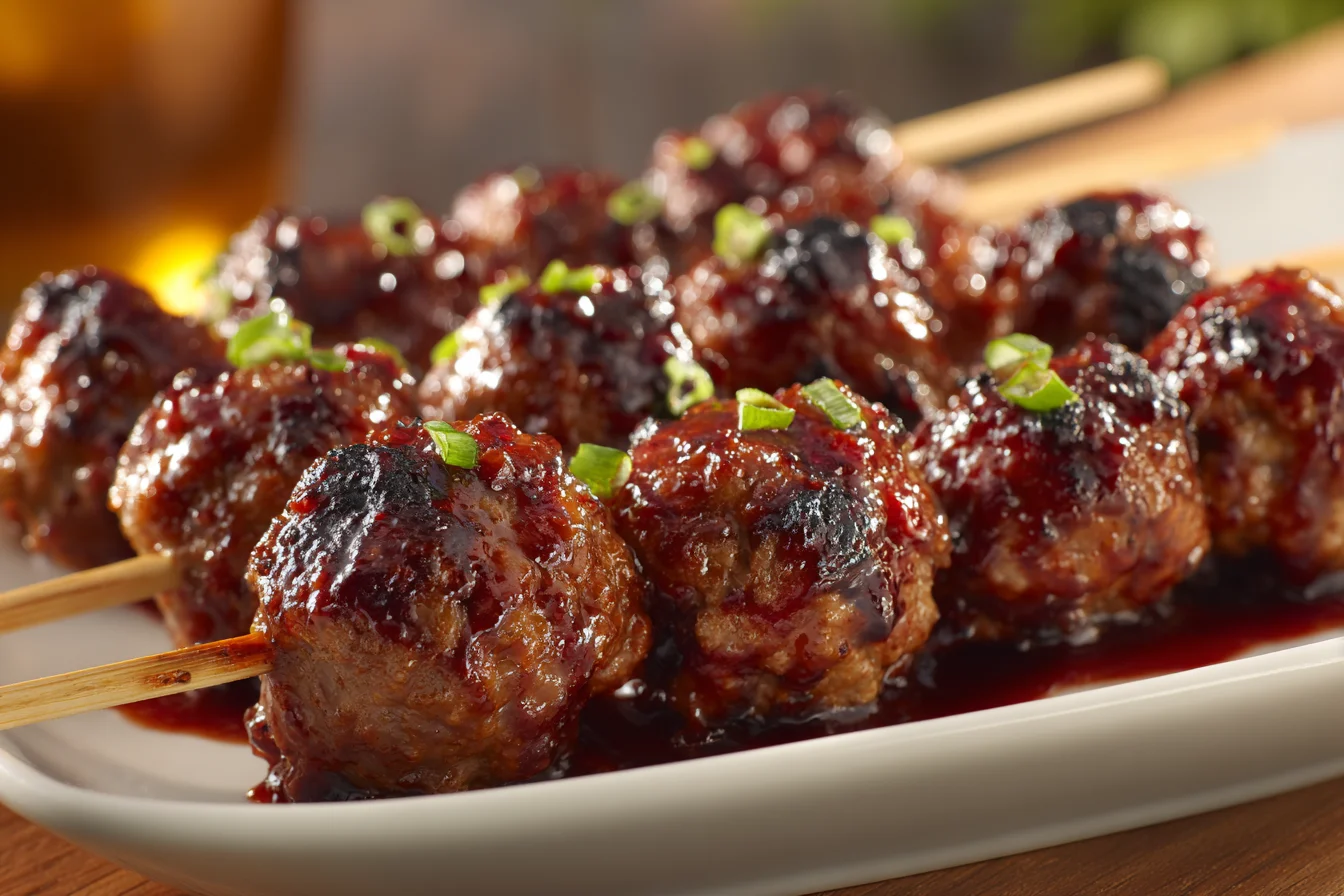
- Grill technique and food safety: keep meatballs tender by not overworking mixture, use beef and pork with a panade, preheat grill, and cook to 160°F.
- Sauce timing and caramelization: brush BBQ sauce during the last 2 to 3 minutes so it caramelizes without burning for a glossy, flavorful coating.
- Make ahead, customize, and serve: prep meatballs a day ahead, adapt sauces or vegetarian options, and pair skewers with sides for main course or appetizers.
Last Updated on April 12, 2026 by Souhail
This post contains affiliate links. As an Amazon Associate, we earn from qualifying purchases. This means we may earn a small commission if you purchase through our links, at no extra cost to you.
There’s something magical about grilling season, and BBQ meatball skewers are the perfect centerpiece for any outdoor gathering or casual weeknight dinner. These tender, juicy meatballs glazed in tangy barbecue sauce and threaded onto skewers deliver restaurant-quality flavor in your own backyard. Whether you’re feeding a crowd or cooking for your family, this recipe combines the comfort of classic meatballs with the excitement of grilled skewers.
I’ve been cooking professionally for years, and I can tell you that grilled meatball skewers are one of those dishes that always impresses. The magic happens when the sauce caramelizes on the grill, creating a smoky, sweet glaze that coats every bite. Plus, they’re incredibly versatile—you can prep them ahead, customize the sauce to your taste, and have dinner ready in under 30 minutes.
These skewers work beautifully as a main course or appetizer, and they’re guaranteed to become a family favorite. Let me walk you through everything you need to know to master this grilled meatball recipe at home.
Table of contents
- Why You’ll Love This Recipe
- Let’s Make These Grilled Meatball Skewers
- Pro Tips for Perfect BBQ Meatball Skewers
- Creative Ways to Customize Your Grilled Meatballs
- Understanding the Nutrition in Your Meatball Skewers
- Serving Your Grilled Meatballs with Style
- Storing and Reheating Your Leftover Meatball Skewers
- Common Questions About Making BBQ Meatball Skewers
Why You’ll Love This Recipe
- These BBQ meatball skewers come together in just 30 minutes from start to finish, making them perfect for busy weeknights when you need a satisfying dinner without spending hours in the kitchen.
- The combination of tender ground beef meatballs and smoky barbecue glaze delivers bold, restaurant-quality flavor that tastes like you spent all day cooking, even though the prep is incredibly simple.
- You can prepare the meatballs ahead of time and refrigerate them for up to 24 hours, then quickly grill them when you’re ready, making this recipe ideal for meal planning and entertaining.
- Grilled meatball skewers work wonderfully as a main dish, appetizer, or party food, giving you flexibility to serve them however you like for any occasion.
- This recipe is naturally gluten-free when you use certified gluten-free breadcrumbs, and it adapts easily to different dietary preferences without sacrificing any of the delicious flavor.
Let’s Make These Grilled Meatball Skewers
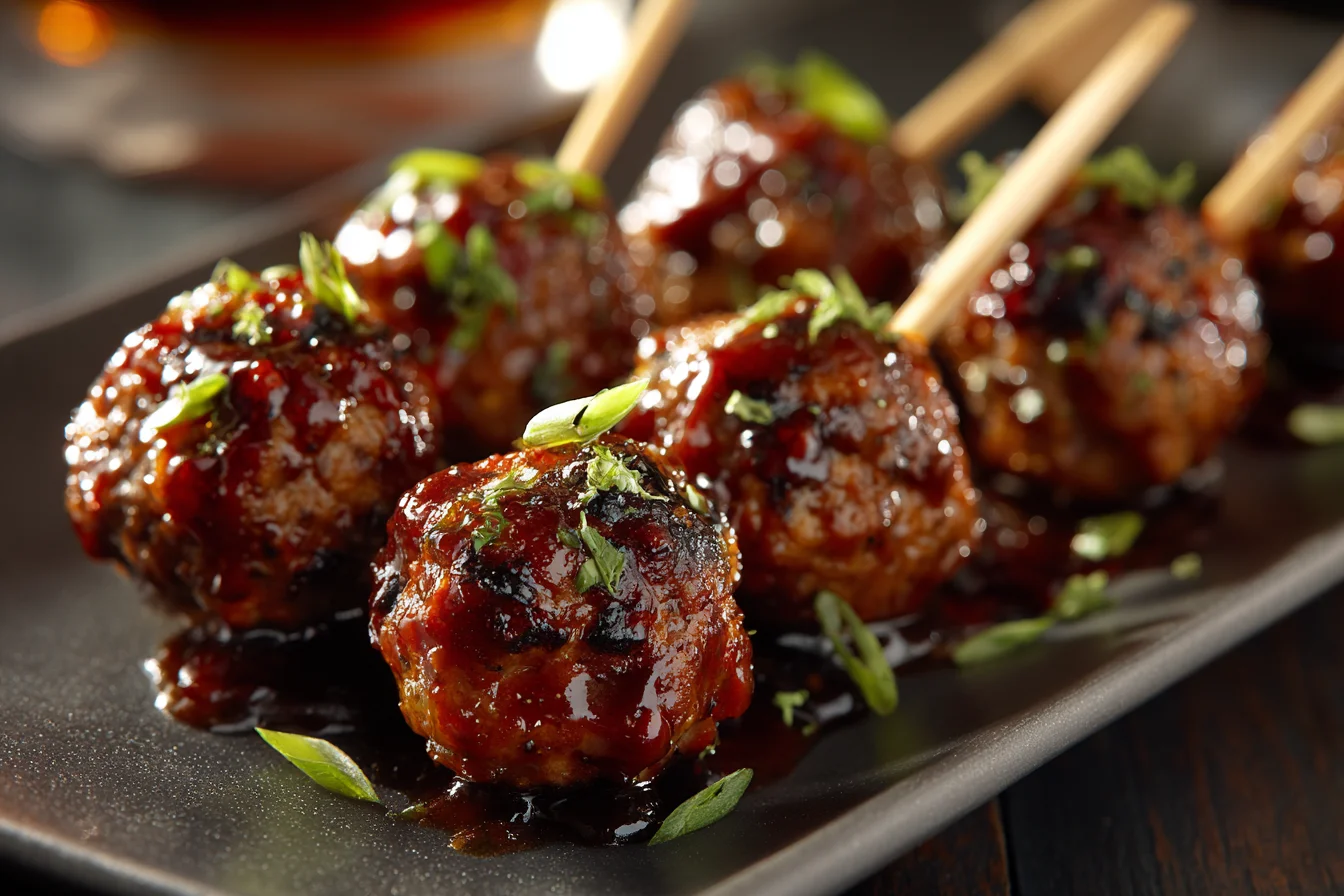

BBQ Meatball Skewers
Tender, juicy meatballs glazed in smoky barbecue sauce and grilled to perfection on skewers. This easy recipe comes together in 30 minutes and serves 4-5 people as a main course or 6-8 as an appetizer. Perfect for outdoor entertaining or casual weeknight dinners.
5
servings15
minutes12
minutes280
kcalKeep the screen of your device on
Ingredients
1 lb ground beef
0.5 lb ground pork
0.5 cup breadcrumbs
0.25 cup whole milk
1 large egg
0.5 cup barbecue sauce
0.5 teaspoon salt
0.25 teaspoon black pepper
0.5 teaspoon garlic powder
0.5 teaspoon onion powder
8-10 skewers wooden or metal skewers
Directions
- Soak your wooden skewers in water for at least 30 minutes to prevent them from burning on the grill.
- Combine the breadcrumbs and milk in a small bowl and let sit for 2 minutes to create a panade, which keeps the meatballs tender and moist.
- Mix the ground beef and pork in a large bowl with the soaked breadcrumb mixture, beaten egg, barbecue sauce, salt, pepper, garlic powder, and onion powder until just combined. Don’t overwork the mixture.
- Form the meat mixture into 16-20 meatballs, about 1.5 inches in diameter. Handle them gently to keep them tender.
- Thread the meatballs onto skewers, placing 4-5 meatballs per skewer with a small gap between each one for even cooking.
- Preheat your grill to medium-high heat and lightly oil the grates to prevent sticking.
Notes
- Wooden skewers must be soaked for at least 30 minutes before grilling to prevent burning.
- Don’t overwork the meat mixture—this keeps meatballs tender rather than dense and tough.
- Apply barbecue sauce only during the last 2-3 minutes of grilling to prevent the sugar from burning while still allowing it to caramelize.
- Use a meat thermometer to verify meatballs reach 160°F for food safety.
- You can prepare uncooked meatballs up to 24 hours ahead and refrigerate, or freeze for up to 3 months.
Nutrition Facts
- Serving Size: 1
- Total number of serves: 5
- Calories: 280kcal
- Fat: 14g
- Carbohydrates: 12g
- Fiber: 0.5g
- Protein: 24g
Like this recipe?
Follow @wikitasty on Pinterest
Pro Tips for Perfect BBQ Meatball Skewers
Making excellent grilled meatball skewers comes down to a few key techniques that I’ve refined over years in the kitchen. First, don’t overwork the meat mixture—this keeps your meatballs tender rather than dense. Second, let your grill get hot before adding the skewers so they develop a beautiful caramelized exterior. Finally, brush the sauce on during the last few minutes of cooking to prevent burning. Here are my professional tips to ensure success every time.
Choosing the Right Grill Setup
I recommend using a medium-high heat setting on your grill for these meatballs. If you’re using a gas grill, preheat it for at least 10 minutes. For charcoal grills, wait until the coals are covered in white ash before you start cooking. This ensures even cooking and prevents sticking. Additionally, oil your grill grates well before adding the skewers—this is crucial for preventing the meatballs from sticking and helps create those gorgeous grill marks.
Meat Mixture Secrets
The secret to tender, juicy meatballs is using a mixture of ground beef and ground pork, which adds flavor and keeps them moist. Mix your ingredients gently with your hands, just until combined. Overworking the meat creates tough, dense meatballs that nobody wants. I also recommend adding a beaten egg and breadcrumbs soaked in milk—this mixture, called a panade, keeps the meatballs incredibly tender and helps them hold together on the skewer.
Skewer Preparation and Grilling
Always soak wooden skewers in water for at least 30 minutes before grilling to prevent them from burning. When threading meatballs onto skewers, leave a tiny bit of space between each one so heat circulates evenly. For food safety, check that your meatballs reach an internal temperature of 160°F according to USDA guidelines. I use an instant-read meat thermometer to verify doneness every time.
Sauce Application Timing
Here’s a pro trick: apply your barbecue sauce only during the last 2-3 minutes of grilling. This prevents the sugar in the sauce from burning while still allowing it to caramelize beautifully and coat the meatballs. Brush the sauce on generously and let it set for a minute before flipping. The result is a glossy, flavorful exterior that tastes incredible.
Creative Ways to Customize Your Grilled Meatballs
One of the best things about BBQ meatball skewers is how easily you can adapt them to match your preferences or dietary needs. Whether you want to add vegetables, switch up the sauce, or make them vegetarian, this recipe is incredibly flexible. Let me share some of my favorite variations that keep things interesting and exciting at the dinner table.
Asian-Inspired Glazed Meatballs
For an exciting twist, replace the barbecue sauce with a glaze made from soy sauce, honey, rice vinegar, and fresh ginger. Add minced garlic and a touch of sriracha for heat. This creates a sweet and savory Asian-style meatball that tastes completely different from the traditional version. Thread them onto skewers with bell peppers and red onions for a colorful presentation that’s sure to impress.
Vegetable-Loaded Skewers
Transform your meatball skewers into a complete grilled meal by adding vegetables between the meatballs. Large chunks of bell peppers, red onions, zucchini, and cherry tomatoes work beautifully. The vegetables grill alongside the meatballs and absorb all those smoky, savory flavors. This approach also stretches the recipe further, so you can feed more people with the same amount of meat.
Spicy Jalapeño Meatballs
If you love heat, add diced jalapeños and sharp cheddar cheese directly into your meatball mixture. Grill them with your favorite spicy barbecue sauce or a chipotle-based glaze. The result is a bold, fiery meatball that pairs wonderfully with cool sour cream or ranch dip for serving. These are perfect for anyone who enjoys a kick of heat in their dinner.
Vegetarian Meatball Skewers
You can absolutely make plant-based versions using store-bought vegetarian meatballs or by making your own from lentils, mushrooms, and walnuts. Grill them using the same technique and sauce as the beef version. They work wonderfully alongside grilled vegetables and deliver satisfying, hearty flavor. The barbecue glaze caramelizes just as beautifully on plant-based meatballs, creating that same delicious exterior.
Honey Mustard and Maple Variation
For a sweeter profile, combine Dijon mustard, whole grain mustard, maple syrup, and a touch of apple cider vinegar for your glaze. This variation adds complexity and works beautifully with the savory meatballs. Brush it on during the final minutes of grilling and watch it caramelize into a gorgeous mahogany coating. This version pairs exceptionally well with cornbread on the side for a complete meal.
Understanding the Nutrition in Your Meatball Skewers
Each serving of these BBQ meatball skewers contains approximately 280 calories, making them a reasonable portion for a main course or substantial appetizer. The protein content is excellent at around 24 grams per serving, which comes primarily from the ground beef and pork mixture. This makes the skewers particularly satisfying and helps keep you full longer.
The fat content sits at about 14 grams per serving, mostly from the meat itself. The carbohydrates come from the breadcrumbs in the meatballs and the barbecue sauce glaze, totaling around 12 grams per serving. If you’re watching your carb intake, you can use lower-carb vegetable sides to balance your meal. The fiber content is minimal at about 0.5 grams, so consider serving these with a fiber-rich side dish.
Sugar content is moderate at around 8 grams per serving, primarily from the barbecue sauce. If you prefer less sugar, you can use a sugar-free barbecue sauce or make your own glaze with less sweetener. The sodium level is approximately 520 mg per serving, which is reasonable for a grilled dinner. Overall, these meatball skewers offer a well-balanced nutritional profile that fits nicely into most dietary approaches.
Serving Your Grilled Meatballs with Style
The beauty of BBQ meatball skewers is that they shine on their own but also pair wonderfully with complementary sides and sauces. I love serving them with creamy coleslaw, which provides a cool, crisp contrast to the warm, smoky meatballs. The acidity in the coleslaw cuts through the richness of the meat perfectly. You can also offer a selection of dipping sauces—ranch dressing, additional barbecue sauce, or even a spicy mayo—so guests can customize their experience.
For a complete grilled dinner, serve these skewers alongside classic sides like grilled corn on the cob, baked beans, or a fresh garden salad. They also work beautifully as part of a casual appetizer spread at parties or gatherings. Simply arrange them on a platter with small bowls of sauce nearby, and let your guests help themselves. The skewers make them easy to grab and eat while mingling, which is perfect for entertaining.
If you’re serving these as a main course, consider pairing them with comforting side dishes like mashed potatoes or roasted vegetables. The smoky, savory meatballs complement hearty sides beautifully. Fresh bread or dinner rolls are also excellent for soaking up any extra sauce. Don’t forget to have plenty of napkins on hand—these meatballs are messy in the best possible way.
Storing and Reheating Your Leftover Meatball Skewers
If you’re lucky enough to have leftovers, store them properly to maintain quality and food safety. Place cooled meatball skewers in an airtight container and refrigerate them for up to 3 days. You can also remove the meatballs from the skewers before storing if that’s more convenient for your space. For longer storage, freeze them in a freezer-safe container for up to 2 months.
To reheat refrigerated meatballs, place them on a baking sheet and warm them in a 350°F oven for about 10 minutes until heated through. Alternatively, you can reheat them on the grill over medium heat for 5-7 minutes, turning occasionally. This method actually restores some of that grilled flavor. For frozen meatballs, thaw them in the refrigerator overnight before reheating using either method above. Avoid microwaving if possible, as this can dry them out and compromise their tender texture.
Common Questions About Making BBQ Meatball Skewers
I get lots of questions about this recipe, and I’m happy to address the most common ones. Whether you’re wondering about food safety, ingredient substitutions, or technique, I’ve got you covered. Check out the detailed answers below to make sure your grilled meatballs turn out perfectly.
Absolutely! You can bake them in a 400°F oven for 15-18 minutes until cooked through, then brush with barbecue sauce and broil for 2-3 minutes to caramelize. You can also cook them in a skillet over medium-high heat, turning frequently. The grilled version has the best flavor, but these methods work well if you don’t have access to a grill.
Make sure your meatballs are firmly packed and compact. Don’t make them too soft—the mixture should hold together well. Thread the skewer through the center of each meatball, and leave a small gap between meatballs so they don’t crowd together. Metal skewers work better than wooden ones for holding meatballs securely, though wooden skewers work fine if soaked properly.
Any quality barbecue sauce works well, but I prefer ones with a balance of sweetness and smokiness. Kansas City-style sauce is thick and sweet, Texas-style has more vinegar and spice, and Carolina-style offers a mustard base. You can also make your own by combining ketchup, brown sugar, vinegar, Worcestershire sauce, and spices. Brush it on during the last few minutes of grilling to prevent burning.
Yes! Form the meatballs and refrigerate them in an airtight container for up to 24 hours before grilling. You can also freeze uncooked meatballs for up to 3 months. Thaw them in the refrigerator before threading onto skewers and grilling. This makes the recipe perfect for meal planning and entertaining since you can do the prep work the day before.
Yes, when cooked properly. Always ensure meatballs reach an internal temperature of 160°F, which is the safe temperature for ground meat according to food safety guidelines. Use a meat thermometer to verify. Practice proper food handling by keeping raw meat separate from other ingredients, washing your hands and surfaces after handling raw meat, and following CDC food safety recommendations for storage and preparation.
For a main course, plan on 4-5 meatballs per person, which typically equals one full skewer. For appetizers, 2-3 meatballs per person is appropriate. This recipe makes about 16-20 meatballs total, depending on size, so it serves 4-5 people as a main course or 6-8 as an appetizer. Adjust quantities based on what else you’re serving.
I hope you enjoy making these BBQ meatball skewers as much as I do. There’s something genuinely rewarding about pulling a beautiful platter of grilled meatballs off the grill and watching your family or guests dig in. The combination of tender meat, smoky sauce, and that perfect charred exterior is hard to beat. This recipe has become a staple at my house for everything from casual weeknight dinners to backyard parties.
Give this recipe a try the next time you fire up your grill, and don’t be afraid to make it your own with different sauces, vegetables, or seasonings. Let me know how it turns out—I’d love to hear what variations you create. Happy grilling!