
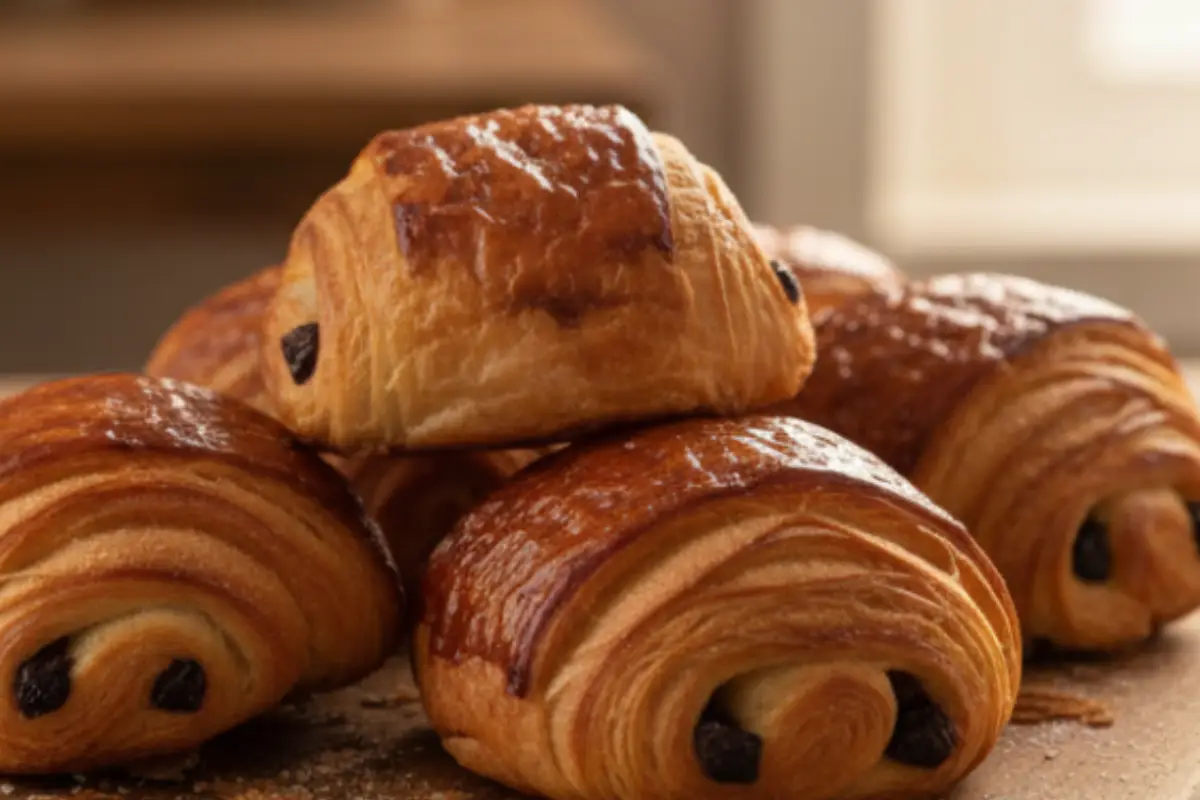
- Simplified three-fold lamination yields flaky, paper-thin layers with less active time while preserving authentic pastry texture.
- Use high-quality dark chocolate batons for silky molten ribbons; avoid chips that resist melting.
- Butter temperature and chill/rest periods are crucial to prevent dense, greasy croissants.
- Variants include almond filling, orange zest, salted caramel, and whole wheat substitutions for flavor flexibility.
- Store at room temperature short-term; freeze for longer storage and reheat in the oven, never the microwave.
Last Updated on January 29, 2026 by Souhail
There’s a little corner boulangerie near my apartment in Brooklyn that I visit every Sunday morning without fail. Rain or shine, I’m there by 8 a.m., still in my weekend sweats, waiting in line behind neighbors who’ve become friends. And every single time, I order the same thing: a warm pain au chocolat, its dark chocolate oozing from layers of golden, shatteringly crisp pastry. That first bite, with flakes scattering onto my coat and rich chocolate melting on my tongue, is pure magic. It’s the kind of simple joy that makes New York feel like home.
Today, I’m sharing my perfected chocolate croissants recipe so you can bring that same magic into your own kitchen. Yes, laminated dough can feel intimidating, but I’ve streamlined the process without sacrificing an ounce of that authentic French bakery charm. These chocolate croissants are your ticket to weekend luxury, holiday entertaining, or simply treating yourself on a Tuesday night when the world feels heavy. With a flavor profile that balances deep cocoa richness against cultured butter and a whisper of sea salt, each bite delivers that perfect contrast of crisp exterior and tender, airy interior. What makes this recipe special isn’t just the result, it’s the journey: a surprisingly meditative process that rewards patience with pure, unadulterated joy.
Table of contents
Why This Recipe Works
Let me tell you why these chocolate croissants will become your new weekend obsession. I spent months testing this method in my tiny New York kitchen (with flour dusting every surface, much to my cat’s dismay) until I landed on a version that delivers professional results without requiring a culinary degree. Here’s what makes it special:
- The dough uses a simplified lamination technique with just three folds, cutting down active time while still creating those dreamy, paper thin layers that shatter at the slightest touch.
- We’re using high quality dark chocolate batons instead of chips, which melt into silky ribbons rather than pooling into a puddle.
- A touch of honey in the dough adds subtle sweetness and helps achieve that gorgeous amber color bakers dream about.
- The recipe includes precise temperature cues so you’ll never guess when the butter is too cold or too warm again.
Want to make these your own? Swap the dark chocolate for semi sweet if you prefer a milder cocoa flavor. For a dairy free version, use a high quality plant based butter that stays firm when chilled (I’ve tested with European style vegan butter with great results). Gluten free bakers, I recommend trying this with a 1 to 1 gluten free flour blend specifically designed for laminated doughs, though the texture will be slightly denser.
Pro Tips for Success
Before you dive in, let me share the secrets that transformed my croissants from sad and dense to bakery worthy. First, your butter temperature is everything. It should feel like cold clay, not hard as a rock and not soft enough to smear. If it’s too cold, it’ll crack through the dough. Too warm, and it’ll absorb right in, leaving you with brioche instead of flaky layers. Second, don’t skip the rest periods. Those hours in the fridge aren’t downtime, they’re when the magic happens as the gluten relaxes and the butter firms up between folds. Third, when shaping, make sure your chocolate batons sit snugly against the edge of the dough before rolling. This prevents them from sliding out during baking and ensures every bite has that perfect chocolate hit. And finally, bake on the lowest oven rack for the first 10 minutes to encourage maximum rise from the bottom up.
Variants of the Recipe
Once you’ve mastered the classic version, the world of chocolate croissants opens up beautifully. Here are my favorite twists that keep breakfast exciting:
Almond Chocolate Croissants
After baking, slice your croissants horizontally and fill them with frangipane (almond cream) before sandwiching them back together. Dust with powdered sugar and sliced almonds for a hybrid treat that combines the best of both worlds. This variation reminds me of the almond croissants I adore, with their tender filling and nutty crunch elevating the chocolate experience.
Orange Zest Infusion
Add 1 tablespoon of finely grated orange zest to the dough during the final mixing stage. The citrus brightness cuts through the richness beautifully and makes these feel especially festive. I love serving these during holiday brunches when I want something special without extra effort.
Sea Salt and Caramel Swirl
Before rolling the dough around the chocolate, brush the interior with a thin layer of salted caramel sauce. The result is a sophisticated balance of sweet, salty, and bitter that feels incredibly indulgent. Pair these with a mug of slow simmered crockpot hot chocolate for the ultimate cozy morning.
Whole Wheat Version
Substitute half the all purpose flour with white whole wheat flour for a nuttier flavor and extra fiber. The texture stays wonderfully tender while adding wholesome depth. These become my go to when I want pastry that feels a little more nourishing without sacrificing joy.
Serving Suggestions
Fresh from the oven, these chocolate croissants need little adornment beyond a dusting of powdered sugar and perhaps a drizzle of melted chocolate across the top. But why stop there? Serve them warm alongside a bowl of fresh berries macerated with a splash of orange juice for a bright contrast to the rich pastry.
For an elegant brunch presentation, slice them in half and arrange on a wooden board with small pots of high quality jam, honeycomb, and clotted cream. I especially love pairing these with a strong espresso or a cup of that slow simmered crockpot hot chocolate on chilly mornings when I want to linger at the table. The combination of flaky pastry and velvety hot chocolate creates pure comfort in a way that never fails to lift my spirits.
Storage and Reheating Instructions
Store completely cooled croissants in a paper bag at room temperature for up to 24 hours. For longer storage, wrap individually in plastic wrap and freeze for up to one month. To reheat frozen croissants, place them directly on the oven rack at 350°F for 8 to 10 minutes until warm throughout and crisp again. Avoid the microwave at all costs, it turns flaky layers soggy and ruins the texture completely. If your croissants have softened overnight, a quick 3 minute toast in a 375°F oven will restore their crisp exterior beautifully.
Creative Uses for the Recipe
Don’t toss those slightly stale croissants. Cube them and toss with eggs, milk, and chocolate chunks for an incredible chocolate croissant bread pudding. Or slice them thickly, brush with butter, and grill until crisp for chocolate croissant French toast. I’ve even used day old versions to make a stunning trifle layered with whipped cream and berries, which always impresses guests during holiday gatherings.
)
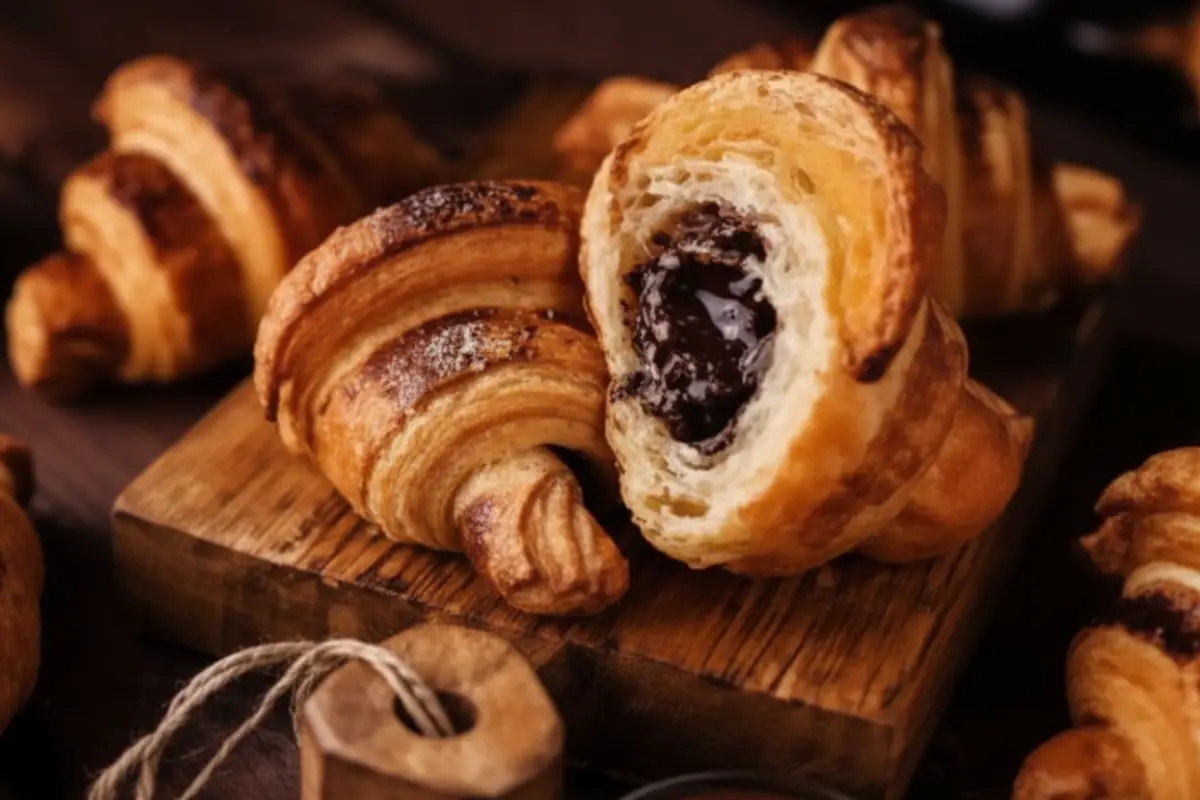
Chocolate Croissants (Pain au Chocolat)
8
servings45
minutes20
minutes320
kcalFlaky, buttery chocolate croissants with molten dark chocolate ribbons in every shattering layer. This approachable recipe brings Parisian bakery magic to your home kitchen without the stress.
Keep the screen of your device on
Ingredients
4 cups (500 g) all purpose flour, plus extra for dusting
0.33 cup (65 g) granulated sugar
1 tablespoon (12 g) fine sea salt
0.25 teaspoons (7 g) active dry yeast
0.25 cups (300 ml) whole milk, lukewarm
1 tablespoon (21 g) honey
0.25 cups (285 g) unsalted European style butter, cold
7 ounces (200 g) dark chocolate batons or high quality chocolate bars cut into 4 inch sticks
Directions
- First, make the dough by combining flour, sugar, salt, and yeast in a large bowl. Warm the milk until it feels like bathwater, then stir in the honey until dissolved. Pour the milk mixture into the dry ingredients and mix until a shaggy dough forms. Knead on a lightly floured surface for 5 minutes until smooth and elastic. Shape into a rectangle, wrap tightly in plastic, and refrigerate for 1 hour.
- Next, prepare the butter block. Place cold butter between two sheets of parchment paper and pound with a rolling pin until it forms a 7 by 9 inch rectangle about 1/2 inch thick. Chill for 20 minutes until firm but still pliable.
- Roll the chilled dough into a 10 by 15 inch rectangle on a floured surface. Place the butter block in the center of the dough and fold the dough over the butter like an envelope, sealing the edges by pinching firmly. This encases the butter completely.
- Roll the dough into a 10 by 20 inch rectangle. Fold the bottom third up and the top third down like a business letter. Rotate 90 degrees, then repeat this rolling and folding process two more times, chilling the dough for 30 minutes between each fold. After the third fold, wrap and chill for at least 2 hours or overnight.
- Roll the chilled dough into a 10 by 24 inch rectangle. Cut into 8 rectangles measuring 5 by 6 inches each. Place two chocolate batons along one short edge of each rectangle and roll tightly toward the opposite edge, sealing the seam underneath. Curve the ends slightly inward to form a crescent shape.
- Place shaped croissants on parchment lined baking sheets, cover loosely with plastic, and let rise at room temperature for 1 1/2 to 2 hours until nearly doubled and jiggly when gently shaken. They should look puffy and delicate.
- Preheat oven to 375°F with a rack in the lower third position. Brush risen croissants gently with beaten egg for a glossy finish. Bake for 18 to 20 minutes until deeply golden brown and crisp. Transfer to a wire rack and cool for 10 minutes before devouring while still warm.
Notes
- European style butter with 82% fat content creates superior flakiness.
- Chocolate batons are ideal, but chop a 70% dark chocolate bar into 4 inch sticks if needed.
- If your kitchen is warm, chill the dough 15 minutes before each fold to prevent butter leakage.
- Croissants are best enjoyed the day they’re baked but freeze beautifully for up to one month.
- For extra shine, brush with egg wash twice: once before the final rise and again right before baking.
Nutrition Facts
- Serving Size: 8g
- Total number of serves: 8
- Calories: 320kcal
- Fat: 18g
- Saturated Fat: 11g
- Sodium: 0.29mg
- Carbohydrates: 35g
- Fiber: 2g
- Sugar: 8g
- Protein: 5g
Like this recipe?
Follow @wikitasty on Pinterest
FAQs
This usually happens when the butter melted into the dough during lamination. Make sure your butter stays cold but pliable, and chill the dough adequately between folds. Warm butter equals sad, dense pastry.
You can, but chips contain stabilizers that prevent proper melting. Batons or chopped chocolate bars create those beautiful molten ribbons we love. If using chips, choose high quality dark chocolate chips and press them firmly into the dough.
Gently shake the baking sheet. Properly proofed croissants will jiggle slightly like jelly and look noticeably puffy. They should nearly double in size. Under proofed croissants won’t rise much in the oven.
Absolutely. After the final fold, wrap the dough tightly and refrigerate for up to 24 hours before shaping. You can also freeze shaped but unbaked croissants on a tray, then transfer to a freezer bag for up to one month. Bake straight from frozen, adding 3 to 4 extra minutes.
A small amount of butter leakage is normal, but excessive leakage means the butter was too warm during lamination or the dough wasn’t chilled enough before baking. Always err on the side of colder butter.
Keep them in a paper bag at room temperature for same day eating. For longer storage, freeze individually wrapped croissants and reheat directly from frozen in a 350°F oven for 8 to 10 minutes to restore crispness.
Final Thoughts
There’s something deeply satisfying about pulling golden, flaky chocolate croissants from your own oven, especially here in New York where bakery runs require serious commitment. This recipe has become my Sunday morning ritual, a moment of calm before the city wakes up. The process might seem involved, but each fold and rest period is an invitation to slow down and savor the making as much as the eating.
Give yourself permission to try these without perfectionism. Even slightly imperfect homemade croissants taste like love. And once you’ve mastered these, you might find yourself exploring other laminated wonders like almond croissants or even tackling a show stopping lobster tail pastry for special occasions.
Your kitchen is waiting. Let’s make some magic together.