
Last Updated on February 10, 2026 by Souhail
There is something magical about the moment you slice into a coconut cake and catch that first whiff of toasted coconut and vanilla. I discovered this magic on a rainy Tuesday in my tiny New York apartment, feeling homesick for sunshine and palm trees. I had zero plans to bake anything that day, but I found a bag of shredded coconut hiding in my pantry, and suddenly I was whisking flour and dreaming of beaches.
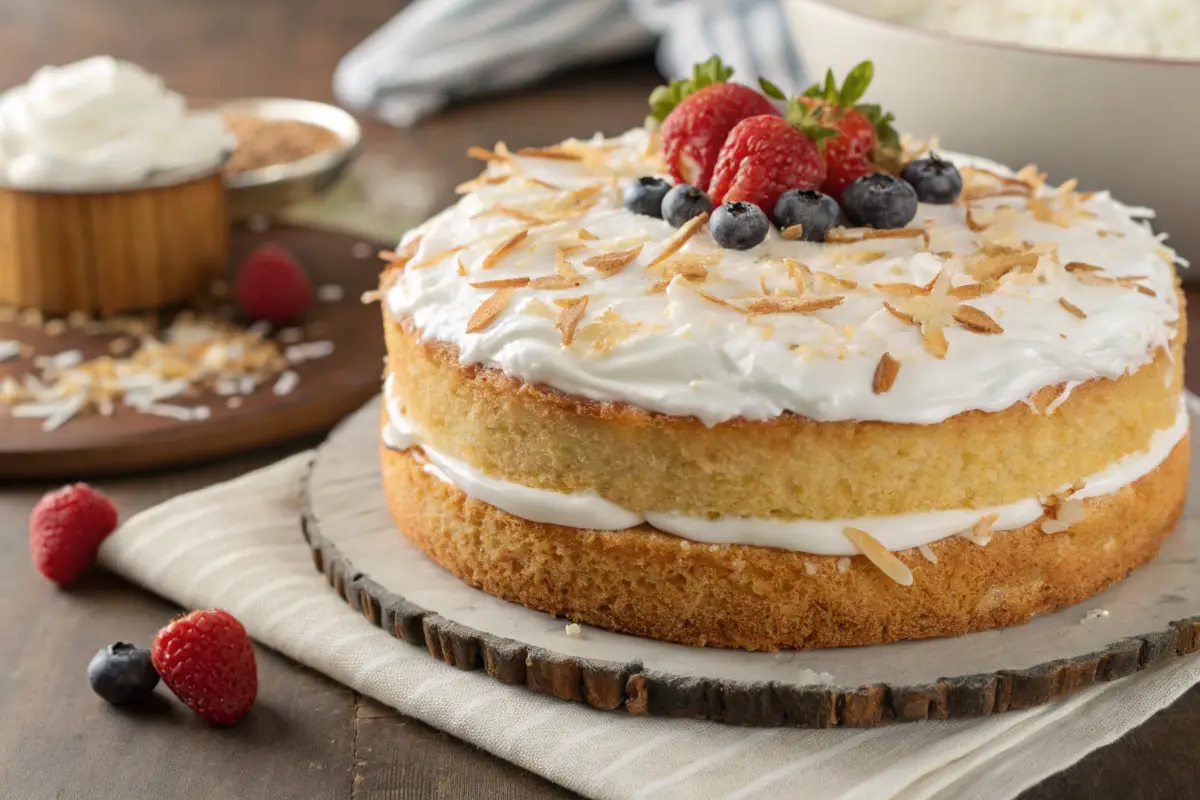
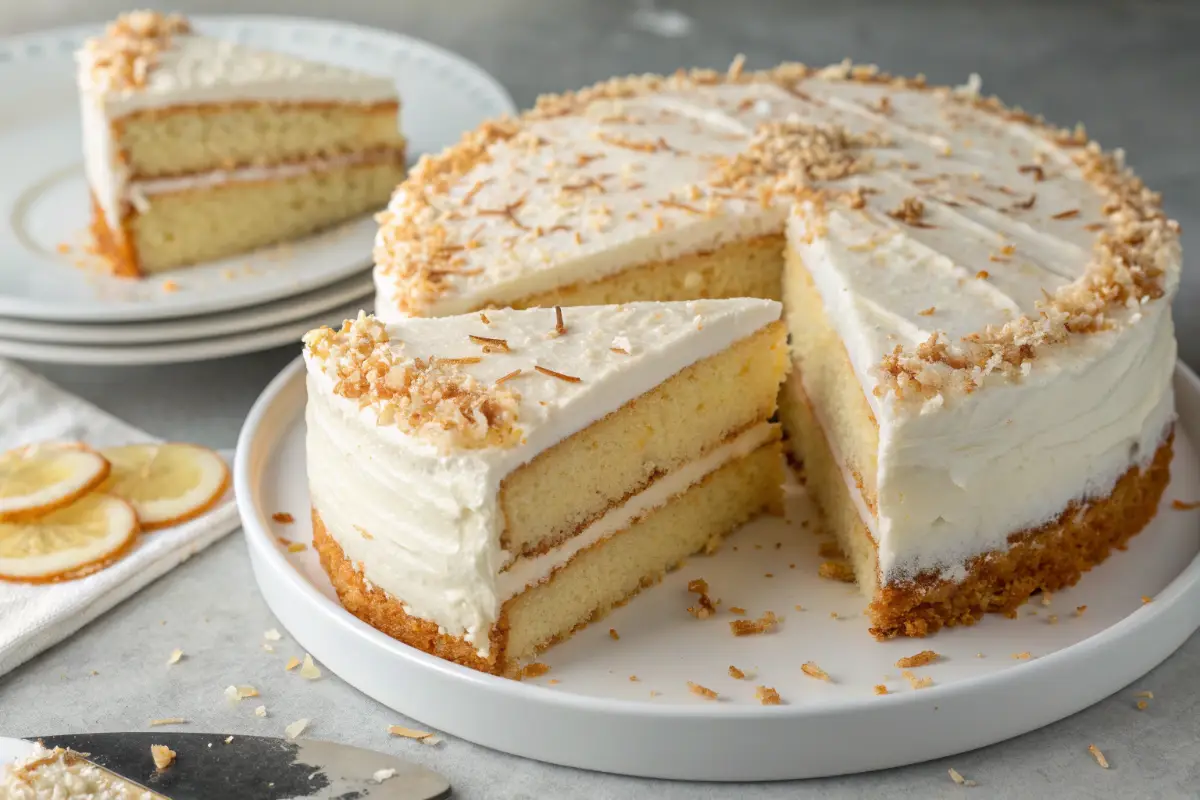
That impromptu bake turned into my go-to coconut cake, the one I now make for birthdays, bad days, and any Tuesday that needs a little joy. This coconut cake is not just dessert, it is a mood lifter. With its tender crumb soaked in coconut milk, fluffy layers kissed with vanilla, and a cloud-like frosting studded with toasted coconut flakes, it delivers pure tropical comfort without requiring a passport.
It is the kind of cake that feels special enough for celebrations but simple enough for a weekend project when you need to fill your kitchen with warmth and your heart with sweetness.
Table of contents
Why This Recipe Works
Let me tell you why this coconut cake has earned a permanent spot in my recipe rotation. It is the little details that transform it from ordinary to unforgettable.
- We swap half the liquid for rich coconut milk, which bakes right into the crumb for deep, authentic coconut flavor in every bite, not just on the surface.
- A touch of sour cream keeps the texture impossibly moist without making the cake heavy or dense.
- We fold toasted coconut into the batter and frosting, adding nutty depth and delightful texture contrast.
- The cream cheese frosting is just sweet enough to balance the cake’s richness, with a hint of vanilla that lets the coconut shine.
- This recipe is endlessly adaptable. Make it gluten free with a 1:1 flour blend, or vegan by swapping in plant based butter, coconut yogurt, and flax eggs. The structure holds beautifully either way.
Pro Tips for Success
Before you preheat that oven, let me share my hard won wisdom for coconut cake perfection. First, do not skip toasting the coconut. Spread unsweetened shredded coconut on a baking sheet and toast at 325°F for 5 to 7 minutes until golden. This step unlocks a nutty, caramelized flavor that raw coconut simply cannot match. Second, bring all your dairy ingredients to room temperature. Cold butter and eggs create a lumpy batter that bakes unevenly.
Third, measure your flour correctly. Spoon it into the measuring cup and level it off. Scooping straight from the bag packs too much flour, leading to a dry cake.
And finally, let the layers cool completely before frosting. I know it is tempting to rush, but warm cake melts frosting into a sad, slippery mess. Trust me, patience pays off in sliceable, beautiful layers.
Variants of the Recipe
This coconut cake is wonderfully versatile. Once you master the base, you can play with flavors to match any season or craving.
Lime Coconut Cake
Add the zest of two limes to the batter and replace one tablespoon of the vanilla extract with lime extract. Frost with the same coconut cream cheese frosting and garnish with thin lime slices. The bright citrus cuts through the richness beautifully, making it perfect for summer gatherings. It reminds me of key lime pie’s tropical cousin.
Pineapple Coconut Cake
Fold one cup of well drained crushed pineapple into the batter along with an extra quarter cup of toasted coconut. The pineapple adds juicy pockets of sweetness and a subtle tang that pairs magically with coconut. This version feels like a deconstructed piña colada and would make a lovely companion to dishes like my chicken pineapple recipe for a full tropical themed menu.
Chocolate Coconut Cake
Replace one quarter cup of the flour with unsweetened cocoa powder and add a half cup of mini chocolate chips to the batter. The chocolate coconut combination is deeply satisfying, like an Almond Joy in cake form. Serve with extra toasted coconut sprinkled on top for that classic candy bar vibe.
Serving Suggestions
This cake deserves a moment to shine. I love serving generous slices on simple white plates to let its golden crumb and snowy frosting take center stage.
For an extra special touch, drizzle each plate with a little warmed coconut syrup or a light dusting of powdered sugar. Pair it with freshly brewed coffee or a cup of jasmine tea to balance the sweetness.
It also makes a stunning centerpiece for celebrations when decorated with edible flowers or extra toasted coconut arranged in a spiral on top.
Leftovers? There are never leftovers in my house, but if you are miraculously blessed with them, they taste even better the next day as the flavors meld overnight.
Storage and Reheating Instructions
Store unfrosted cake layers wrapped tightly in plastic wrap at room temperature for up to two days. A fully assembled frosted cake keeps beautifully in the refrigerator for up to five days. Always cover it loosely with a cake dome or inverted bowl to prevent the frosting from drying out.
I do not recommend freezing the whole frosted cake, but unfrosted layers freeze wonderfully for up to three months. Wrap them first in plastic wrap, then in foil. Thaw overnight in the refrigerator before frosting.
Never microwave slices. For the best texture, let refrigerated cake sit at room temperature for 20 minutes before serving so the frosting softens to that perfect cloud like consistency.
Creative Uses for the Recipe
Think beyond dessert. Crumble leftover cake and fold it into vanilla ice cream for an instant coconut cake ice cream. Use thin slices as the base for a tropical trifle layered with mango curd and whipped cream. Or get playful at brunch: lightly toast small squares of cake and serve them alongside scrambled eggs and fresh fruit for a sweet and savory morning treat that will have your guests talking.
How Do You Make it

Coconut Cake
12
servings25
minutes30
minutes425
kcalKeep the screen of your device on
Ingredients
- For the cake
2.5 cups all purpose flour
1.5 cups granulated sugar
1 teaspoon baking soda
0.5 teaspoon baking powder
0.5 teaspoon salt
0.75 cup unsalted butter softened
3 large eggs room temperature
1 cup coconut milk full fat
0.5 cup sour cream
2 teaspoons vanilla extract
1 cup unsweetened shredded coconut toasted
- For the frosting
8 ounces cream cheese softened
0.5 cup unsalted butter softened
3.5 cups powdered sugar sifted
1 teaspoon vanilla extract
2 tablespoons coconut milk
1 cup unsweetened shredded coconut toasted for garnish
Directions
- First, preheat your oven to 350 degrees F.
- Grease and flour two 9 inch round cake pans, then line the bottoms with parchment paper rounds.
- This little step guarantees your cakes will slide right out without sticking.
- In a medium bowl, whisk together the flour, baking soda, baking powder, and salt until everything is evenly distributed.
- Set that aside while you get the wet ingredients ready.
- In a large mixing bowl, beat the softened butter and granular sugar together on medium high speed for about 3 to 4 minutes until the mixture looks pale and fluffy.
- This creaming step is non negotiable for a light textured cake.
- Add the eggs one at a time, beating well after each addition and scraping down the bowl as needed.
- Mix in the vanilla extract until combined.
- Now alternate adding the dry ingredients and the coconut milk to the butter mixture, starting and ending with the dry ingredients.
- Do this in three additions for the flour and two for the coconut milk, mixing on low speed just until incorporated after each addition.
- Fold in the sour cream until no white streaks remain, then gently fold in three quarters of the toasted coconut by hand with a spatula.
- Divide the batter evenly between the prepared pans and smooth the tops.
- Bake for 28 to 32 minutes, or until a toothpick inserted into the center comes out with just a few moist crumbs attached.
- Let the cakes cool in their pans on a wire rack for 15 minutes before running a knife around the edges and inverting them onto the rack to cool completely.
- This cooling time is crucial, so resist the urge to frost warm cakes.
- While the cakes cool, make the frosting.
- Beat the softened cream cheese and butter together until smooth and creamy, about 2 minutes.
- Gradually add the sifted powdered sugar, one cup at a time, mixing on low speed to avoid a sugar cloud.
- Once incorporated, add the vanilla extract and coconut milk, then beat on medium high for 2 full minutes until light and fluffy.
- If the frosting seems too thin, chill it for 15 minutes before assembling.
- To assemble, place one cooled cake layer on your serving plate.
- Spread a generous layer of frosting evenly over the top.
- Carefully place the second layer on top and frost the top and sides of the entire cake.
- Press the remaining toasted coconut onto the sides and top for that gorgeous bakery style finish.
- Slice and serve with joy.
Notes
- Full fat coconut milk from a can yields the richest flavor. Shake the can well before measuring.
- Toast coconut on a parchment lined baking sheet at 325°F for 5 to 7 minutes, stirring once, until golden brown.
- For extra moist cake, brush cooled layers with a simple syrup made of 1/4 cup coconut milk and 2 tablespoons sugar.
- Sift powdered sugar to prevent lumps in your frosting.
- Room temperature dairy ingredients are essential for a smooth, emulsified batter and frosting.
- Chill the assembled cake for 20 minutes before slicing for clean, beautiful cuts.
Nutrition Facts
- Total number of serves: 12
- Calories: 425kcal
- Fat: 24g
- Saturated Fat: 15g
- Cholesterol: 0.85mg
- Sodium: 0.210mg
- Carbohydrates: 48g
- Fiber: 1g
- Sugar: 34g
- Protein: 4g
Like this recipe?
Follow @wikitasty on Pinterest
FAQS
You can, but I do not recommend it. Sweetened coconut contains added sugar and moisture that can throw off the cake’s balance, making it overly sweet and potentially dense. Unsweetened gives you control over the sweetness level.
Most likely culprit: overmeasuring flour or overbaking. Always spoon flour into your measuring cup rather than scooping, and start checking for doneness at 28 minutes. That toothpick should have a few moist crumbs, not come out completely clean.
Absolutely. Pour the batter into a greased 9×13 inch pan and bake at 350°F for 35 to 40 minutes. The baking time will be slightly longer since the batter is deeper.
Ensure your cream cheese and butter are softened but still cool, not warm or oily. If your kitchen is hot, chill the frosting for 15 minutes before spreading. Also, sift that powdered sugar to avoid clumps that can create uneven texture.
I do not recommend it in this recipe. Butter provides structure and flavor that coconut oil cannot replicate here. The cake may spread too much and lack the tender crumb we are after.
Low and slow is the key. Spread coconut in a thin, even layer on a parchment lined baking sheet. Bake at 325°F, stirring every 2 minutes. It goes from golden to burnt in about 60 seconds, so stay nearby.
Closing Thoughts
There is something quietly joyful about baking a cake that tastes like sunshine. This coconut cake has carried me through gray New York winters, birthday celebrations, and ordinary Tuesdays that needed a little magic. It is not fussy, it is not complicated, but it feels like a gift every single time.
So grab that bag of coconut from your pantry, preheat your oven, and let your kitchen fill with the scent of toasted coconut and vanilla. You have got this. And when you slice into that first tender layer, I hope you feel exactly what I feel: a little piece of paradise, made by your own hands.
If you love playing with layers, my carrot cake recipe or neapolitan cake recipe might become your next baking adventure. Happy baking, friends.