
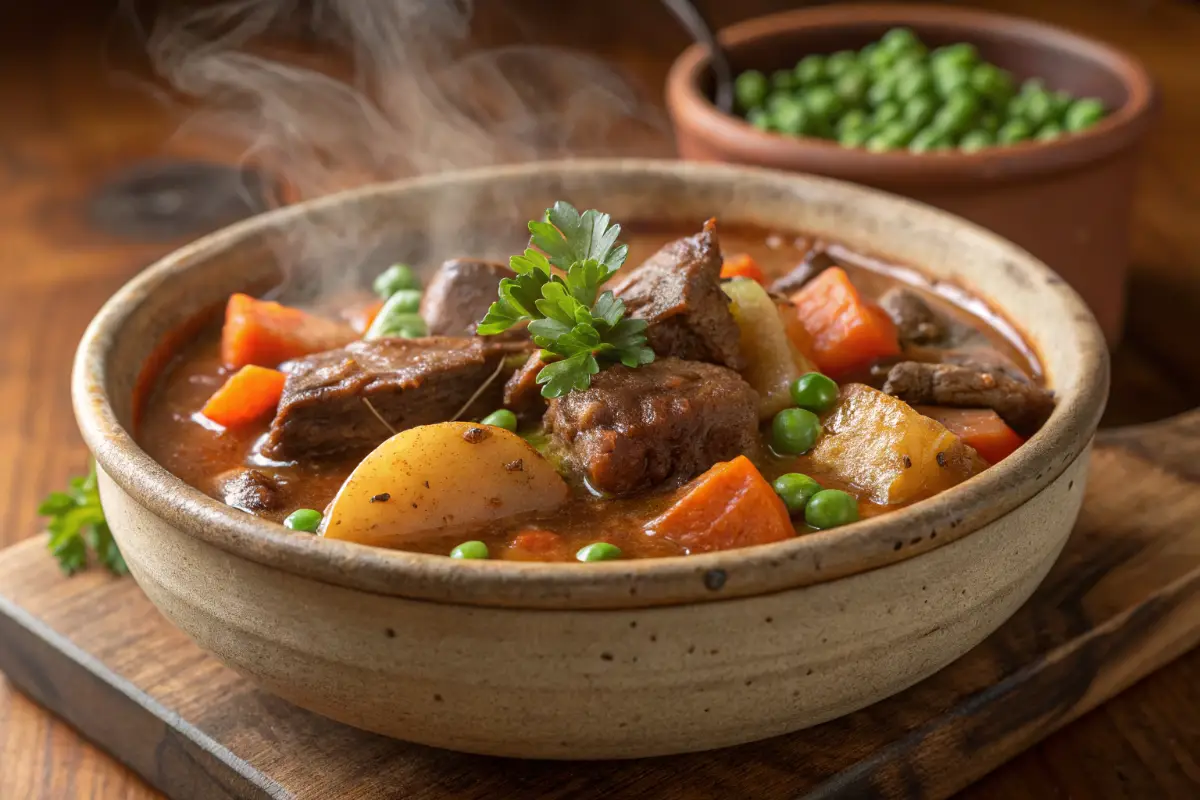
- One-pot, minimal cleanup comfort meal that fills your kitchen with cozy aromas.
- Rich, velvety gravy clings to tender, slow-simmered beef, carrots, and potatoes.
- Alcohol-free recipe using broth for deglazing, accessible for all guests.
- Easy to customize: gluten-free cornstarch option, dairy-free skip butter, add veggies.
- Make ahead friendly: refrigerates 4 days, freezes 3 months, or use slow cooker for hands-off cooking.
Last Updated on March 2, 2026 by Souhail
There’s nothing quite like coming home to the aroma of irish beef stew simmering on the stove, especially on a chilly New York evening. I still remember the first time I made this recipe in my tiny apartment kitchen during a particularly brutal January snowstorm. The way the savory scent of herbs and slow-cooked beef filled my space instantly turned my cramped studio into a cozy haven.
This irish beef stew has since become my go-to comfort meal, perfect for busy weeknights when I want something deeply satisfying with minimal fuss, or for lazy weekends when I love having a pot bubbling away while I catch up on podcasts. What makes this version so special is its rich, velvety gravy that clings to melt-in-your-mouth beef chunks, sweet carrots, and buttery potatoes, all woven together with aromatic thyme and bay leaves.
And the best part? It’s completely alcohol-free, so you get all the deep, complex flavor without any wine or beer, making it welcoming for everyone at your table.
Table of contents
Why This Irish Beef Stew Just Works
Let’s talk about why this irish beef stew has earned a permanent spot in my weekly rotation. It’s not just about the incredible flavor (though, wow, is it good). It’s about how effortlessly it comes together and how forgiving it is. Here’s the magic:
- One pot, minimal cleanup: Everything cooks together, so you spend less time washing dishes and more time enjoying.
- Flavor builds as it simmers: The longer it cooks, the richer and more harmonious the gravy becomes.
- Pantry-friendly ingredients: No fancy finds required, just wholesome, accessible staples.
- Totally customizable: Make it gluten-free with a simple swap, or bulk up the veggies for extra nutrition.
- Freezer-friendly: Double the batch and thank yourself later on a busy night.
Want to adapt it? For a gluten-free version, use cornstarch instead of flour to thicken the gravy. To make it dairy-free, simply skip the optional butter finish. And if you’re loading up on veggies, feel free to add parsnips or celery for extra depth.
My Go-To Tricks for Perfect Irish Beef Stew Every Time
After making this stew countless times in my New York kitchen, I’ve picked up a few tricks that take it from good to “can I have seconds?” Here’s what I swear by:
- Brown the beef in batches. Crowding the pan steams the meat instead of searing it. That deep brown crust is flavor gold, so be patient.
- Deglaze with broth, not wine. Since we’re keeping this alcohol-free, use a splash of extra beef broth to scrape up those tasty browned bits from the pot.
- Cut veggies uniformly. This ensures everything cooks evenly, so you don’t end up with mushy carrots and undercooked potatoes.
- Low and slow is the way to go. A gentle simmer tenderizes the beef without making it tough. If you have a slow cooker, this Irish stew recipe is a great hands-off alternative.
- Taste and adjust at the end. A pinch more salt, a crack of black pepper, or a fresh herb sprinkle can elevate the whole pot.
Variants of the Recipe
Love the base recipe but want to switch things up? This stew is wonderfully adaptable. Whether you’re cooking for different dietary needs or just craving a new twist, these variations keep the cozy spirit alive while changing up the flavor profile.
- Slow Cooker Irish Beef Stew: Transform this into a set-it-and-forget-it meal. After browning the beef and sautéing the aromatics, transfer everything to your slow cooker. Cook on low for 7-8 hours or high for 4-5 hours. The result is fall-apart tender beef with minimal effort. If you’re exploring more slow cooker comforts, my crockpot hot chocolate recipe is the perfect pairing for a cozy night in.
- Hearty Vegetable Boost: For a veggie-forward version, add a cup of diced turnips or parsnips along with the carrots and potatoes. Stir in a handful of frozen peas during the last 10 minutes of cooking for a pop of color and sweetness. This variation is fantastic for using up what’s in your crisper drawer and adds extra fiber.
- Gluten-Free Thickened Gravy: Instead of using flour to coat the beef or thicken the stew, use 2 tablespoons of cornstarch mixed with 3 tablespoons of cold water. Stir this slurry into the simmering stew during the last 15 minutes of cooking. The gravy will become beautifully glossy and rich without any gluten.
- Herb-Infused Twist: Elevate the aroma by adding a sprig of fresh rosemary along with the thyme and bay leaves. For a brighter note, stir in a tablespoon of chopped fresh parsley just before serving. This small change makes the stew feel extra special for guests.
Serving Suggestions
This irish beef stew is a star on its own, but the right accompaniments make it unforgettable. I love serving it with a warm, crusty slice of Irish soda bread muffins for dipping into that rich gravy. For a festive St. Patrick’s Day spread, pair it with simple green salad dressed in lemon vinaigrette to cut through the richness.
A dollop of sour cream or a sprinkle of fresh chives on top adds a lovely creamy contrast. And because every cozy meal deserves a sweet finish, consider setting out a plate of St. Patrick’s Day sugar cookies for dessert. It’s a menu that feels celebratory yet comforting.
Storage and Reheating Instructions
Leftovers? Lucky you. Store cooled stew in an airtight container in the refrigerator for up to 4 days. The flavors often deepen overnight, making it even better the next day.
To reheat, gently warm individual portions in a saucepan over medium-low heat, stirring occasionally, until heated through. If the gravy has thickened too much, add a splash of water or broth to loosen it.
For freezer storage, portion the stew into freezer-safe bags or containers, leaving some space for expansion. It will keep well for up to 3 months. Thaw overnight in the fridge before reheating.
Creative Uses for the Recipe
Don’t let leftovers just sit there. Transform your irish beef stew into a hearty pot pie filling by topping it with puff pastry or mashed potatoes and baking until golden. Use it as a savory topping for baked potatoes for a loaded dinner. Or, shred the beef extra fine and use it as a filling for savory hand pies.
It’s also amazing spooned over creamy polenta for a different twist. If you’re planning a holiday meal, this stew’s flavors complement dishes like turkey stuffing balls beautifully, making it a versatile addition to your recipe repertoire.
How Do You Make it

Irish Beef Stew
6
servings25
minutes2
hours15
minutes385
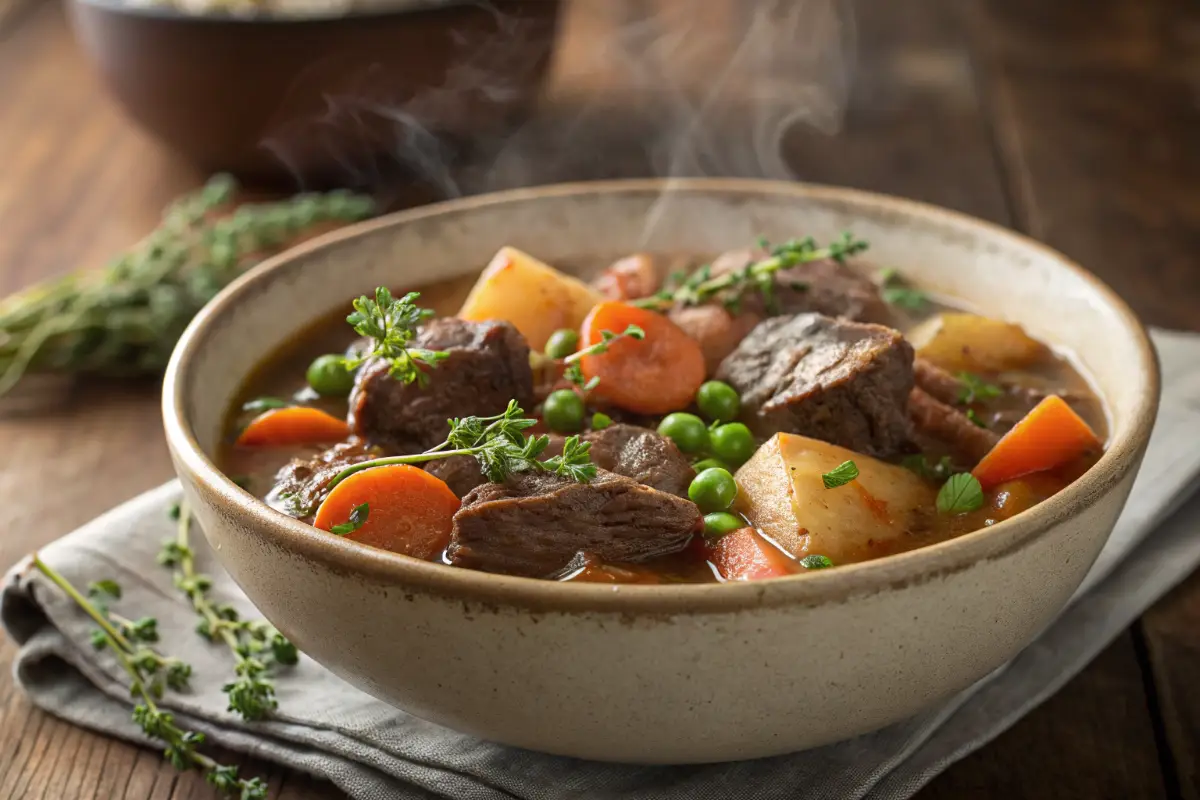
kcalThis irish beef stew is the definition of cozy. Tender chunks of beef, sweet carrots, and buttery potatoes simmer in a rich, herb-infused gravy that’s perfect for chilly nights. It’s an easy one-pot meal that feeds a crowd and leaves everyone satisfied.
Keep the screen of your device on
Ingredients
2 pounds beef chuck, cut into 1.5-inch cubes
3 tablespoons all-purpose flour
2 tablespoons olive oil
1 large yellow onion, diced
4 cloves garlic, minced
4 cups low-sodium beef broth
1 pound baby potatoes, halved
4 large carrots, cut into 1-inch pieces
2 stalks celery, sliced
2 bay leaves
1 teaspoon dried thyme
1 teaspoon salt, plus more to taste
0.5 teaspoon black pepper
2 tablespoons tomato paste
1 tablespoon fresh parsley, chopped (for garnish)
Directions
- Start by patting those beef cubes dry with a paper towel, then toss them with the flour until lightly coated.
- This helps create a beautiful crust and thickens the stew later.
- Heat the olive oil in a large Dutch oven or heavy pot over medium-high heat.
- Working in batches to avoid crowding, brown the beef on all sides, about 3-4 minutes per batch.
- Don’t rush this step; that deep brown color equals deep flavor.
- Transfer the browned beef to a plate.
- In the same pot, add the diced onion and cook for 3-4 minutes until softened.
- Add the minced garlic and cook for another minute until fragrant.
- Stir in the tomato paste and cook for 1 minute more.
- Now, pour in a splash of the beef broth to deglaze the pot, scraping up all those delicious browned bits from the bottom. This is where so much flavor lives.
- Return the browned beef and any accumulated juices to the pot
- Add the remaining beef broth, halved potatoes, carrot pieces, sliced celery, bay leaves, dried thyme, salt, and pepper.
- Give everything a good stir. Bring the mixture to a boil, then immediately reduce the heat to low, cover the pot, and let it simmer gently for about 1.5 to 2 hours.
- You’ll know it’s ready when the beef is fork-tender and the vegetables are soft.
- Once the stew has reached that perfect tenderness, remove the bay leaves.
- Taste and adjust the seasoning with more salt or pepper if needed.
- For a richer finish, you can stir in a tablespoon of butter, but it’s delicious without. Ladle the stew into bowls, garnish with fresh parsley, and serve immediately.
Notes
- For extra depth, add a teaspoon of Worcestershire sauce (check label for gluten-free if needed) with the broth.
- If you prefer a thicker gravy, mix 1 tablespoon cornstarch with 2 tablespoons cold water and stir into the simmering stew for the last 10 minutes.
- This stew tastes even better the next day as the flavors continue to meld.
- Feel free to substitute beef chuck with stewing beef, but avoid lean cuts as they can become tough with long cooking.
- For a quicker version, use a pressure cooker: cook on high pressure for 35 minutes with a natural release.
Nutrition Facts
- Total number of serves: 6
- Calories: 385kcal
- Fat: 6g
- Cholesterol: 0.95mg
- Sodium: 0.620mg
- Carbohydrates: 28g
- Fiber: 4g
- Sugar: 5g
- Protein: 32g
- Vitamin A: 120IU
- Vitamin C: 15mg
- Calcium: 6mg
- Iron: 24mg
Like this recipe?
Follow @wikitasty on Pinterest
FAQS
Absolutely! Brown the beef and sauté the aromatics first, then transfer everything to your slow cooker. Cook on low for 7-8 hours or high for 4-5 hours for tender, flavorful results.
Beef chuck is ideal because it has enough marbling to stay moist and become tender during long, slow cooking. Avoid lean cuts like sirloin.
The flour coating on the beef helps, but if you want it thicker, make a slurry with 1 tablespoon cornstarch and 2 tablespoons cold water. Stir it in during the last 15 minutes of simmering.
Yes, it freezes beautifully! Cool completely, store in airtight containers or freezer bags for up to 3 months. Thaw overnight in the fridge before reheating gently on the stove.
Tough beef usually means it hasn’t cooked long enough. Keep it at a gentle simmer until the meat is fork-tender. Rushing the process over high heat can cause the proteins to tighten.
Definitely! Parsnips, turnips, or green beans work well. Add harder veggies with the potatoes and carrots, and quicker-cooking veggies like peas in the last 10 minutes.
A Little Story from My Kitchen
This recipe reminds me of my first winter in New York. I was missing the hearty meals from home, so I set out to create a stew that felt like a hug. After a few tries, this version emerged: deeply savory, comforting, and simple enough for a weeknight. It’s become my dish for sharing with friends on snowy evenings, proof that the best meals are often the simplest ones made with care.
Health Benefits of This Recipe
This irish beef stew is more than just comfort food. Beef provides high-quality protein and iron, essential for energy. Carrots and potatoes offer vitamins A and C, plus fiber for digestion. Cooking with herbs like thyme adds antioxidants. By using lean beef and loading up on veggies, you create a balanced, nourishing meal that fuels your body while satisfying your soul.
Closing Thoughts
There you have it, friends: my beloved irish beef stew, ready to become your new favorite. It’s the kind of meal that slows you down, fills your kitchen with incredible aromas, and leaves everyone at the table feeling cared for. I hope it brings as much joy to your home as it does to mine.
If you loved this, you might also enjoy exploring more cozy classics like a hearty pot roast or a creamy soup. Now, grab your pot, put on some music, and let’s get cooking. I can’t wait to hear how it turns out for you!