
Last Updated on February 19, 2026 by Souhail
There is something magical about the smell of warm bread filling a small kitchen in the West Village. I remember walking home one chilly March evening, my hands buried deep in my coat pockets, when the scent of butter and baking flour hit me. It reminded me of my grandmother’s kitchen in County Cork, though I was actually just passing a tiny bakery near Hudson Street. That smell inspired me to perfect my own version of irish soda bread, and I am so excited to share it with you today.
This isn’t just a festive dish for March 17. It is a comforting treat that fits perfectly into everyday life, whether you need a quick weeknight meal accompaniment or a special weekend breakfast. The flavor profile is wonderfully simple, featuring a tangy buttermilk note balanced by a slightly sweet, dense crumb.
What makes this recipe so special is the lack of yeast. You do not need to wait for dough to rise. You can mix it up and have it in the oven in minutes, making it a lifesaver for unexpected guests or last-minute dinner plans.
Table of contents
Why This Simple Loaf Works So Well
You might wonder why this bread holds up without yeast. It is all about chemistry. The baking soda reacts with the buttermilk to create carbon dioxide, which lifts the dough. Here is why you will love it.
- Speed: You can bake this in under an hour from start to finish.
- Texture: It creates a crusty exterior with a tender, dense interior.
- Customization: It handles add-ins like raisins or seeds beautifully.
- Dietary Friendly: It is easily adapted for gluten-free diets using alternative flours.
If you enjoy experimenting with quick breads, you might also love my Homemade Pumpkin Bread Recipe which uses a similar mixing method for a moist treat.
Let’s Get That Crust Perfect
Baking bread can be intimidating, but soda bread is forgiving. Here is how to ensure yours turns out golden and delicious every single time.
- Do Not Overmix: Mix the dough until it just comes together. Overworking it makes the bread tough.
- Cold Butter: Keep your butter cold until it hits the oven. This creates steam pockets for a better crumb.
- Real Buttermilk: Use cultured buttermilk for the proper tang and chemical reaction.
- Sharp Knife: Cut a deep cross on top to help heat penetrate the center.
If you are curious about how different leavening agents affect texture, check out my notes on fermentation in this Sourdough Pumpkin Bread Recipe. It highlights why soda bread is the king of speed.
Variants of the Recipe
This base recipe is a canvas for your creativity. You can tweak flavors to match your mood or dietary needs without compromising the texture.
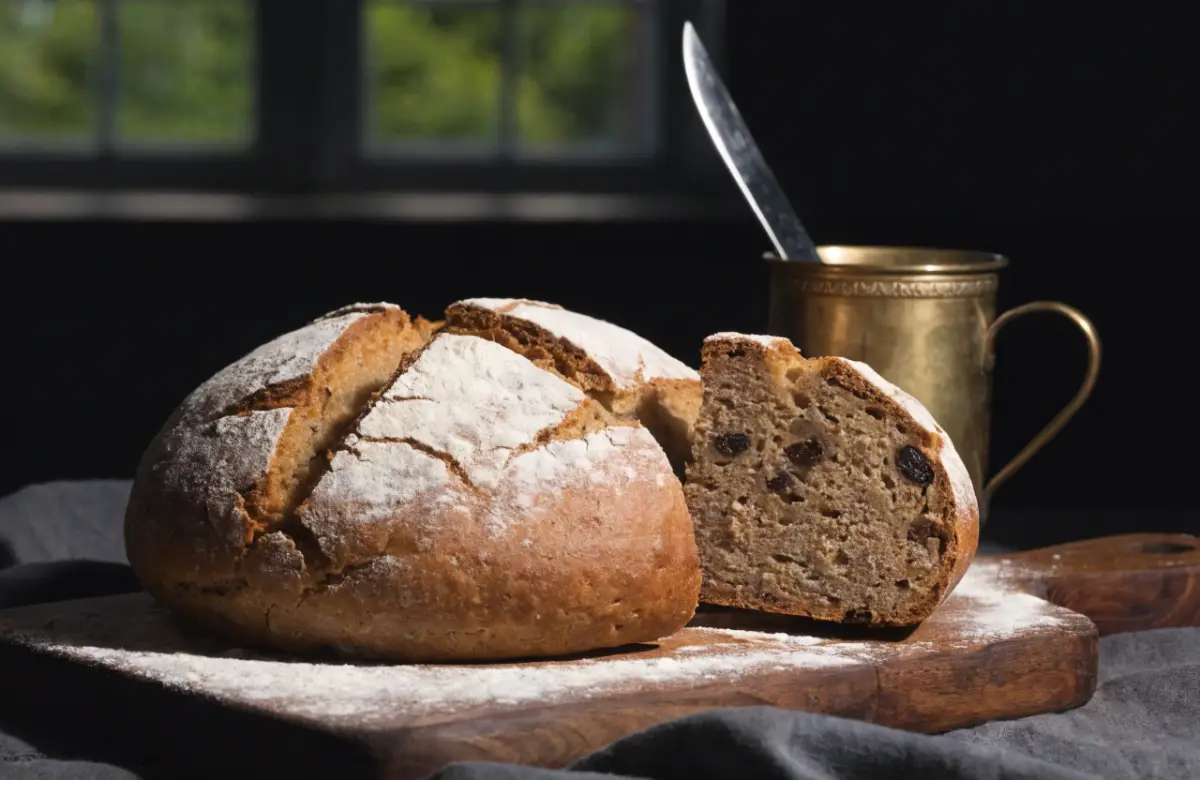
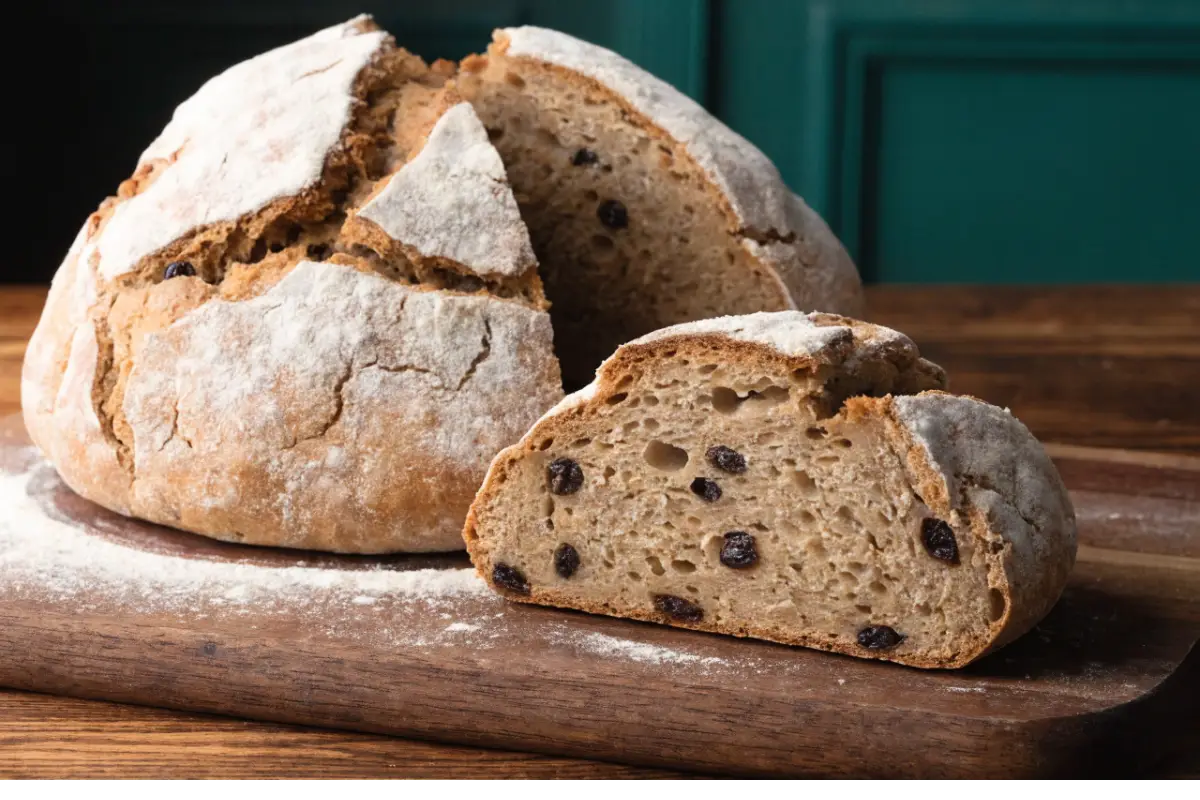
Sweet and Fruity Add half a cup of raisins or currants to the dry ingredients. This traditional version adds pockets of sweetness that pair beautifully with salted butter. The fruit plumps up during baking, keeping the bread moist.
Savory Herb and Cheese Skip the sugar and add chopped rosemary and sharp cheddar cheese. This version works well as a side for soups or stews. The cheese melts into the crumb, creating a savory richness.
Gluten-Free Adaptation Swap the all-purpose flour for a gluten-free blend that includes xanthan gum. You may need to add a tablespoon more buttermilk to achieve the right consistency. The texture will be slightly more crumbly but still delicious.
Serving Suggestions
This bread shines when served warm with plenty of salted butter. It pairs exceptionally well with hearty soups like potato leek or beef stew. For a party spread, slice it thinly and serve alongside my Mini Pretzel Bites Recipe for a savory snack table. You can also toast slices and top them with avocado and egg for a robust breakfast. The crust holds up well to toppings, making it versatile for brunch or dinner.
Storage and Reheating Instructions
Store the bread in an airtight container at room temperature for up to three days. Do not refrigerate it, as this dries out the crumb. To reheat, wrap slices in foil and warm them in a 350°F oven for ten minutes. You can also toast slices lightly. For longer storage, wrap the whole loaf tightly in plastic wrap and freeze for up to one month. Thaw at room temperature before reheating.
Creative Uses for the Recipe
Leftover soda bread makes excellent breadcrumbs for coating chicken or fish. You can also use thick slices as a base for open-faced sandwiches. If you are planning a full holiday menu, this bread complements sweet treats nicely. Consider serving it alongside St. Patrick’s Day Sugar Cookies for a balanced dessert table that offers both fruity and sweet options. It is a great way to use every crumb.
How to Make It
Making this bread is straightforward. You start by mixing your dry ingredients in a large bowl. Cut in the cold butter until it looks like coarse crumbs. Pour in the buttermilk and stir gently. Turn the dough onto a floured surface and shape it into a round. Place it on a baking sheet and cut a deep cross on top. Bake until golden brown and hollow sounding when tapped. Let it cool slightly before slicing to let the steam escape.

Irish Soda Bread
This authentic irish soda bread is easy to make without yeast. It features a crispy crust and soft interior, perfect for any occasion.
8
servings15
minutes45
minutes210
kcalKeep the screen of your device on
Ingredients
4.0 cups all-purpose flour
1.0 teaspoon baking soda
1.0 teaspoon salt
1.0 tablespoon sugar
4.0 tablespoons cold butter
1.5 cups buttermilk
Directions
- Preheat your oven to 425°F and line a baking sheet with parchment paper.
- Combine the flour, baking soda, salt, and sugar in a large mixing bowl.
- Cut the cold butter into the dry mixture until it resembles coarse crumbs.
- Pour in the buttermilk and stir gently until the dough just comes together.
- Turn the dough onto a floured surface and shape it into a round loaf.
- Place the loaf on the prepared baking sheet and cut a deep cross on top.
- Bake for 45 minutes until the crust is golden and the bottom sounds hollow when tapped.
- Cool on a wire rack for 10 minutes before slicing.
Notes
- Ensure butter is cold for the best texture.
- Do not overmix the dough to avoid toughness
- .Use cultured buttermilk for proper rise.
- Store at room temperature for best freshness.
- Freeze leftovers for up to one month.
- Add raisins for a traditional sweet touch
Nutrition Facts
- Total number of serves: 8
- Calories: 210kcal
- Fat: 10g
- Carbohydrates: 32g
- Fiber: 1g
- Sugar: 2g
- Protein: 5g
Like this recipe?
Follow @wikitasty on Pinterest
FAQS
Yes, you can add one tablespoon of vinegar to regular milk and let it sit for five minutes to mimic buttermilk.
This usually happens if the dough was overmixed. Handle it gently to keep it tender.
Yes, use a gluten-free flour blend with xanthan gum to replicate the structure.
Tap the bottom of the loaf. It should sound hollow, and the crust should be deep golden brown.
No, this recipe relies on baking soda for leavening. Adding yeast would change the texture and timing.
Use a serrated knife and let the bread cool slightly so it does not crumble too much.
A Bit of History
Soda bread originated in Ireland in the 1800s when baking soda became available. Soft wheat grown in Ireland did not work well with yeast, so people used baking soda and buttermilk instead. It became a staple because it was cheap and quick. Making it connects me to that history every time I tie my apron.
Join the Conversation
I would love to see your creations. Tag me on social media when you bake this loaf. Leave a comment below to tell me about your add-ins. Your feedback helps our community grow.
Final Thoughts
This loaf is a staple in my kitchen year-round. It brings warmth and comfort to any table. I hope you enjoy baking it as much as I do. If you want more festive ideas, try my St. Patrick’s Day Cake Recipe for a sweet finish to your meal. Happy baking!