
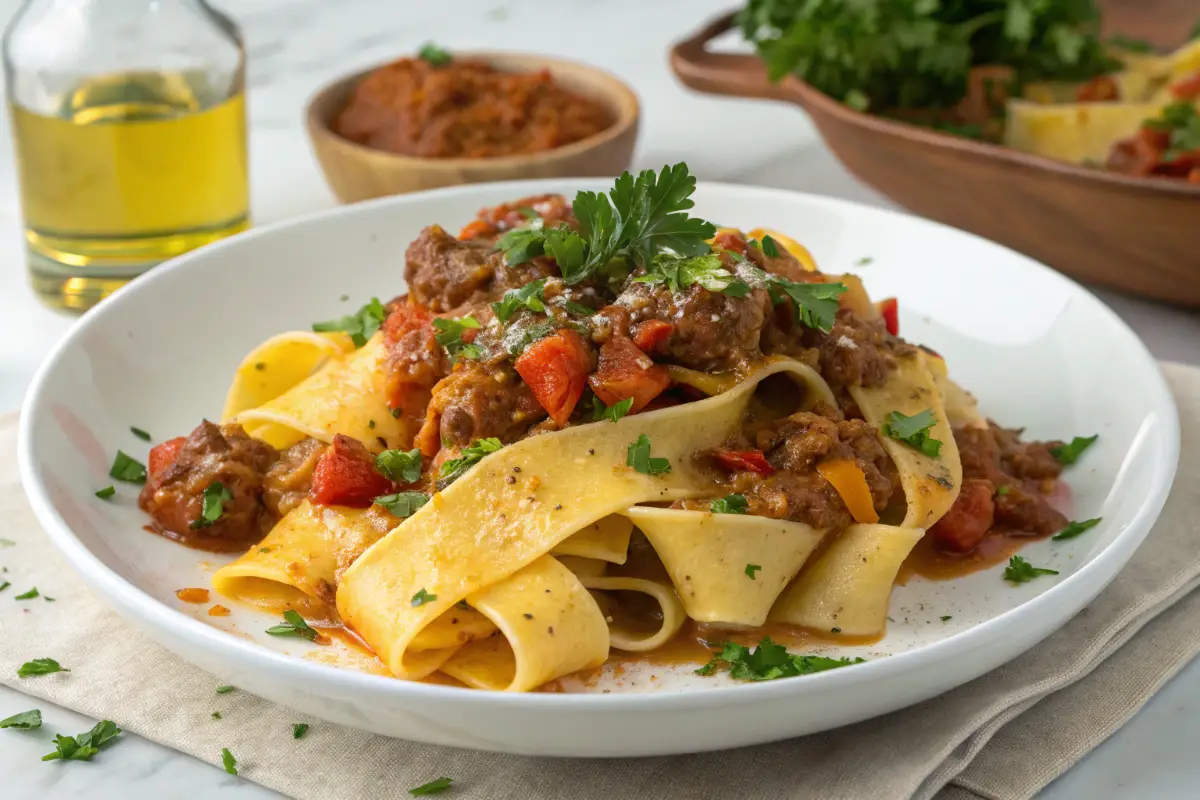
- Slow-simmered lamb yields fork-tender meat and deep, layered savory flavor, creating a rustic yet elegant ragù.
- Key techniques: sear, deglaze, and maintain a bare simmer to develop fond and prevent tough meat.
- Pappardelle's wide ribbons catch and hold the rich tomato-lamb sauce for a perfect, comforting bite every forkful.
- Make-ahead friendly and versatile: improves after a day refrigerated, freezes well, and adapts to vegetarian, spicy, or lighter broth variations.
Last Updated on April 3, 2026 by Souhail
There is something undeniably sophisticated about pulling a pot of slow-simmered meat off the stove and tossing it with wide, ribbon-like noodles. Pappardelle with Spring Lamb Ragù captures that exact feeling of rustic elegance without requiring a culinary degree to execute. The aroma of rosemary and seared lamb filling your kitchen is the kind of sensory experience that instantly makes a house feel like a home.
This dish fits perfectly into those moments when you want to impress guests or simply treat yourself to a high-quality meal after a long week. It bridges the gap between a casual Tuesday dinner and a special occasion feast with effortless grace. The combination of tender, shredded lamb and fresh herbs creates a flavor profile that is both deeply savory and surprisingly bright for the season.
You will love how the rich sauce clings to every fold of the pasta, delivering a mouthful of comfort in each bite. It is a recipe that rewards patience with incredible depth, proving that simple ingredients can create something truly extraordinary. Let’s get cooking and bring this restaurant-quality classic right to your dining table.
Table of contents
- Why This Ragù Stands Out From The Crowd
- Pro Tips For Perfect Lamb Ragù Every Time
- Making This Ragù Your Own With Simple Variations
- Serving Ideas That Elevate Your Dinner Table
- Storing And Reheating For Maximum Flavor
- Creative Ways To Enjoy Leftover Ragù
- How Do You Make IT
- FAQS
- The Story Behind Spring Lamb Ragù
- Optional Printable Shopping List
- Health Benefits Of This Nourishing Dish
- Your Next Culinary Adventure Awaits
Why This Ragù Stands Out From The Crowd
A truly excellent ragù relies on technique more than complexity, and this recipe delivers restaurant-level results through methodical layering of flavor. The secret lies in properly browning the lamb to develop those deep savory notes before building the sauce with aromatic vegetables and fresh spring herbs.
- Low and slow cooking: Simmering the lamb gently breaks down connective tissue for that signature fork-tender texture without drying out the meat.
- Wide pasta surface: Pappardelle’s broad ribbons catch and hold the rich tomato base better than thinner shapes, ensuring every bite is perfectly coated.
- Seasonal brightness: Fresh rosemary and a finish of lemon zest cut through the richness, creating a balanced flavor profile that feels appropriate for spring.
- Make-ahead friendly: This ragù actually improves after a day in the fridge, making it an ideal choice for stress-free entertaining or meal prep.
If you enjoy the comforting depth of other slow-cooked classics like this Irish stew recipe, you will appreciate how this lamb ragù builds similar layers of flavor with a distinctly Italian twist. The technique of braising meat until it shreds effortlessly is a fundamental skill that translates across many cuisines and seasons.
Pro Tips For Perfect Lamb Ragù Every Time
Success with this dish comes down to a few key techniques that elevate the final result from good to exceptional. Master these fundamentals and you will consistently produce a ragù that rivals any trattoria version.
- Sear properly: Pat the lamb completely dry before browning to ensure a golden crust rather than steaming, which builds the foundation of flavor for the entire sauce.
- Deglaze thoroughly: Use your red wine to scrape up every bit of fond from the bottom of the pot, as those caramelized bits contain concentrated flavor essential to the sauce.
- Simmer gently: Maintain the barest bubble during the long cook time to prevent the lamb from becoming tough or the sauce from reducing too quickly.
- Finish with acid: A small squeeze of fresh lemon juice or a sprinkle of zest at the end brightens the rich flavors and balances the dish perfectly.
When working with lamb, remember that herb pairings matter tremendously for balancing its distinctive flavor. If you enjoy experimenting with lamb and fresh herbs, you might also appreciate how mint complements the meat in this lamb chops with mint chimichurri recipe, which uses a similar principle of bright herbs cutting through richness.
Making This Ragù Your Own With Simple Variations
One of the greatest strengths of a well-constructed ragù is its adaptability to different ingredients, dietary needs, and personal preferences. This foundational recipe serves as a canvas for creative exploration while maintaining its core identity.
Vegetarian Mushroom Version
Swap the lamb for a mix of hearty mushrooms like cremini, shiitake, and portobello, chopped and seared until deeply browned. The umami richness of mushrooms mimics the savory depth of lamb while creating a completely plant-based dish that still feels substantial and satisfying.
Spicy Calabrian Twist
Add one to two teaspoons of Calabrian chili paste or red pepper flakes when sautéing the aromatics to introduce a gentle heat that complements the lamb beautifully. This variation adds complexity without overwhelming the delicate spring herbs that define the original recipe.
Gluten-Free Pasta Swap
Simply substitute your favorite gluten-free wide noodle or even polenta for the traditional pappardelle to accommodate dietary restrictions without sacrificing texture or flavor. The ragù itself is naturally gluten-free, making this an easy adaptation that doesn’t compromise the dish’s integrity.
Lighter Broth-Based Option
For a less rich version, reduce the tomato paste by half and add a cup of low-sodium chicken or vegetable stock to create a brothier consistency similar to a hearty soup. This approach works particularly well if you are looking for something reminiscent of comforting bowls like this Italian chicken soup recipe but with the distinctive flavor of lamb.
Serving Ideas That Elevate Your Dinner Table
Presenting this dish with intention transforms a simple meal into a memorable dining experience that feels special without being fussy. The goal is to enhance the ragù’s natural appeal with complementary textures and colors that make the plate visually stunning.
- Classic family-style: Serve the pasta and ragù tossed together in a large, warmed bowl with extra grated Pecorino Romano and fresh herbs scattered on top for guests to help themselves.
- Elegant plated portions: Twirl individual servings of pappardelle into neat nests, ladle the ragù generously over the top, and finish with a drizzle of high-quality olive oil and microgreens for a restaurant-worthy presentation.
- Rustic bread accompaniment: Place a basket of warm, crusty bread alongside the pasta to soak up every last drop of the luxurious sauce, ensuring nothing goes to waste.
Storing And Reheating For Maximum Flavor
Proper storage ensures your leftover ragù maintains its quality and can be enjoyed just as much as the first serving. This dish is remarkably forgiving and actually benefits from time, making it an excellent candidate for meal planning.
| Storage Method | Duration | Notes |
|---|---|---|
| Refrigerator | 3-4 days | Store sauce and pasta separately if possible to prevent the pasta from becoming mushy |
| Freezer | Up to 3 months | Freeze the ragù alone in airtight containers; thaw overnight before reheating |
| Counter | Not recommended | Do not leave at room temperature for more than 2 hours due to food safety |
Reheat gently on the stovetop over low heat, adding a splash of water or broth to loosen the sauce if it has thickened too much. Avoid microwaving at high power, which can cause the lamb to become tough and the sauce to separate unevenly.
Creative Ways To Enjoy Leftover Ragù
Leftovers present an opportunity for culinary creativity, allowing you to transform this classic dish into entirely new meals with minimal effort. These ideas extend the value of your cooking time while keeping dinners exciting throughout the week.
- Hearty breakfast hash: Sauté diced potatoes until crispy, then stir in warmed ragù and top with a fried egg for a substantial brunch that feels indulgent yet practical.
- Stuffed vegetable filling: Use the ragù as a filling for bell peppers or zucchini boats, top with cheese, and bake until bubbly for an easy weeknight dinner with built-in portion control.
- Gourmet grilled cheese: Spread a thin layer of ragù inside a sandwich with mozzarella and fontina, then grill until golden for a luxurious twist on a comfort food favorite.
- Pasta bake layer: Combine leftover ragù with cooked short pasta, top with béchamel and Parmesan, then bake until golden for a comforting casserole that feeds a crowd.
If you enjoy repurposing hearty dishes into breakfast meals, you might also like how this cottage cheese breakfast bowl recipe offers a lighter, protein-packed start to the day that balances richer meals throughout your week.
How Do You Make IT
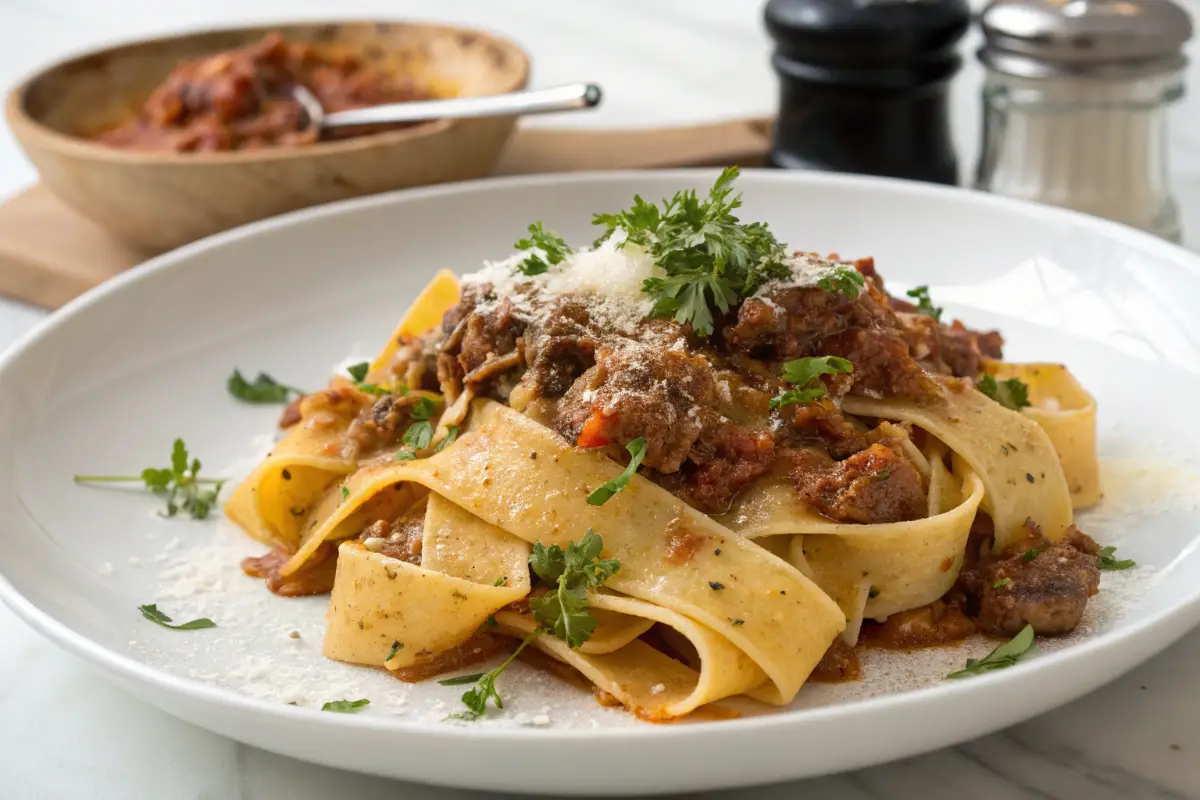

Pappardelle with Spring Lamb Ragù
A rich, slow-simmered Pappardelle with Spring Lamb Ragù that delivers tender, shredded lamb in a vibrant tomato-herb sauce, perfect for cozy dinners or impressive entertaining. This homemade version brings rustic Italian elegance to your table with straightforward steps and pantry-friendly ingredients.
4
servings20
minutes2
hours30
minutes580
kcalKeep the screen of your device on
Ingredients
1.5 pounds boneless lamb shoulder, cut into 1-inch cubes
2 tablespoons olive oil
1 medium yellow onion, finely diced
2 medium carrots, finely diced
2 celery stalks, finely diced
4 garlic cloves, minced
2 tablespoons tomato paste
0.5 cup dry red wine
1 can (28 oz) crushed tomatoes
1 cup low-sodium chicken or vegetable stock
2 sprigs fresh rosemary, leaves stripped and chopped
1 bay leaf
1 teaspoon kosher salt, plus more to taste
0.5 teaspoon freshly ground black pepper
1 pound fresh or dried pappardelle pasta
0.25 cup freshly grated Pecorino Romano, plus more for serving
1 teaspoon finely grated lemon zest
2 tablespoons fresh parsley, chopped, for garnish
Directions
- Pat the lamb cubes completely dry with paper towels, then season generously with salt and pepper.
- Heat the olive oil in a large Dutch oven or heavy-bottomed pot over medium-high heat until shimmering.
- Add the lamb in a single layer, working in batches if necessary to avoid crowding, and sear until deeply browned on all sides, about 3-4 minutes per batch.
- Transfer the browned lamb to a plate and set aside.
- Reduce the heat to medium and add the diced onion, carrot, and celery to the pot.
- Sauté, stirring occasionally, until the vegetables are softened and beginning to caramelize, about 6-8 minutes.
- Stir in the minced garlic and tomato paste, cooking for another minute until fragrant and the paste darkens slightly.
- Pour in the red wine to deglaze the pot, scraping up any browned bits from the bottom with a wooden spoon.
- Return the seared lamb and any accumulated juices to the pot. Add the crushed tomatoes, stock, chopped rosemary, and bay leaf.
- Stir to combine and bring the mixture to a gentle simmer.
- Reduce the heat to low, cover the pot partially with a lid, and let the ragù simmer gently for 2 to 2.5 hours, stirring occasionally, until the lamb is fork-tender and easily shreds.
- About 15 minutes before the ragù is finished, bring a large pot of salted water to a boil and cook the pappardelle according to package directions until al dente.
- Reserve 1 cup of pasta water before draining.
- Remove the bay leaf from the ragù. If the sauce seems too thick, add a splash of the reserved pasta water to reach your desired consistency.
- Stir in the grated Pecorino Romano and lemon zest.
- Add the drained pappardelle directly to the pot with the ragù and toss gently to coat the pasta thoroughly with the sauce.
- Serve immediately, garnished with additional Pecorino Romano and fresh parsley.
Notes
- For deeper flavor, prepare the ragù a day ahead and refrigerate overnight; the flavors will meld and intensify.
- If using dried pappardelle, be sure to salt the pasta water generously to season the noodles from within.
- Substitute beef chuck for lamb if preferred, adjusting cooking time as needed for tenderness.
- Fresh herbs make a significant difference here; avoid dried rosemary if possible for the brightest flavor.
Nutrition Facts
- Total number of serves: 4
- Calories: 580kcal
- Fat: 22g
- Saturated Fat: 7g
- Cholesterol: 0.95mg
- Sodium: 0.680mg
- Carbohydrates: 0.58g
- Fiber: 5g
- Sugar: 8g
- Protein: 38g
Like this recipe?
Follow @wikitasty on Pinterest
FAQS
Yes, absolutely. After browning the lamb and sautéing the vegetables on the stovetop, transfer everything to a slow cooker. Cook on low for 7-8 hours or high for 4-5 hours until the lamb is tender. This method is perfect for hands-off cooking while you tackle other tasks.
Lamb shoulder is ideal because it has enough fat and connective tissue to break down during long cooking, resulting in that signature melt-in-your-mouth texture. Avoid lean cuts like leg of lamb, which can become dry and tough with extended simmering.
The ragù freezes beautifully for up to three months when stored in airtight containers. Freeze the sauce separately from the pasta for best results, then thaw overnight in the refrigerator before reheating gently on the stovetop.
The ragù itself is naturally gluten-free, but traditional pappardelle contains wheat. To make the entire dish gluten-free, simply swap in your favorite gluten-free wide noodle or serve the ragù over creamy polenta for a delicious alternative.
The key is low, gentle heat and adequate cooking time. Maintain a bare simmer rather than a rolling boil, and allow the full 2 to 2.5 hours for the connective tissue to break down properly. Rushing this step is the most common mistake that leads to tough meat.
A medium-bodied red wine with good acidity complements the richness of the lamb without overwhelming it. Consider a Chianti Classico, Montepulciano d’Abruzzo, or a Côtes du Rhône for a harmonious pairing that enhances both the food and the wine.
The Story Behind Spring Lamb Ragù
Ragù has deep roots in Italian culinary tradition, with regional variations reflecting local ingredients and cultural influences across the peninsula. While the more famous ragù alla Bolognese hails from Emilia-Romagna, this spring-focused lamb version draws inspiration from central and southern Italy, where lamb is celebrated during Easter and the warmer months.
The use of pappardelle, with its broad, ribbon-like shape, is intentional and historical. These wide noodles were designed to catch and hold hearty, chunky sauces, ensuring that each forkful delivers a balanced combination of pasta and ragù. It is a testament to the Italian philosophy that form should always follow function in the kitchen.
Spring lamb, with its milder flavor and tender texture compared to mature lamb, pairs beautifully with the bright herbs and tomatoes that signal the changing seasons. This dish embodies the Italian approach to eating with the calendar, honoring what is freshest and most flavorful at any given moment.
Optional Printable Shopping List
Produce
- 1 medium yellow onion
- 2 medium carrots
- 2 celery stalks
- 4 garlic cloves
- 1 lemon (for zest)
- Fresh rosemary (2 sprigs)
- Fresh parsley (for garnish)
Meat & Dairy
- 1.5 pounds boneless lamb shoulder
- Pecorino Romano cheese (for grating)
Pantry
- Olive oil
- Tomato paste (2 tablespoons)
- Dry red wine (0.5 cup)
- Crushed tomatoes (28 oz can)
- Low-sodium chicken or vegetable stock (1 cup)
- Kosher salt
- Black pepper
- Bay leaf (1)
Pasta
- 1 pound fresh or dried pappardelle
Health Benefits Of This Nourishing Dish
| Nutrient or Ingredient | Benefit |
|---|---|
| Lamb shoulder | High-quality protein and iron for muscle health and energy |
| Tomatoes | Rich in lycopene, an antioxidant that supports heart health |
| Rosemary | Contains anti-inflammatory compounds and aids digestion |
| Garlic | Supports immune function and cardiovascular health |
| Olive oil | Provides heart-healthy monounsaturated fats |
This dish offers a balanced combination of macronutrients that keep you satisfied and energized. The slow-cooking method helps preserve nutrients while making the protein more digestible, and the inclusion of vegetables adds fiber and essential vitamins. Enjoying meals prepared with whole, seasonal ingredients like this supports both physical wellness and a deeper connection to your food.
Your Next Culinary Adventure Awaits
There is a particular joy in mastering a dish that feels both timeless and personal, and Pappardelle with Spring Lamb Ragù delivers exactly that experience. Once you have perfected this recipe, you will find yourself returning to it season after season, perhaps tweaking the herbs or adjusting the richness to suit your mood.
If you enjoyed the comforting depth of this ragù, you might also love exploring other hearty, slow-cooked meals that bring people together around the table. Consider trying these cottage cheese pancakes for a delightful weekend brunch that offers a lighter contrast to this rich dinner.
Save this recipe for your next dinner party or cozy night in, and let the aromas of rosemary and slow-simmered lamb transform your kitchen into an Italian trattoria. Pin this for later and share your creations with friends who appreciate the art of homemade comfort food.