
Last Updated on February 24, 2026 by Souhail
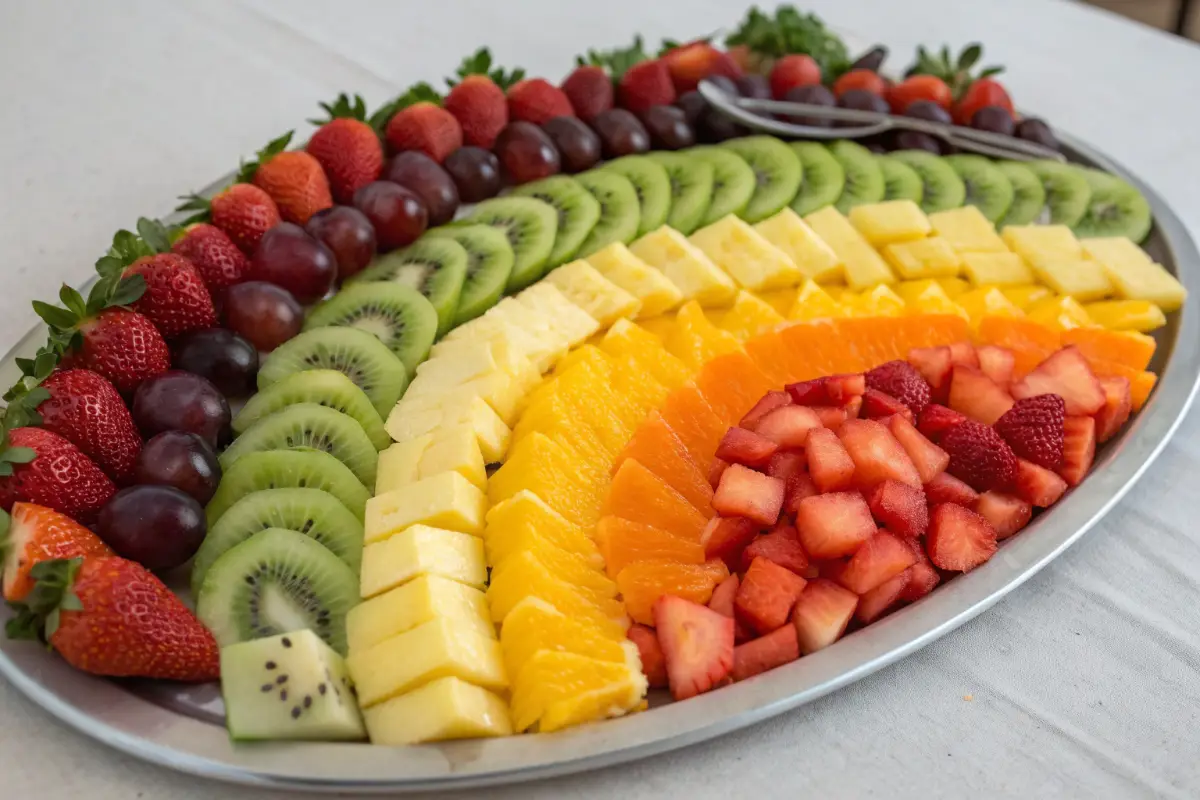
Living in New York City means my life is often a blur of subway rides, tight deadlines, and the constant hum of millions of people. But no matter how chaotic my week gets, I always find my center in the kitchen, specifically when I am arranging something bright, fresh, and utterly joyful. There is something magical about taking a pile of ordinary produce and turning it into a rainbow fruit platter that looks like it belongs in a storybook.
I remember the first time I made one for a potluck in my tiny West Village apartment. I was nervous that it would look amateurish next to the fancy catered spreads, but the moment I set it down, the room went quiet before erupting in oohs and aahs. It wasn’t just about the taste, though the burst of sweet strawberry or tangy kiwi is incredible; it was about the visual celebration.
This recipe fits perfectly into everyday life as a healthy afternoon snack, a stunning addition to a festive brunch, or a comforting treat that reminds us to eat the colors of the earth. The flavor profile is a symphony of sweet, tart, juicy, and crisp notes that dance on your tongue, making this dish special because it appeals to every single sense you have.
Table of contents
- Why This Colorful Creation Works So Well
- Let’s Chat About Customizing Your Platter
- Pro Tips for Success: Making Your Platter Pop
- Variants of the Recipe
- Serving Suggestions
- Storage and Reheating Instructions
- Creative Uses for the Recipe
- How Do You Make It
- FAQS
- A Little Story About Color
- Health Benefits of the Recipe
- Final Thoughts
Why This Colorful Creation Works So Well
You might be thinking, isn’t this just cutting up fruit? Well, yes and no. While the concept is simple, the execution is what turns a bowl of chopped snacks into a show-stopping centerpiece. Here is why this approach to arranging fruit is a total game-changer for your hosting duties:
- Visual Appeal Drives Appetite: We eat with our eyes first. Arranging fruit by color creates a psychological trigger that makes the food look fresher and more appetizing than a random mix in a bowl.
- Customizable for Every Diet: This is naturally vegan, gluten-free, dairy-free, and nut-free, making it the safest and most inclusive dish you can bring to any gathering.
- Seasonal Flexibility: You are not locked into specific fruits. If mangoes are on sale, swap them for peaches. If berries are out of season, use citrus segments. The rainbow structure remains the same.
- Texture Variety: By carefully selecting fruits with different textures, from the crunch of an apple to the creaminess of a banana, you keep every bite interesting.
Let’s Chat About Customizing Your Platter
One of the best things about this dish is how forgiving it is. If you are catering to a low-sugar diet, focus heavily on the green and red sections with berries and melons while skipping the grapes or pineapple. For a tropical twist, lean into the yellow and orange sections with papaya, passion fruit, and mango.
If you want to add a protein element for a more filling snack, you can serve skewers alongside the platter with cubes of mild cheese or marshmallows, though purists (like me on a hot summer day) prefer the fruit to stand alone.
And if you really want to elevate the experience, consider serving it with a creamy companion; my homemade fruit dip recipe pairs absolutely perfectly with these fresh slices, adding a rich contrast that guests will love.
Pro Tips for Success: Making Your Platter Pop
Creating a masterpiece doesn’t require culinary school, but it does require a few tricks of the trade that I have picked up over years of styling food for photos and parties.
First, always wash and thoroughly dry your fruit before cutting. Water is the enemy of longevity; excess moisture will make your berries soggy and dilute the flavors of the softer fruits. I like to use a salad spinner for the berries and pat everything else down with clean paper towels. Second, think about the order of operations. Cut fruits that oxidize quickly, like apples and bananas, last. When you do cut them, give them a quick toss in a little lemon or lime juice to keep them from turning brown.
Third, consider the size of your cuts. Uniformity is key for a professional look. Try to cut your melon balls, strawberry slices, and grape clusters so they are roughly the same size, which makes the rainbow bands look neat and intentional. Finally, chill your serving platter before you start arranging.
A cold plate helps keep the fruit crisp and refreshing, especially if you are setting this out for a while before guests arrive.
Variants of the Recipe
While the classic rainbow arrangement is timeless, there are endless ways to reinterpret this concept to suit different themes or dietary needs. Changing the format or the accompanying elements can completely transform the experience.
The Skewer Station Instead of laying the fruit flat on a platter, thread the colorful pieces onto wooden or bamboo skewers. Arrange them in a tall vase or a block of floral foam covered in foil. This variant changes the texture experience slightly as you get multiple flavors in one bite depending on how you stack them.
It is also incredibly practical for standing cocktail parties where guests do not want to juggle a plate and a drink. You can group them by color or create mini-rainbows on each stick. This is a fantastic alternative if you are already serving sweet treats like rainbow sugar cookies and want a lighter, handheld option to balance the menu.
The Chocolate-Dipped Delight For a more decadent treat, prepare your fruit as usual but offer a selection of dipping sauces. Melt dark, milk, and white chocolate and place them in small bowls around the perimeter of the platter. This variation caters to those with a sweet tooth and adds a rich, creamy contrast to the acidic and watery notes of the fresh fruit.
It works particularly well for evening dessert tables or holiday gatherings where indulgence is the name of the game. If you love sprinkles, you could even dip the ends of the fruit in chocolate and roll them in colorful jimmies, mimicking the vibe of rainbow sprinkle cookies but with a fresh twist.
The Savory Herb Infusion This might sound unusual, but hear me out. Sprinkle finely chopped fresh mint, basil, or even a pinch of chili-lime salt over specific sections of the fruit. The herbs enhance the natural sweetness and add a sophisticated aromatic layer. This version is perfect for adult gatherings or summer barbecues where you want something refreshing that isn’t cloyingly sweet.
The basil pairs beautifully with watermelon and strawberries, while mint lifts the flavor of melons and grapes. It’s a great palate cleanser if your main course is something hearty, like those savory chicken sausage balls that are always a hit at my brunches.
Serving Suggestions
Presenting your rainbow fruit platter is half the fun. I love using a large, white ceramic platter or a rustic wooden board to make the colors truly pop against a neutral background. If you want to elevate the presentation, scatter some edible flowers like pansies or nasturtiums across the gaps between the fruit rows. For a cohesive meal, serve this alongside a creamy vanilla yogurt dip or a honey-lime drizzle.
It pairs wonderfully with light savory dishes too; imagine serving this after a spicy taco night or alongside a quinoa salad for a balanced brunch. If you are hosting kids, consider placing small flags in the different color sections to label the fruits, turning the snack into an educational game.
And for a truly monochromatic party theme, you could pair this fresh display with something bold like green velvet brownies to play up the green section of your rainbow!
Storage and Reheating Instructions
Let’s be real: you probably won’t have leftovers if this platter is at a party, but if you do, storage is tricky. Fruit releases water as it sits, so do not try to store the assembled platter for more than a few hours. Instead, store the cut fruit in separate airtight containers in the refrigerator.
Most cut fruit will stay fresh for 2 to 3 days, though bananas and apples are best eaten within 24 hours. There is no reheating involved here; this dish is meant to be enjoyed cold and crisp.
If the fruit looks a little dry after being in the fridge, a tiny squeeze of fresh citrus juice right before serving can wake up the flavors and restore some shine.
Creative Uses for the Recipe
Think beyond the snack table. Use the components of this platter to top off morning oatmeal or Greek yogurt parfaits. You can blend the leftover odds and ends into a vibrant smoothie that is packed with vitamins.
For a fun weekend activity, set up a “build your own rainbow” station for children’s birthday parties, letting them arrange their own fruit on plates. You can even freeze the grapes and melon balls to use as natural ice cubes in sparkling water or lemonade, keeping drinks cold without diluting them.
How Do You Make It

Rainbow Fruit Platter
Create a stunning and healthy rainbow fruit platter that bursts with color and flavor. This easy-to-follow guide helps you arrange seasonal fruits into a beautiful spectrum that is perfect for parties, snacks, or a bright start to your morning.
8-10
servings25
minutes00
minutes85
kcalKeep the screen of your device on
Ingredients
2 cups strawberries, hulled and sliced
1 cup raspberries
1 cup blackberries
2 oranges, peeled and segmented
1 cup pineapple chunks, fresh
1 cup mango cubes, fresh
2 kiwis, peeled and sliced into rounds
1 cup green grapes, washed
1 cup blueberries
1 tablespoon fresh lemon juice
Fresh mint leaves for garnish (optional)
Directions
- Start by washing all your fruit gently under cool running water.
- Be extra careful with the berries so you don’t bruise them, and make sure to dry everything thoroughly with paper towels or a salad spinner because water is the enemy of a crisp platter.
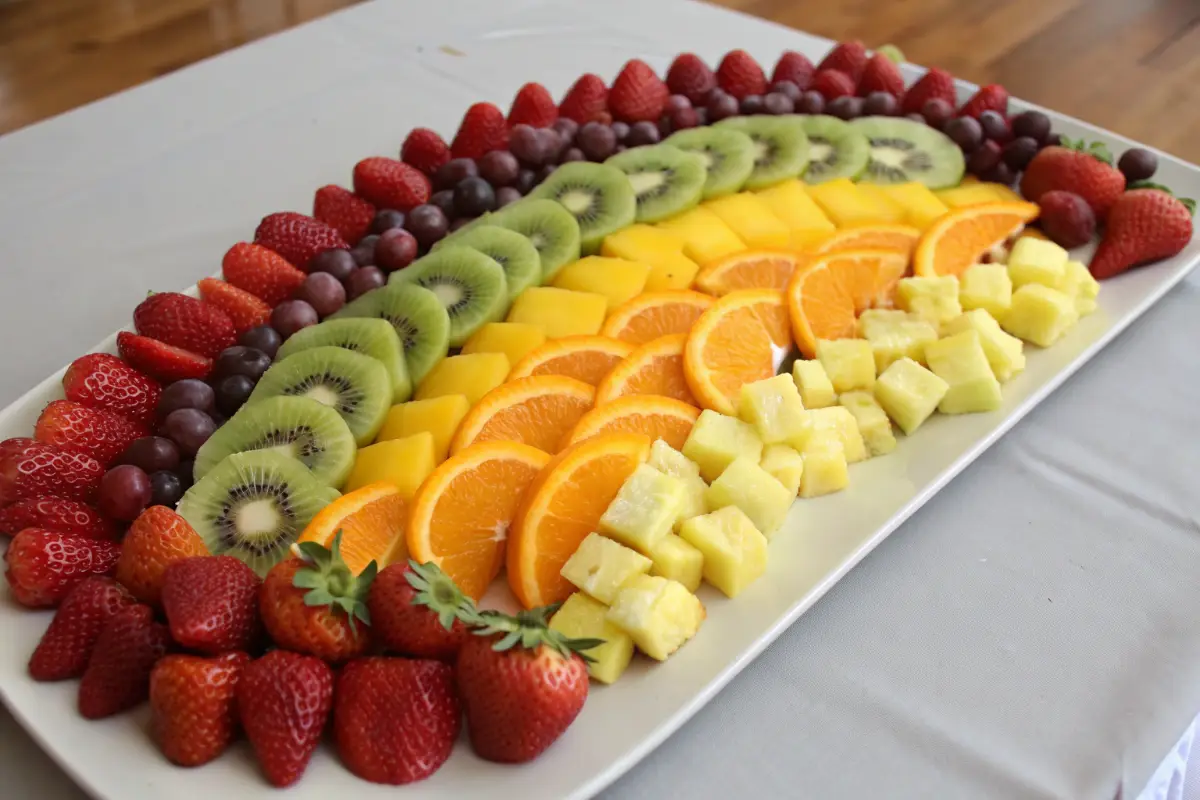
- Next, prepare your red section by hulling the strawberries and slicing them uniformly, then arrange them in a curved line on one side of your large serving platter.
- Follow this immediately with the raspberries and blackberries, filling in the gap to create a deep red-to-purple gradient.
- Move on to the warm colors by peeling your oranges and separating them into segments, removing any tough white pith, and placing them next to the berries.
- Chop your fresh pineapple and mango into bite-sized cubes that are similar in size to the orange segments, and arrange them in bright yellow and orange bands.
- For the green section, peel your kiwis and slice them into even rounds, tossing them lightly with a bit of lemon juice to prevent browning if you are prepping ahead.
- Place the kiwi slices next to the mango, followed by a generous row of crisp green grapes.
- Finish your spectrum with the blue and violet hues by scattering the blueberries along the inner curve or end of the platter to complete the rainbow effect.
- Take a step back and assess your work, filling in any sparse areas with extra berries or fruit pieces to ensure the colors look vibrant and continuous.
- Garnish the edges with fresh mint leaves if you like, and keep the platter chilled in the refrigerator until you are ready to serve it to your guests.
Notes
- Prevent Browning: Apples, pears, and bananas oxidize quickly. If you must include them, cut them at the very last minute and toss them in citrus juice.
- Seasonal Swaps: Feel free to substitute fruits based on what is in season. Nectarines work great for orange, and honeydew melon is a perfect substitute for green grapes.
- Serving Temperature: This platter tastes best when served ice cold. Chill your serving tray in the freezer for 10 minutes before assembling.
- Uniform Cuts: Try to keep all fruit pieces roughly the same size for a professional, polished look.
- Dipping Options: Serve with sides of honey, yogurt, or melted chocolate for added variety.
- Allergy Awareness: While naturally allergen-free, always check labels if serving pre-cut fruit from a store to ensure no cross-contamination.
Nutrition Facts
- Total number of serves: 10
- Calories: 85kcal
- Fat: 0g
- Potassium: 8mg
- Carbohydrates: 22g
- Fiber: 4g
- Sugar: 16g
- Protein: 1g
- Vitamin D: 95mg
Like this recipe?
Follow @wikitasty on Pinterest
FAQS
You can prep and cut most fruits up to 24 hours in advance if stored separately in airtight containers. However, assemble the actual platter no more than 2-3 hours before serving to maintain freshness and prevent sogginess.
Avoid fruits that turn brown very quickly like apples and bananas unless you treat them with acid and serve immediately. Also, avoid overly soft fruits like ripe figs or very soft plums as they can get mushy and bleed color onto other fruits.
The secret is drying the fruit thoroughly after washing. Additionally, do not add sugar or syrups until right before serving, as salt and sugar draw moisture out of the fruit cells.
Yes, most fruits like berries, mango, and pineapple freeze well. Spread them on a baking sheet to freeze individually before transferring to a bag. Note that the texture will change, making them better suited for smoothies or baking rather than eating raw later.
It can be, in moderation. Focus on lower glycemic index fruits like berries, kiwi, and melon, and limit high-sugar fruits like grapes, mango, and pineapple. Pairing the fruit with a protein source like nuts or yogurt can also help stabilize blood sugar.
Aim for bite-sized pieces that are easy to pick up with a fork or toothpick. Uniformity is key for aesthetics, so try to make your slices and cubes consistent in size and shape.
A Little Story About Color
I grew up in a household where dinner was often beige and brown. It wasn’t until I moved to New York and visited the Union Square Greenmarket that I realized food could be this vibrant. I bought a single pint of heirloom strawberries that were so red they looked painted, and golden beets that glowed like jewels. That day sparked my obsession with eating the rainbow. This platter isn’t just a recipe; it is my way of sharing that moment of discovery with you, proving that healthy food can be the most exciting thing on the table.
Health Benefits of the Recipe
This platter is a powerhouse of nutrition. By eating a variety of colored fruits, you are consuming a wide spectrum of antioxidants, including anthocyanins in the blue and red fruits, which support heart health, and carotenoids in the orange and yellow fruits, which are great for eye health.
The high fiber content aids digestion, while the massive dose of Vitamin C boosts your immune system. Plus, the high water content in many of these fruits helps keep you hydrated naturally.
Final Thoughts
There you have it, friends! A rainbow fruit platter that is as good for your soul as it is for your body. I hope this recipe brings a little bit of sunshine and a lot of smiles to your next gathering. Remember, cooking doesn’t always have to be complicated; sometimes the best dishes are the ones that let nature do the heavy lifting.
If you loved this, you might also enjoy my guide to making homemade granola parfaits or my tips for the perfect summer berry crisp. Now, go grab some fruit, put on your favorite playlist, and start building your own edible masterpiece. Happy eating!