
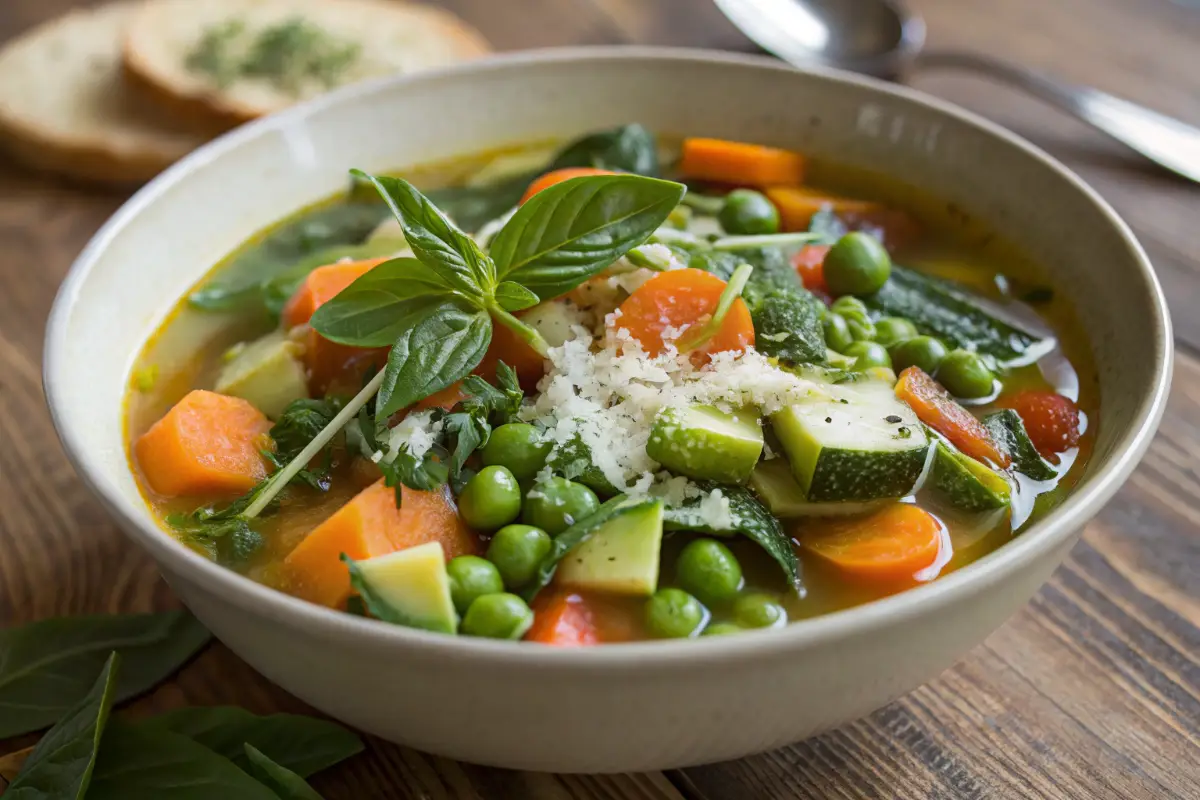
- Celebrates spring produce: tender asparagus, peas, zucchini, and fresh herbs make a bright, garden-fresh, nourishing soup.
- One-pot, weeknight-friendly recipe that's quick, meal-prep ready, naturally vegan or gluten-free, and easily customized with proteins or cream.
- Layer flavors: sauté aromatics first, add vegetables by cooking time, use quality broth, finish with lemon and herbs; flavors deepen overnight.
Last Updated on April 3, 2026 by Souhail
I still remember the first time I truly understood what spring tasted like, standing in my tiny Brooklyn kitchen while rain tapped gently against the windowpane. It wasn’t just about the flowers blooming outside; it was the moment I stirred a pot of Spring Minestrone and watched the bright green zucchini and delicate peas dance in the golden broth. That simple bowl of soup felt like a promise that the long, gray winter was finally behind us, replaced by something fresh and full of life.
This recipe has since become my go-to solution for those unpredictable days when the weather can’t decide if it wants to be sunny or chilly. It fits perfectly into our busy lives as an easy weeknight dinner that comes together quickly but tastes like you spent hours nurturing it on the stove. There is something deeply satisfying about chopping fresh vegetables and hearing them sizzle as they hit the hot oil, filling the entire apartment with an aroma that feels like a warm hug.
The flavor profile is a beautiful balance of earthy beans, sweet carrots, and the bright, grassy notes of fresh herbs that only appear this time of year. Every spoonful offers a different texture, from the soft, yielding cannellini beans to the slight crunch of asparagus tips that have been cooked just right. It is a dish that invites you to slow down, grab a crusty piece of bread, and savor the very essence of the season in a single, steaming bowl.
Table of contents
- Why This Spring Minestrone Will Become Your New Seasonal Favorite
- Secrets For Perfect Spring Minestrone Every Time
- Make It Your Own: Delicious Spring Minestrone Variations
- Perfect Pairings: How To Serve Your Spring Minestrone
- Keeping Your Spring Minestrone Fresh: Storage and Reheating Guide
- Beyond the Bowl: Creative Ways To Enjoy Spring Minestrone
- How Do You Make IT
- FAQS
- The Heart of Spring Minestrone: A Story in Every Bowl
- Your Printable Spring Minestrone Shopping List
- Nourishing Notes: Health Benefits of Spring Minestrone
- A Final Spoonful: Why You Will Love This Spring Minestrone
Why This Spring Minestrone Will Become Your New Seasonal Favorite
There is a particular kind of magic that happens when you combine the first tender vegetables of spring in one bubbling pot. This Spring Minestrone captures that fleeting moment when asparagus is just right, peas are sweet enough to eat raw, and herbs are so fragrant they perfume the entire kitchen. I love how this soup transforms simple pantry staples into something that feels both nourishing and celebratory, like a garden party in a bowl.
The secret lies in the layering of flavors, starting with a sofrito of onions, carrots, and celery that forms the aromatic foundation. As the broth simmers, it draws out the natural sugars from the vegetables while the beans add a creamy, satisfying heartiness that makes this soup a complete meal. Every ingredient has a purpose, and together they create a harmony that is greater than the sum of its parts.
- Seasonal Flexibility: This recipe welcomes whatever looks best at the market, so you can swap in snap peas, fava beans, or baby artichokes based on what is fresh and available.
- One-Pot Wonder: Everything cooks in a single Dutch oven, which means less cleanup and more time to enjoy the cozy aromas filling your home.
- Naturally Adaptable: Whether you need a vegan dinner or a gluten-free lunch, this soup adjusts beautifully without sacrificing an ounce of flavor or texture.
- Meal Prep Champion: The flavors actually deepen overnight, making this an ideal make-ahead option for busy weeks when you need a quick, wholesome meal.
If you are craving something with a bit more protein punch on a chilly evening, you might also enjoy exploring a hearty vegetable beef soup that shares similar comforting qualities. For this minestrone, keeping it plant-forward allows the delicate spring flavors to truly shine, but a sprinkle of Parmesan or a dollop of pesto on top adds a lovely finishing touch for those who enjoy dairy.
Secrets For Perfect Spring Minestrone Every Time
I have learned through many batches of soup that the difference between good and great often comes down to a few small, intentional choices. Taking the time to properly prep your vegetables and layering your ingredients in the right order ensures that each component cooks to its ideal texture. These little details might seem minor, but they are what transform a simple weeknight soup into something you will want to make all season long.
- Sauté Your Aromatics First: Spend a full five minutes cooking the onion, carrot, and celery base over medium heat until they are soft and fragrant. This step builds the flavor foundation that makes the broth taste rich and complex.
- Add Vegetables by Cooking Time: Toss in firmer vegetables like carrots and potatoes first, then add delicate greens and peas in the last few minutes. This keeps everything perfectly tender-crisp instead of mushy.
- Use Quality Broth: Since the broth is the star of any soup, choose a low-sodium vegetable stock that you love the taste of on its own. You can always adjust seasoning later, but you cannot fix a bland or overly salty base.
- Finish with Freshness: Stir in a squeeze of lemon juice and a handful of chopped fresh herbs right before serving. This brightens all the flavors and makes the soup taste vibrant and garden-fresh.
- Let It Rest: If you have time, allow the soup to sit off the heat for ten minutes before ladling. This brief pause helps the flavors meld together for a more cohesive, satisfying bowl.
Make It Your Own: Delicious Spring Minestrone Variations
One of the joys of minestrone is its chameleon-like ability to adapt to what you have on hand or what your family is craving. This recipe is a canvas, and you are the artist, free to paint with whatever seasonal ingredients speak to you at the market. Do not be afraid to experiment, because the best version of this soup is the one that makes you happiest.
Vegan and Gluten-Free Spring Minestrone
Simply ensure your broth is certified vegan and use gluten-free pasta or skip the pasta altogether for a naturally gluten-free bowl. The beans and vegetables provide plenty of substance, so you will not miss the wheat, and the soup remains deeply satisfying and full of rustic texture.
Creamy Spring Minestrone with a Twist
For a richer, more indulgent version, stir in a few tablespoons of cream cheese or a splash of coconut milk at the end of cooking. This adds a subtle creaminess that pairs beautifully with the bright vegetables, creating a luxurious mouthfeel that feels like a special treat.
Protein-Packed Spring Minestrone
Add a cup of cooked quinoa, farro, or shredded chicken to boost the protein content and make this soup even more filling. This variation is perfect for post-workout meals or when you need extra staying power to get through a long afternoon.
Light and Brothy Spring Minestrone
If you prefer a soup that is more like a vibrant broth with vegetables, simply increase the stock by two cups and reduce the beans slightly. This lighter version is refreshing and perfect for warmer spring days when you want something nourishing but not too heavy.
Perfect Pairings: How To Serve Your Spring Minestrone
Imagine sitting at a sun-dappled table with a steaming bowl of this colorful soup, the steam carrying hints of garlic and fresh basil up to greet you. The right accompaniments can turn this already wonderful meal into an unforgettable dining experience that feels both simple and special. Here are a few ideas to elevate your serving moment.
- Crusty Bread for Dipping: A slice of warm, toasted sourdough or a soft dinner roll is perfect for soaking up the golden, herb-infused broth. The contrast of the crisp crust against the tender vegetables adds a delightful textural element to every bite.
- Fresh Green Salad: Serve a simple arugula salad with lemon vinaigrette on the side to add a peppery, crisp counterpoint to the soup’s heartiness. This combination feels light yet complete, ideal for a spring luncheon.
- Grated Parmesan or Nutritional Yeast: Offer a small bowl of freshly grated Parmesan or nutritional yeast for vegans at the table. This allows everyone to customize their bowl with a savory, umami-rich finish that enhances the soup’s natural flavors.
Keeping Your Spring Minestrone Fresh: Storage and Reheating Guide
Proper storage ensures that your leftover soup tastes just as vibrant and delicious as it did when you first made it. This minestrone holds up beautifully in the fridge or freezer, making it a practical choice for meal prep and busy weeks ahead.
| Storage Method | Duration | Notes |
|---|---|---|
| Refrigerator | Up to 4 days | Store in airtight containers; flavors meld and improve overnight |
| Freezer | Up to 3 months | Freeze without pasta for best texture; add fresh pasta when reheating |
| Counter | Not recommended | Do not leave at room temperature for more than 2 hours for food safety |
When you are ready to enjoy a bowl, reheat gently on the stovetop over medium-low heat, stirring occasionally until warmed through. If the soup has thickened in the fridge, add a splash of water or broth to reach your desired consistency. For frozen portions, thaw overnight in the refrigerator before reheating for even, gentle warming.
Beyond the Bowl: Creative Ways To Enjoy Spring Minestrone
This versatile soup is wonderful on its own, but it also inspires some fun culinary adventures that stretch your creativity and minimize food waste. Think of these ideas as playful invitations to see your leftover minestrone in a new light.
- Minestrone Pasta Bake: Toss leftover soup with cooked pasta, top with mozzarella, and bake until bubbly for a cozy casserole that feels like a whole new meal. This is a fantastic way to use up extra soup and please a crowd with minimal effort.
- Spring Minestrone Stuffed Peppers: Use the hearty vegetable and bean mixture as a filling for bell peppers, top with breadcrumbs, and bake for a charming, handheld dinner. The colors are as beautiful as the flavor, making this perfect for a spring gathering.
- Grain Bowl Base: Spoon the soup over a bed of quinoa or farro, then top with a soft-boiled egg and extra fresh herbs for a deconstructed, protein-rich lunch. This approach lets you customize each bowl to your exact cravings.
How Do You Make IT
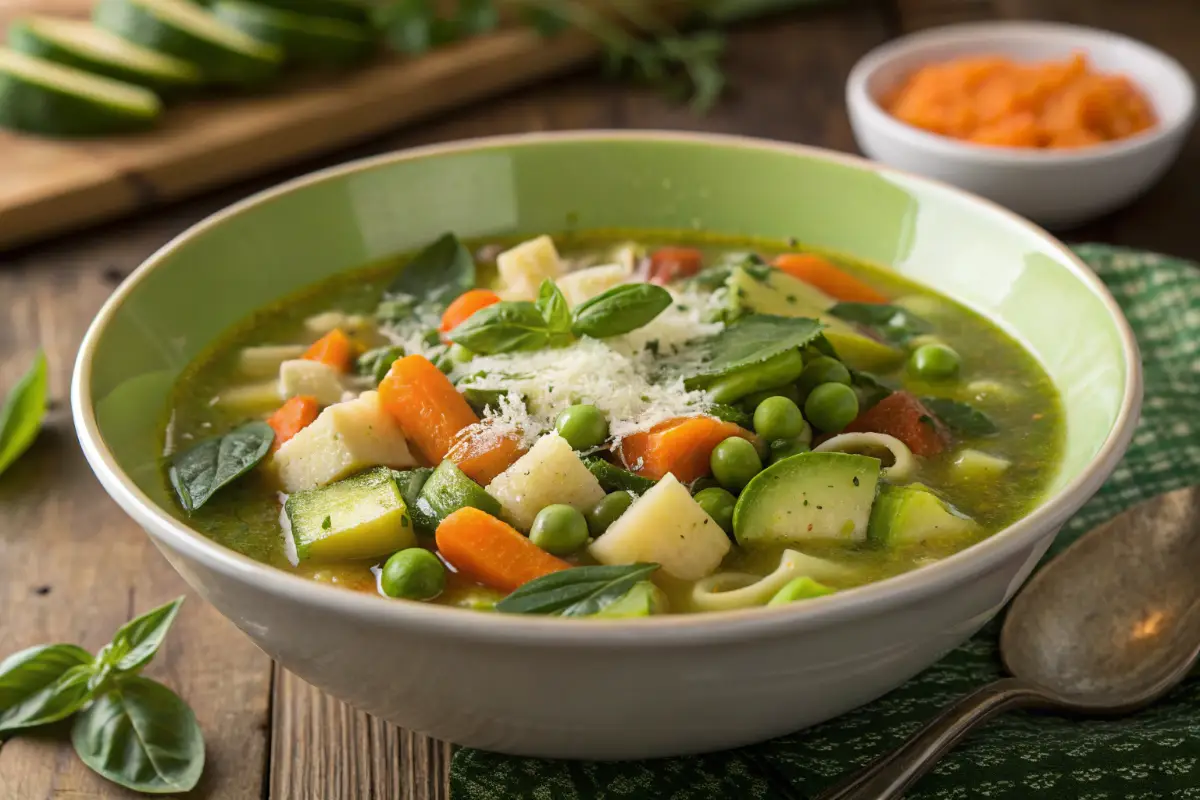

Spring Minestrone
A vibrant, garden-fresh Spring Minestrone packed with seasonal vegetables, tender beans, and aromatic herbs. This easy one-pot soup is perfect for weeknight dinners, meal prep, or sharing with friends. Light yet satisfying, it captures the very best flavors of the season in every comforting bowl.
6
servings20
minutes35
minutes245
kcalKeep the screen of your device on
Ingredients
2 tablespoons olive oil
1 medium yellow onion, diced
3 medium carrots, diced
3 celery stalks, diced
4 cloves garlic, minced
8 cups low-sodium vegetable broth
1 can (15 ounces) cannellini beans, rinsed and drained
1 cup small pasta (like ditalini or elbow), gluten-free if needed
1 medium zucchini, quartered and sliced
1 cup fresh asparagus, cut into 1-inch pieces
1 cup fresh or frozen peas
2 cups fresh spinach or kale, chopped
1 teaspoon dried oregano
0.5 teaspoon red pepper flakes (optional)
1 bay leaf
Salt and black pepper to taste
2 tablespoons fresh lemon juice
0.25 cup fresh basil or parsley, chopped
Grated Parmesan or nutritional yeast for serving (optional)
Directions
- Heat the olive oil in a large Dutch oven or soup pot over medium heat.
- Add the diced onion, carrots, and celery, then cook, stirring occasionally,
- for about five minutes until the vegetables begin to soften and the onions turn translucent.
- Stir in the minced garlic, dried oregano, and red pepper flakes if using, and cook for another minute until the garlic is fragrant.
- This quick toast unlocks the garlic’s sweet, aromatic oils and builds a flavorful base for the entire soup.
- Pour in the vegetable broth and add the cannellini beans, pasta, and bay leaf.
- Bring the mixture to a gentle boil, then reduce the heat to low, cover, and simmer for ten minutes, stirring occasionally to prevent the pasta from sticking.
- Add the zucchini, asparagus, and peas to the pot, then continue to simmer uncovered for another eight to ten minutes until the pasta is al dente and the vegetables are tender-crisp.
- Keep an eye on the pasta to ensure it does not overcook, as it will continue to soften in the hot broth.
- Stir in the chopped spinach or kale and cook just until wilted, about one to two minutes.
- Remove the pot from the heat, discard the bay leaf, then stir in the fresh lemon juice and chopped basil or parsley for a bright, herbaceous finish.
- Taste and adjust seasoning with salt and black pepper as needed.
- Ladle the soup into warm bowls and serve immediately with grated Parmesan or nutritional yeast on the side if desired.
Notes
- For a thicker soup, mash a few of the cannellini beans before adding them to the pot.
- If you plan to freeze leftovers, cook the pasta separately and add it to individual bowls when serving to prevent mushiness.
- Feel free to swap the pasta for a grain like quinoa or farro for a gluten-free option that adds extra protein and fiber.
Nutrition Facts
- Total number of serves: 6
- Calories: 245kcal
- Fat: 6g
- Saturated Fat: 1g
- Cholesterol: 0mg
- Sodium: 0.420mg
- Carbohydrates: 42g
- Fiber: 9g
- Sugar: 6g
- Protein: 11g
- Vitamin A: 0.85IU
- Vitamin C: 0.45mg
- Calcium: 0.8mg
- Iron: 0.20mg
Like this recipe?
Follow @wikitasty on Pinterest
FAQS
Absolutely, and I highly recommend it. This soup tastes even better the next day as the flavors have more time to meld and deepen. Simply store it in an airtight container in the refrigerator and reheat gently on the stovetop, adding a splash of broth if it has thickened too much.
You have several delicious options if you want to skip pasta or keep the soup gluten-free. Try using cooked quinoa, rice, or diced potatoes added with the carrots for a hearty, grain-based twist. For a lower-carb version, increase the amount of beans and add extra non-starchy vegetables like green beans or cauliflower.
The key is to add vegetables in stages based on their cooking time. Firmer veggies like carrots and potatoes go in early, while delicate ones like peas, asparagus, and leafy greens should be stirred in during the last five minutes of cooking. This ensures each component retains its ideal texture and vibrant color.
Yes, this recipe is naturally vegan as written, using vegetable broth and plant-based ingredients. Just double-check that your pasta is egg-free if you are strict about veganism, and skip the Parmesan garnish or use nutritional yeast instead for that savory, cheesy note.
Yes, this soup freezes beautifully for up to three months. For best results, freeze the soup without the pasta, as pasta can become soft and absorb too much liquid when thawed. Cook fresh pasta when you reheat the soup, or add pre-cooked pasta directly to the bowl before serving.
Gently reheat on the stovetop over medium-low heat, stirring occasionally until warmed through. If the soup has thickened in the fridge, add a little water or broth to reach your preferred consistency. You can also reheat individual portions in the microwave, stirring halfway through to ensure even heating.
The Heart of Spring Minestrone: A Story in Every Bowl
I think of my grandmother every time I make this soup, though she never called it “Spring Minestrone.” To her, it was simply “the soup with whatever is green,” a humble dish that appeared on our table whenever the garden started to wake up after winter. She would send me out to snip fresh herbs with small, careful hands, teaching me that cooking is not just about following steps, but about paying attention to the world around you.
That lesson stays with me as I chop vegetables for this recipe, remembering how she would taste the broth and adjust the seasoning with a pinch of this, a squeeze of that. There is a rhythm to making minestrone that feels meditative, a quiet conversation between the cook and the ingredients. It is a reminder that some of the most meaningful meals are not about perfection, but about presence and the simple joy of nourishing the people you love.
If you enjoy exploring other comforting soup recipes, you might also love this creamy asparagus soup that celebrates another spring favorite. Both dishes share that same spirit of seasonal celebration, turning the best of what is fresh into something warm and wonderful.
Your Printable Spring Minestrone Shopping List
Produce
- 1 medium yellow onion
- 3 medium carrots
- 3 celery stalks
- 4 cloves garlic
- 1 medium zucchini
- 1 bunch fresh asparagus
- 1 cup fresh or frozen peas
- 2 cups fresh spinach or kale
- 1 lemon
- Fresh basil or parsley
Pantry
- Olive oil
- Low-sodium vegetable broth (8 cups)
- 1 can (15 ounces) cannellini beans
- Small pasta (1 cup, gluten-free if needed)
- Dried oregano
- Red pepper flakes (optional)
- Bay leaf
- Salt and black pepper
Optional for Serving
- Grated Parmesan cheese or nutritional yeast
- Crusty bread or dinner rolls
Nourishing Notes: Health Benefits of Spring Minestrone
| Nutrient or Ingredient | Benefit |
|---|---|
| Cannellini Beans | High in plant-based protein and fiber, supporting digestion and sustained energy |
| Seasonal Vegetables | Rich in vitamins A and C, antioxidants that support immune health and skin vitality |
| Olive Oil | Contains heart-healthy monounsaturated fats and anti-inflammatory compounds |
| Garlic and Onions | Offer prebiotic fibers that promote gut health and contain immune-supporting compounds |
| Leafy Greens (Spinach/Kale) | Packed with iron, calcium, and vitamin K for bone health and oxygen transport |
This soup is a beautiful example of how eating seasonally can naturally boost your nutrient intake. The variety of colorful vegetables provides a wide spectrum of phytonutrients, each playing a role in reducing inflammation and supporting overall wellness. Plus, the high fiber content from beans and veggies helps you feel full and satisfied, making it a great choice for mindful eating without sacrificing flavor.
A Final Spoonful: Why You Will Love This Spring Minestrone
There is something profoundly comforting about coming home to a pot of this Spring Minestrone simmering on the stove, the kitchen filled with the scent of garlic and fresh herbs. It is a recipe that welcomes you exactly as you are, whether you need a quick weeknight dinner or a cozy dish to share with loved ones on a lazy weekend. I hope it brings as much joy to your table as it has to mine, season after season.
If you enjoy this vibrant soup, you might also want to try these fluffy cottage cheese pancakes for a delightful spring brunch, or save this mini egg cake recipe for a festive dessert that pairs perfectly with the season. Each of these recipes captures a little piece of spring’s magic, ready to brighten your meals and your mood.
Save this Spring Minestrone recipe for your next cozy dinner, and pin it to your favorite soup board so you can easily find it when those first tender asparagus spears appear at the market. Happy cooking, and may your bowl always be full of warmth and good things.