
Last Updated on March 16, 2026 by Souhail
I still remember the first time I truly understood the magic of risotto. It was a rainy Tuesday in my tiny Brooklyn apartment, and I was stirring a pot of rice while listening to the city hum outside my window. The steam rising from the pan carried the scent of garlic and white wine, instantly turning a gloomy evening into something warm and hopeful. Making Spring Vegetable Risotto with Parmesan feels exactly like that memory every single time, wrapping you in a cozy embrace no matter the weather.
This dish is the perfect bridge between the heavy comforts of winter and the light freshness of the coming season. It fits beautifully into your life as a special weeknight treat that feels fancy enough for guests but simple enough for a solo dinner. You do not need a special occasion to enjoy it, just a little patience and some good ingredients from the market.
The flavor profile is a delightful dance between the earthy sweetness of fresh asparagus and peas and the sharp, salty kick of aged Parmesan. Each bite offers a creamy, velvety texture that coats your tongue, punctuated by the bright pop of tender vegetables and a hint of lemon zest. It is a bowl of pure joy that looks as vibrant on your table as it tastes on your spoon.
Table of contents
- Why This Risotto Becomes Your New Spring Tradition
- Mastering the Perfect Stir: Tips From My Kitchen to Yours
- Make It Yours: Delicious Twists on a Classic Bowl
- Plating Joy: Simple Ways to Serve Your Risotto
- Keeping the Magic: Smart Storage and Reheating Secrets
- Beyond the Bowl: Creative Ways to Love Your Leftovers
- How Do You Make IT
- FAQS
- A Little Story About Spring and the Joy of Sharing Food
- Your Printable Spring Market List
- Nourishing Notes: Why This Bowl Loves You Back
- Come Back Soon for More Kitchen Stories
Why This Risotto Becomes Your New Spring Tradition
There is something deeply satisfying about watching plain rice transform into a creamy, luxurious dish through nothing but patience and a wooden spoon. This Spring Vegetable Risotto with Parmesan stands out because it celebrates the season’s best produce without overwhelming them with heavy sauces or complicated techniques. The slow stir method allows each grain of arborio rice to absorb the golden broth, creating that signature velvety texture we all crave.
- Fresh seasonal vegetables like asparagus and peas bring vibrant color and a natural sweetness that pairs perfectly with sharp Parmesan.
- One-pot simplicity means less cleanup and more time enjoying your meal with family or friends.
- Naturally gluten-free and easily adaptable for vegetarian or vegan diets without sacrificing flavor or creaminess.
- Impressive yet approachable enough for dinner guests but forgiving enough for a relaxed Tuesday night.
If you love celebrating spring produce in a comforting bowl, you might also enjoy this Spring Minestrone Recipe which captures similar seasonal flavors in a hearty soup form. For those with dietary preferences, swapping chicken broth for vegetable stock keeps this dish fully plant-based while maintaining its rich depth. You can even stir in a spoonful of pesto at the end for an herby twist that feels like a garden on a plate.
Mastering the Perfect Stir: Tips From My Kitchen to Yours
Getting risotto right is less about fancy equipment and more about understanding a few key techniques that make all the difference. I have burned more than one batch while learning, so let me share the secrets that turned my early attempts into creamy successes. These tips will help you achieve that coveted al dente texture with a sauce that coats the back of your spoon.
- Toast the rice first: Sauté arborio rice in butter or oil for 1-2 minutes until the edges look translucent. This step seals the grains and prevents them from turning mushy during the long stir.
- Warm your broth: Keep your vegetable or chicken broth simmering in a separate pot. Adding cold liquid shocks the rice and interrupts the steady absorption needed for creaminess.
- Stir with intention: You do not need to stir constantly, but do stir every 30-45 seconds. This releases the rice’s natural starches gradually for that signature velvety finish.
- Taste as you go: Start checking for doneness around the 18-minute mark. The rice should be tender with a slight bite, not chalky or overly soft.
- Finish with cold butter: Off the heat, stir in a tablespoon of cold butter and your Parmesan. This technique, called mantecatura, creates an emulsified, glossy sauce that clings to every grain.
If you are new to building layers of flavor in one pot, practicing with a simple Vegetable Soup Recipe can help you master the basics of seasoning and timing before tackling risotto. Remember, the aromatic garlic and white wine deglaze are not just steps; they are the foundation of the dish’s savory umami character. Trust the process, and let the kitchen aromas guide you.
Make It Yours: Delicious Twists on a Classic Bowl
One of the joys of cooking is making a recipe your own, and this risotto welcomes creativity with open arms. Whether you are adapting for dietary needs or simply craving a new flavor combination, these variations keep the soul of the dish while offering fresh perspectives. Each change brings its own charm to your dinner table.
Lemon-Herb Brightness
Add the zest of one lemon and a handful of fresh basil or mint along with the Parmesan at the end. This variation amplifies the springtime freshness and pairs beautifully with grilled fish or chicken. The citrus notes cut through the richness for a lighter, more vibrant finish.
Mushroom Earthiness
Sauté 1 cup of sliced cremini or shiitake mushrooms with the garlic before adding the rice. This swap introduces a deep, forest-floor umami that complements the Parmesan wonderfully. It is a cozy twist perfect for cooler spring evenings when you still crave hearty flavors.
Protein-Packed Version
Stir in 1 cup of cooked white beans, shredded rotisserie chicken, or pan-seared shrimp during the last five minutes of cooking. This turns your risotto into a complete meal with added protein, ideal for busy weeknights when you need something substantial. The creamy rice base welcomes almost any addition without losing its character.
Vegan Cream Dream
Replace butter with olive oil and use nutritional yeast or a vegan Parmesan alternative for that cheesy finish. A splash of full-fat coconut milk stirred in at the end can mimic the luxurious mouthfeel of dairy. This version proves that comfort food can be inclusive and still feel indulgent.
| Variation | Key Change | Best For |
|---|---|---|
| Lemon-Herb | Fresh citrus zest + herbs | Light dinners, seafood pairings |
| Mushroom | Sautéed wild mushrooms | Earthy flavor lovers, cooler nights |
| Protein-Packed | Beans, chicken, or shrimp | Hearty meals, post-workout dinners |
| Vegan Cream | Plant-based fats + nutritional yeast | Dairy-free diets, inclusive gatherings |
Plating Joy: Simple Ways to Serve Your Risotto
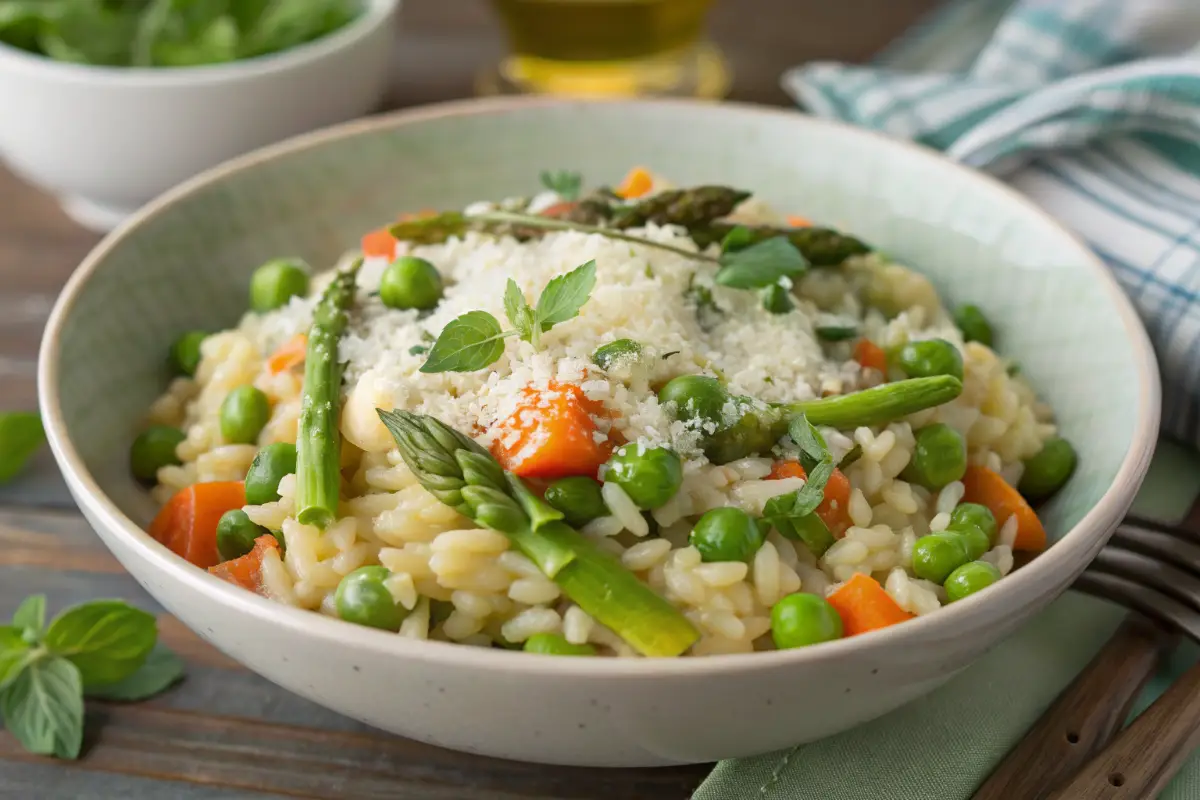
Imagine setting down a steaming bowl of this risotto, the vibrant green peas and tender asparagus peeking through the creamy rice, all crowned with a snowy dusting of Parmesan. The aroma alone is enough to gather everyone at the table. Presentation matters, and a few simple touches can elevate this dish from home-cooked to restaurant-worthy.
- Serve in shallow bowls with a drizzle of good olive oil and a crack of black pepper on top. The contrast of colors and textures makes each bite visually exciting and Instagram-ready.
- Pair with a crisp arugula salad dressed in lemon vinaigrette to balance the risotto’s richness with a peppery, fresh contrast.
For a heartier spread, consider offering this risotto alongside a robust Vegetable Beef Soup Recipe for guests who appreciate a variety of comforting, savory options. The combination creates a feast that feels abundant and thoughtfully curated without overwhelming your kitchen.
Keeping the Magic: Smart Storage and Reheating Secrets
Risotto is best enjoyed fresh, but life happens, and leftovers are a reality. Proper storage ensures your risotto retains its creamy texture and bright flavors for another meal. With a few simple steps, you can revive yesterday’s dinner into today’s delight.
Store cooled risotto in an airtight container in the refrigerator for up to 3 days. For longer storage, freeze individual portions in freezer-safe bags for up to 1 month. Label with the date so you always know what is ready to thaw.
| Storage Method | Duration | Notes |
|---|---|---|
| Refrigerator | Up to 3 days | Reheat with a splash of broth to restore creaminess |
| Freezer | Up to 1 month | Thaw overnight in fridge before reheating gently |
| Counter | Not recommended | Risotto contains dairy and should not sit at room temperature >2 hours |
To reheat, place risotto in a saucepan over low heat with a tablespoon or two of broth or water. Stir gently until warmed through and creamy again. Avoid the microwave if possible, as it can make the rice gummy, but if you must, use a low power setting and stir frequently.
Beyond the Bowl: Creative Ways to Love Your Leftovers
Do not let extra risotto go to waste; its creamy texture and savory flavor make it incredibly versatile for next-day creations. These ideas transform leftovers into entirely new meals that feel just as special as the original. Pinterest lovers, take note: these hacks are as shareable as they are delicious.
- Arancini Bites: Chill leftover risotto, form into small balls, coat in breadcrumbs, and pan-fry until golden. Serve with marinara for an irresistible appetizer or snack that disappears fast at parties.
- Breakfast Hash: Sauté leftover risotto with diced potatoes and a fried egg on top. The crispy edges and runny yolk create a decadent morning meal that blurs the line between breakfast and dinner.
- Stuffed Vegetables: Use chilled risotto as a filling for bell peppers or zucchini boats. Top with extra Parmesan and bake until bubbly for a complete, portable dinner that reheats beautifully.
How Do You Make IT
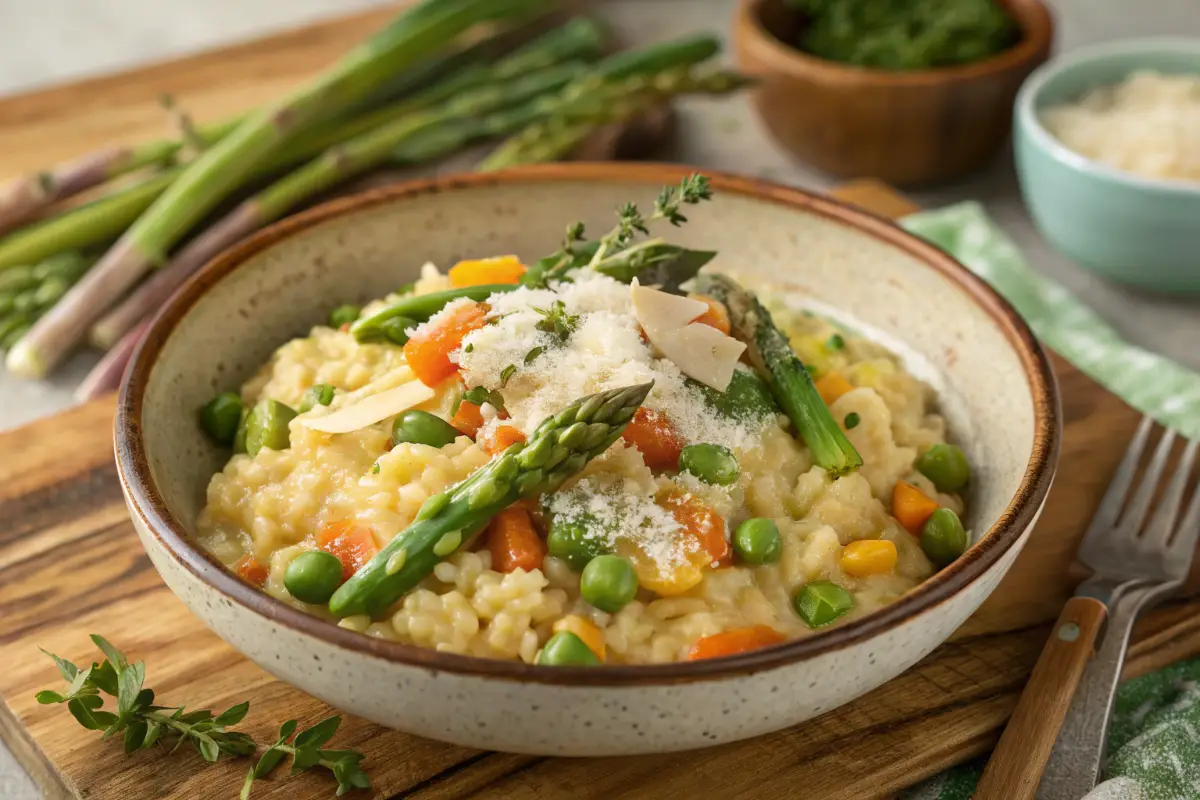

Spring Vegetable Risotto with Parmesan
4
servings15
minutes30
minutes420
kcalCreamy Spring Vegetable Risotto with Parmesan brings fresh asparagus, sweet peas, and nutty cheese together in one comforting, gluten-free bowl. Easy enough for weeknights, elegant enough for guests.
Keep the screen of your device on
Ingredients
2 tablespoons olive oil
3 tablespoons unsalted butter, divided
1 small yellow onion, finely diced
3 cloves garlic, minced
1.5 cups arborio rice
0.5 cup dry white wine (Pinot Grigio or Sauvignon Blanc)
6 cups vegetable or chicken broth, kept warm
1 bunch asparagus, trimmed and cut into 1-inch pieces
1 cup fresh or frozen peas
1 cup freshly grated Parmesan cheese, plus more for serving
1 teaspoon lemon zest
Salt and freshly ground black pepper, to taste
Fresh basil or mint leaves, chopped (optional, for garnish)
Directions
- Heat the olive oil and 1 tablespoon of butter in a large, heavy-bottomed pot or Dutch oven over medium heat.
- Add the diced onion and a pinch of salt, cooking gently until soft and translucent, about 5 minutes.
- Stir in the minced garlic and cook for another minute until fragrant, being careful not to let it brown.
- Add the arborio rice to the pot and stir constantly for 2 to 3 minutes.
- You want the grains to be coated in fat and slightly toasted at the edges, which helps them maintain their structure during the long cooking process.
- The rice should look glossy and slightly translucent around the edges.
- Pour in the white wine and stir vigorously until the liquid is completely absorbed by the rice.
- The alcohol will evaporate, leaving behind a subtle acidity that brightens the final dish.
- This step also helps to deglaze the pan, lifting any flavorful bits stuck to the bottom.
- Begin adding the warm broth one ladleful at a time, stirring frequently to encourage the rice to release its starches.
- Wait until each addition is almost fully absorbed before adding the next ladle.
- This slow process is the secret to achieving that signature creamy texture without adding any actual cream.
- Continue this rhythm of adding broth and stirring for about 18 minutes. When the rice is nearly tender but still has a slight bite, stir in the asparagus pieces.
- Cook for another 3 to 4 minutes until the asparagus is bright green and fork-tender.
- Gently fold in the peas and cook for just 2 more minutes to warm them through while keeping their vibrant color. Taste the rice; it should be creamy on the outside but al dente in the center.
- If it feels too firm, add a little more broth and cook for another minute or two.
- Remove the pot from the heat immediately to stop the cooking process. Stir in the remaining 2 tablespoons of cold butter, the grated Parmesan cheese, and the lemon zest.
- Vigorously mix these ingredients in to create an emulsified, glossy sauce that clings to every grain of rice.
- Season generously with salt and freshly ground black pepper to taste.
- Serve the risotto immediately in shallow bowls while it is hot and creamy.
- Garnish with extra Parmesan shavings and fresh herbs if desired for a beautiful finishing touch.
Notes
- Broth Temperature Matters: Always keep your broth simmering in a separate pot; adding cold liquid stops the cooking process and can make the rice texture uneven.
- Cheese Quality: Use a block of Parmigiano-Reggiano and grate it yourself for the best flavor and melting quality, avoiding pre-grated cheeses with anti-caking agents.
- Vegetable Timing: If you prefer softer vegetables, add the asparagus a few minutes earlier, but keep an eye on them to prevent them from turning mushy.
- Wine Substitute: If you do not cook with alcohol, you can substitute the white wine with an equal amount of broth mixed with a teaspoon of lemon juice or white wine vinegar.
- Make Ahead: While best served fresh, you can undercook the rice slightly, spread it on a baking sheet to cool, and finish it with broth and butter just before serving.
- Vegan Option: Swap the butter for high-quality olive oil and use nutritional yeast or a vegan hard cheese alternative to maintain the savory depth.
Nutrition Facts
- Total number of serves: 4
- Calories: 420kcal
- Saturated Fat: 9g
- Cholesterol: 0.35mg
- Sodium: 0.850mg
- Carbohydrates: 52g
- Fiber: 4g
- Sugar: 3g
- Protein: 12g
- Vitamin A: 0.15IU
- Vitamin C: 0.25mg
- Iron: 0.10mg
Like this recipe?
Follow @wikitasty on Pinterest
FAQS
While risotto is best served immediately, you can par-cook it by stopping about 5 minutes before it is fully done. Spread it on a baking sheet to cool quickly, then refrigerate. When ready to serve, finish cooking with additional warm broth. This method works well for dinner parties when you want to minimize last-minute stirring.
Carnaroli or Vialone Nano rice are excellent alternatives with similar starch content and absorption properties. In a pinch, short-grain brown rice can work, but it will require more liquid and a longer cooking time, resulting in a chewier texture. Avoid long-grain rice like basmati, as it will not release the necessary starches for creaminess.
Yes, this recipe is naturally gluten-free as long as you use gluten-free broth and verify that your Parmesan cheese does not contain anti-caking agents with gluten. Always check labels if you have celiac disease or severe sensitivity, as cross-contamination can occur in processing facilities.
The key is to add warm broth gradually and stir regularly but not constantly. Start tasting at 18 minutes and remove from heat when the rice is al dente. Remember that residual heat will continue to cook the rice slightly after you plate it, so err on the side of slightly underdone.
Absolutely. Frozen peas and asparagus tips work wonderfully and are often flash-frozen at peak freshness. Add them directly from the freezer during the last 5 minutes of cooking to preserve their vibrant color and texture. Just be sure to pat them dry if they seem icy to avoid watering down your risotto.
A crisp, dry white wine like Pinot Grigio or Sauvignon Blanc complements the bright vegetables and creamy rice without overwhelming them. If you prefer red, a light-bodied Chianti can work, especially with the mushroom variation. For cooking, use a wine you would enjoy drinking; the flavor concentrates as it reduces.
A Little Story About Spring and the Joy of Sharing Food
Every spring, I visit the Union Square Greenmarket in New York, basket in hand, letting the vibrant stalls guide my dinner plans. The first tender asparagus, the sweetest peas still in their pods, the fragrant bunches of herbs; these are the ingredients that inspire this risotto. Cooking with the seasons connects us to the rhythm of the earth and to the people who grow our food.
This recipe is my love letter to those early spring mornings and the promise of longer, warmer days ahead. It is a dish meant to be shared, passed around a table with laughter and clinking glasses. In my kitchen, the act of stirring risotto is a meditation, a moment to slow down and appreciate the simple alchemy of rice, broth, and time.
Your Printable Spring Market List
Produce
- 1 bunch fresh asparagus, trimmed and cut into 1-inch pieces
- 1 cup fresh or frozen peas
- 1 small yellow onion, finely diced
- 3 cloves garlic, minced
- 1 lemon, for zest and juice
- Fresh basil or mint, for garnish (optional)
Dairy
- 4 tablespoons unsalted butter, divided
- 1 cup freshly grated Parmesan cheese, plus more for serving
Pantry & Grains
- 1.5 cups arborio rice
- 6 cups vegetable or chicken broth, kept warm
- 0.5 cup dry white wine (like Pinot Grigio)
- 2 tablespoons olive oil
- Salt and freshly ground black pepper, to taste
Spices & Extras
- Pinch of red pepper flakes (optional, for heat)
- Extra virgin olive oil, for drizzling
Nourishing Notes: Why This Bowl Loves You Back
| Nutrient or Ingredient | Benefit |
|---|---|
| Arborio Rice | Provides easily digestible carbohydrates for sustained energy |
| Asparagus | Rich in folate, vitamins A and C, and natural prebiotics for gut health |
| Peas | Plant-based protein and fiber to support digestion and satiety |
| Parmesan Cheese | High in calcium and protein, with probiotics that aid bone health |
| Garlic & Onion | Contain antioxidants and anti-inflammatory compounds that support immunity |
| Olive Oil | Source of heart-healthy monounsaturated fats and polyphenols |
This risotto is more than just comfort in a bowl; it is a balanced meal that nourishes your body while delighting your senses. The combination of complex carbohydrates, fresh vegetables, and quality fats provides steady energy without the crash. Plus, the act of cooking it slowly can be a calming ritual that feeds your mind as well as your stomach.
Come Back Soon for More Kitchen Stories
Making this Spring Vegetable Risotto with Parmesan is an invitation to slow down, savor the season, and share something beautiful with the people you love. I hope it becomes a cherished part of your spring routine, a dish you return to year after year as the world blooms outside your window. If you try it, I would love to hear how it turned out for you; tag me in your photos so I can celebrate your kitchen wins.
If you enjoyed this creamy, vegetable-forward recipe, you might also love exploring these cozy favorites: a bright and herby Spring Minestrone Recipe for lighter days, or fluffy, protein-packed Cottage Cheese Pancakes for a delightful weekend brunch. Each one brings its own kind of magic to your table.
Save this recipe for later and pin it to your favorite dinner board; your future self will thank you on those busy nights when you need a little comfort, fast. Until next time, keep stirring, keep tasting, and keep sharing the joy of good food.