
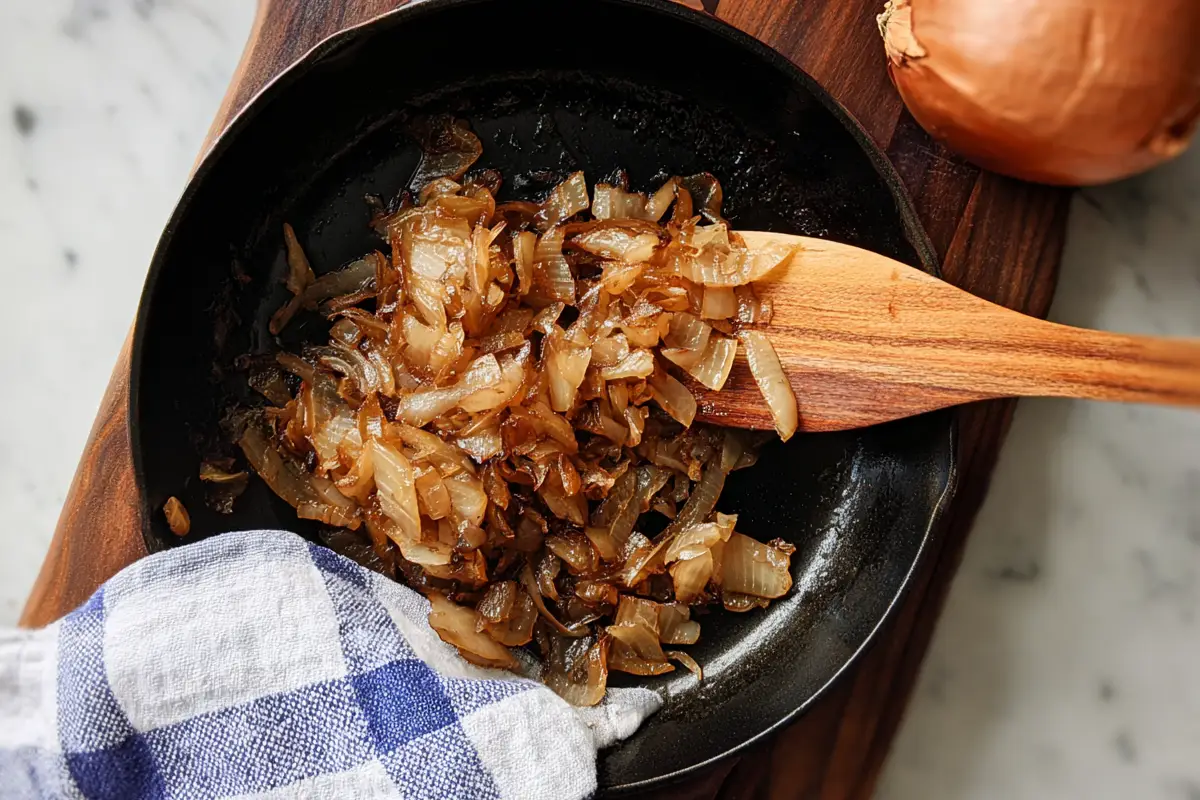
- Slow-cooking onions on medium-low heat for about 45 minutes develops deep, sweet, umami-rich caramelized flavor.
- Only a few simple ingredients and patience are needed; butter, oil, salt, and occasional deglazing yield gourmet results.
- Versatile make-ahead ingredient: store in fridge up to 5 days or freeze for 3 months; use in sandwiches, pasta, or bowls.
Last Updated on January 30, 2026 by Kenza
Let me tell you a secret: the best way to take a dish from good to unforgettable is a humble pan of slow-cooked caramelized onions. I learned this the hard (but delicious) way during a rainy night in my tiny New York apartment, throwing together grilled cheese and tomato soup when I decided to add a pile of these golden beauties. That bite changed my life. Suddenly, my basic dinner felt gourmet. I knew I had stumbled onto something magical.
Caramelized onions are the flavor bomb you didn’t know you were missing—sweet, savory, and deeply rich with a silky texture that melts right into anything you pair it with. Whether it’s tucked into a sandwich, stirred into pasta, spooned over steak, or blended into a dip, it transforms the ordinary into soul-satisfying comfort. This recipe is a kitchen essential, and once you make it yourself, you’ll never go back to store-bought.
The best part? You only need a few ingredients and a little patience. This is a cozy, slow-cooking kind of recipe perfect for Sunday food prep or adding extra love to a weeknight dinner.
Table of contents
- Why These Caramelized Onions Are Worth the Wait
- Let’s Make Caramelized Onions Together
- Let’s Talk Tips: My Best Advice for Caramelized Onion Perfection
- Make It Your Own: Variations on Caramelized Onions
- How to Serve These Golden Beauties
- Storage and Reheating Instructions
- Creative Ways to Use Caramelized Onions
- Frequently Asked Questions
- Conclusion
Why These Caramelized Onions Are Worth the Wait
You might be thinking, Do I really need to cook onions low and slow for 45 minutes? The answer is a resounding YES. Caramelized onions are what happen when time meets technique, and here’s why this recipe truly works:
- Deep Flavor Development: Slow-cooking breaks down the onion’s natural sugars, creating that golden-brown color and sweet, umami-packed flavor.
- Simple Ingredients, Complex Taste: With just onions, a little fat, salt, and a splash of water or vinegar, you get a condiment that tastes like it took a culinary degree to master.
- Versatility Galore: Use it in grilled cheese, burgers, pasta, eggs, grain bowls—you name it. They add richness without overpowering other flavors.
- Customizable to Your Needs: This recipe works with butter, oil, or a mix of both. Prefer vegan? Use olive oil. Gluten-free? Naturally is!
- Easy to Make in Batches: Double or triple the onions in a large pan and freeze portions for easy meal upgrades later.
These are not your average sautéed onions. They’re jammy, melt-in-your-mouth, and loaded with that savory-sweet depth that makes everything they touch more delicious.
Let’s Make Caramelized Onions Together
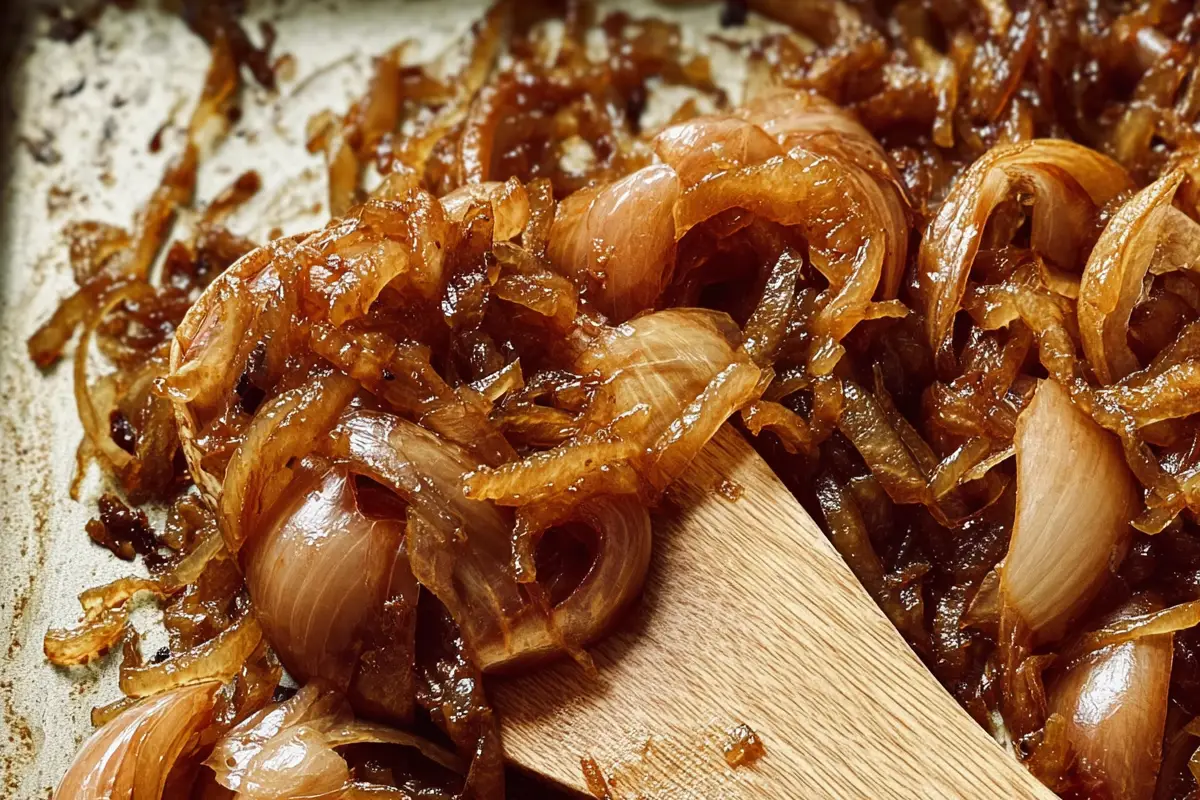

Caramelized Onions Recipe
6
servings10
minutes45
minutes85
kcalThese rich, golden caramelized onions add deep, sweet-savory flavor to anything they touch—from burgers and soups to pasta and casseroles.
Keep the screen of your device on
Ingredients
4 large yellow onions, thinly sliced
2 tablespoons butter (or olive oil for vegan)
1 teaspoon salt
2 –4 tablespoons water, broth, or balsamic vinegar (as needed for deglazing)
Optional: 1 teaspoon balsamic vinegar, for finishing
Directions
- Start by grabbing 4 large yellow onions. Slice them thinly—you’re going for half-moons here. Try to keep the slices even so they cook at the same pace, but don’t stress if a few are a little thicker or thinner. That’s real-life cooking!
- Heat 2 tablespoons of butter (or olive oil, if you’re going the vegan route) in a large skillet over medium-low heat. The pan should be wide enough to let the onions spread out a bit. Once the butter melts and starts to sizzle softly, add the sliced onions.
- Now, here’s where the magic begins. Stir the onions to coat them evenly in the fat, and sprinkle in 1 teaspoon of salt. That salt will help draw out moisture and kickstart the caramelizing process.
- For the first 10 to 15 minutes, stir every few minutes—don’t walk away completely, but also don’t hover. The onions will start to soften and turn translucent. Resist the urge to crank the heat; low and slow is the name of the game.
- At around the 20-minute mark, the onions start to take on a pale golden color and shrink quite a bit. If the bottom of the pan starts to develop browned bits (aka flavor bombs), you’re doing it right.
- From here, keep cooking for another 20 to 25 minutes, stirring occasionally and deglazing the pan as needed. This means adding a splash of water, broth, or even a little balsamic vinegar to loosen up those tasty brown bits stuck to the bottom of the pan. It deepens the flavor and prevents burning.
- By the 40 to 45-minute mark, your onions should be a rich, golden brown and smell absolutely divine—sweet, savory, and just a little nutty. Taste one! If you want a slightly more tangy finish, stir in a teaspoon of balsamic vinegar right at the end.
- And that’s it. You’ve just made culinary gold. Let them cool slightly, spoon them into a jar, and pat yourself on the back.
Notes
- Use sweet onions like Vidalia for an even sweeter result.
- Olive oil is a great substitute for butter for a vegan version.
- Don’t overcrowd the pan—use a large skillet for even cooking.
- Stir gently and regularly to prevent burning.
- Deglazing helps deepen flavor and lift caramelized bits.
- Add herbs like thyme or garlic for an aromatic twist.
Nutrition Facts
- Calories: 85kcal
- Fat: 5g
- Sodium: 400mg
- Carbohydrates: 10g
- Fiber: 1.5g
- Sugar: 5g
- Protein: 1g
Like this recipe?
Follow @wikitasty on Pinterest
Let’s Talk Tips: My Best Advice for Caramelized Onion Perfection
Alright, if you want golden, rich onions that taste like pure magic, follow these pro tips:
- Choose the Right Onion: Yellow onions are classic, but sweet onions like Vidalia work beautifully if you want extra sweetness. Red onions create a darker, slightly more bitter result, but still delicious.
- Don’t Rush It: Medium-low heat is the sweet spot. Too high and you’ll sauté (or burn) them instead of caramelizing.
- Use a Wide, Heavy Pan: Surface area helps the moisture evaporate so onions caramelize rather than steam.
- Deglaze for Extra Flavor: Add a splash of water, broth, wine, or balsamic vinegar during cooking to lift browned bits and boost the depth of flavor.
- Salt Early, Stir Often: Salt draws out moisture and helps the onions break down evenly. Stir every few minutes to prevent sticking or burning.
Make It Your Own: Variations on Caramelized Onions
Once you’ve nailed the basics, it’s time to experiment! Here are a few creative spins on the classic caramelized onion:
Balsamic Caramelized Onions
Add 1 to 2 tablespoons of balsamic vinegar during the last 5 minutes of cooking. It gives the onions a tangy, syrupy finish that’s perfect for flatbreads or roasted veggies.
Garlic-Thyme Caramelized Onions
Toss in a couple cloves of minced garlic and a few sprigs of thyme halfway through cooking. This version is dreamy on steak or stirred into mashed potatoes.
Spicy Caramelized Onions
Want a kick? Add a pinch of red pepper flakes or a splash of hot sauce near the end. This twist pairs well with tacos or burgers.
Vegan Caramelized Onions
Just use olive oil or vegan butter instead of regular butter. No flavor compromise here—just plant-based perfection.
Wine-Infused Onions
Deglaze with white wine or dry red near the end. It adds a little acidity and depth that’s especially great in French-inspired dishes like this onion soup recipe.
How to Serve These Golden Beauties
Honestly, I could eat these straight from the pan. But if you want to get fancy (or just strategic), here are some delicious ideas:
- Layer them into green bean casserole for an extra hit of savory sweetness.
- Add them to a grilled cheese sandwich with sharp cheddar and sourdough.
- Spoon over steak or chicken with a side of twice baked potatoes.
- Toss with cooked pasta and a splash of cream for a cozy, impromptu French onion pasta.
- Mix into butternut squash mac and cheese for a fall-inspired twist.
Storage and Reheating Instructions
Caramelized onions are the ultimate make-ahead ingredient. Once cooled, store them in an airtight container in the fridge for up to 5 days.
To freeze, spoon them into ice cube trays or small containers. They’ll last for up to 3 months and can be reheated in a skillet over low heat or added straight to soups, sauces, or sautés.
Creative Ways to Use Caramelized Onions
Let’s think beyond the basics! Here are some unexpected ways to use these jammy beauties:
- Savory Oatmeal: Stir them into cheesy oats with a poached egg on top.
- Breakfast Burritos: Add to scrambled eggs, cheese, and avocado for a next-level filling.
- Tart Topping: Use as the base for a puff pastry tart with goat cheese or brie.
- Dip Mix-In: Blend with sour cream or Greek yogurt for a homemade onion dip.
- Grain Bowl Booster: Pile onto rice, farro, or quinoa bowls for added richness and sweetness.
Frequently Asked Questions
About 45 minutes on medium-low heat. It takes time for the sugars to break down and brown slowly—don’t rush it!
Yes! Let them cool completely, then freeze in small portions (like ice cube trays) for up to 3 months.
Yellow onions are best for balanced sweetness and flavor, but sweet onions or even red onions work too.
Your heat might be too high. Lower the heat and stir often. Also, use a wide pan to let moisture evaporate evenly.
Absolutely. Olive oil or a vegan butter substitute works just fine for plant-based or dairy-free diets.
Try balsamic vinegar, white wine, fresh thyme, or garlic during the cooking process for an extra layer of flavor.
Conclusion
Caramelized onions are like edible gold in your fridge. They make simple meals feel gourmet, and once you’ve got a jar ready to go, you’re just a spoonful away from greatness. Whether you’re adding them to green bean casserole, layering into twice baked potatoes, or mixing into butternut squash mac and cheese, these onions are your flavor-packed secret weapon.
Ready to make your first (or fiftieth) batch? Trust me—it’s worth every minute.