
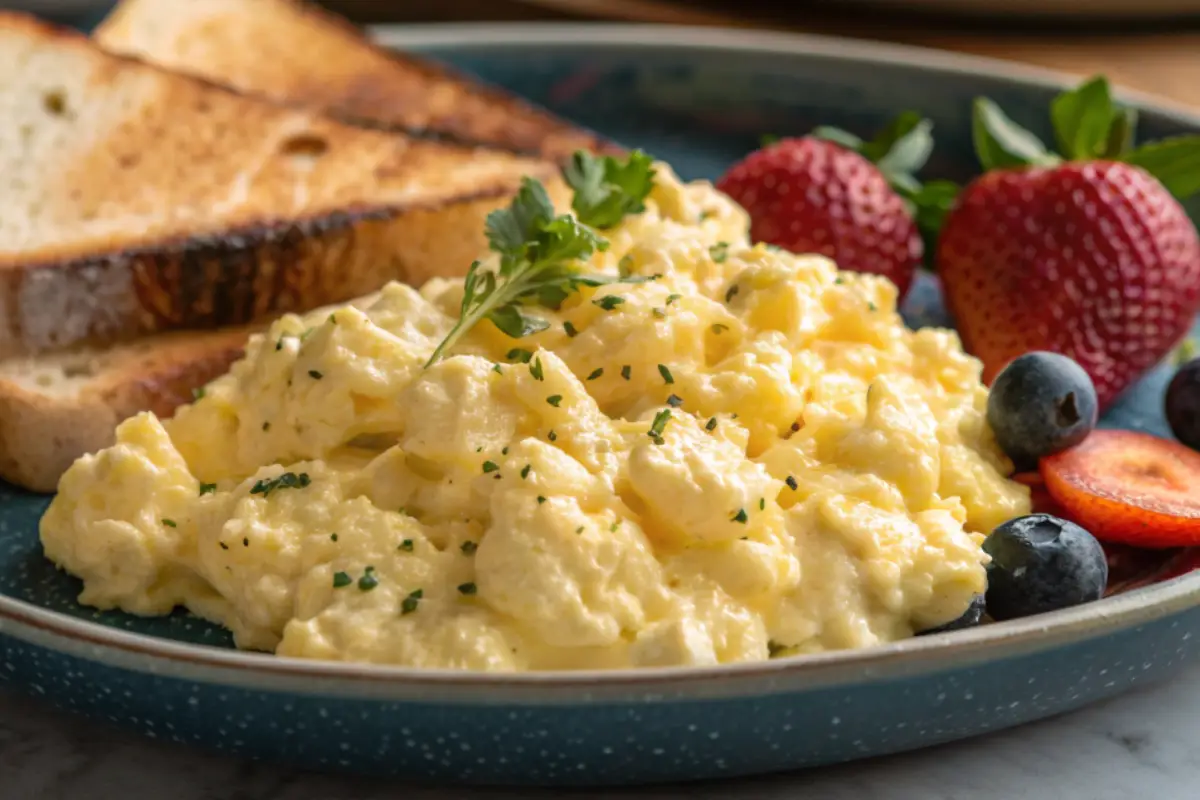
- Cottage cheese makes scrambled eggs ultra creamy and fluffy while adding about 12 grams of protein per serving.
- Whisk eggs and cottage cheese until nearly smooth, cook low and slow, and remove from heat slightly underdone for perfect texture.
- Variations include everything bagel seasoning, southwest chiles and pepper jack, garden vegetables, or smoked salmon toppings.
- Store leftovers up to 2 days; reheat gently on the stovetop with a splash of milk to avoid rubbery eggs.
Last Updated on February 1, 2026 by Souhail
I’ll never forget the morning I discovered cottage cheese scrambled eggs. Bleary-eyed at 7 a.m., out of milk, and staring into my fridge like it held life’s answers—I tossed a scoop of cottage cheese into my whisked eggs. What emerged from the pan was pure magic: impossibly creamy, cloud-like curds with a subtle tang that made my usual scramble taste like cardboard.
This 10-minute breakfast hack has been my non-negotiable ever since. It’s the perfect weekday win—protein-packed, luxuriously smooth, and so simple it feels like cheating. No one will guess your secret ingredient, but everyone will ask for the recipe.
Table of contents
Why You’ll Fall in Love With This Scramble
Let’s talk about why this humble combo works so brilliantly. It’s not just a random kitchen experiment, it’s food science magic happening right in your skillet.
- The high moisture content in cottage cheese steams the eggs gently as they cook, creating pillowy soft curds instead of rubbery clumps
- You get an extra 12 grams of protein per serving without changing the flavor profile one bit
- The slight acidity in cottage cheese brightens the whole dish, cutting through richness naturally
- Zero extra fat needed. The cottage cheese provides all the creaminess heavy cream or butter would, but with way less guilt
- It’s a brilliant way to use up that tub of cottage cheese hiding in your fridge before it expires
Want to make it dairy-free? Swap the cottage cheese for silken tofu (blend it first for smoothness). Gluten-free? Already is! Vegan? Try crumbled firm tofu with a splash of unsweetened plant yogurt. And if you love cottage cheese as much as I do now, you might also adore my cottage cheese pancakes for weekend brunch.
My Foolproof Tips for Perfect Scrambles Every Time
Friends, the difference between good scrambled eggs and great scrambled eggs comes down to three things: low heat, patience, and the right tools. Here’s how I nail it every single time.
First, whisk those eggs and cottage cheese together until the mixture looks almost smooth. You don’t need a blender, but a few vigorous stirs with a fork helps break up the curds so they melt seamlessly into the eggs.
Second, cook over medium-low heat, not medium-high. I know we’re all in a rush some mornings, but rushing eggs is the fastest way to dry, gray curds. Let them cook slowly, stirring gently with a silicone spatula every 20 seconds or so.
And third, pull the pan off the heat just before the eggs look fully set. They’ll keep cooking from residual heat and finish perfectly creamy. Oh, and if you’re meal prepping breakfasts, these scramble beautifully alongside my cottage cheese breakfast bowl for a full week of protein-packed mornings.
Fun Ways to Switch Up Your Scramble
Once you’ve mastered the base recipe, the variations are endless. Here are my favorite twists:
The Everything Bagel Version
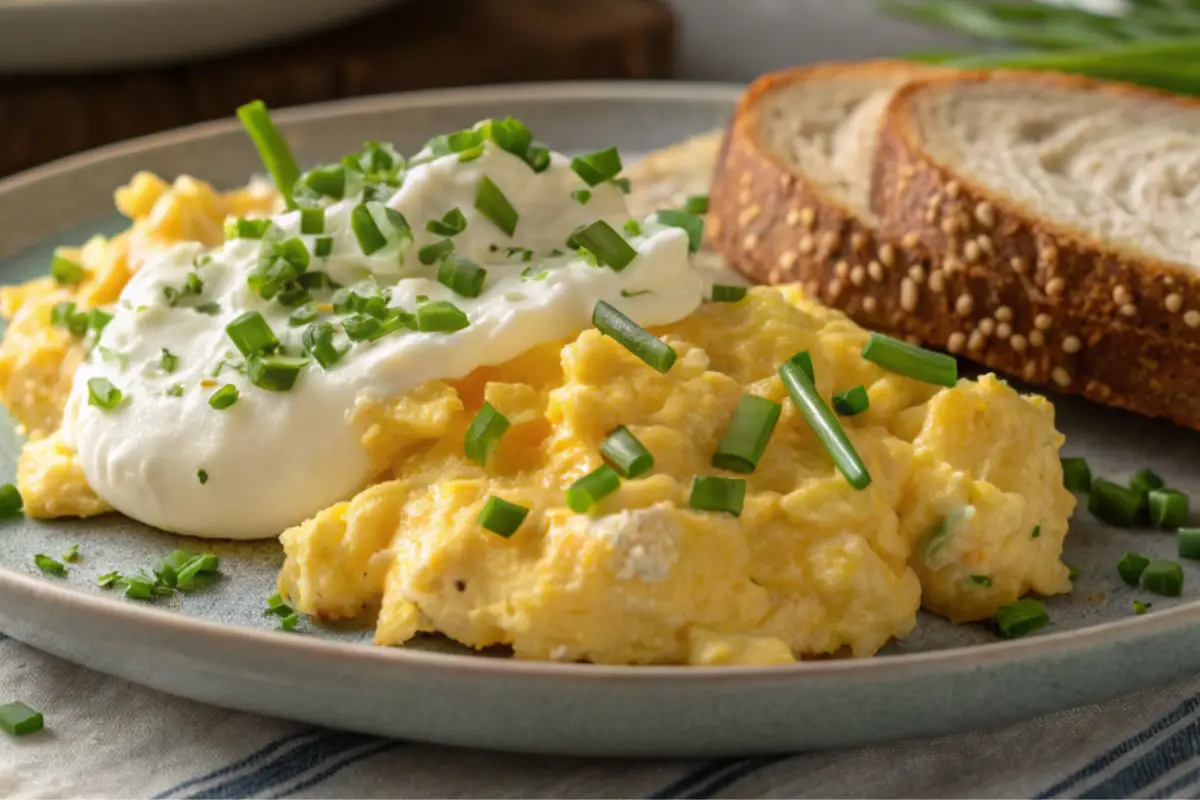
Stir in 1 teaspoon everything bagel seasoning right before the eggs finish cooking. The sesame seeds, garlic, and onion flakes add incredible crunch and savory depth. Top with extra seasoning and a dollop of Greek yogurt for the ultimate savory breakfast.
The Southwest Scramble
Fold in 2 tablespoons of diced roasted green chiles and a handful of pepper jack cheese during the last minute of cooking. Serve with avocado slices and hot sauce. It’s like a breakfast burrito filling without the wrap!
The Garden Fresh Scramble
Add 1/4 cup finely chopped spinach, 2 tablespoons diced cherry tomatoes, and fresh basil right at the end. The residual heat wilts the spinach perfectly while keeping the tomatoes juicy. Light, bright, and gorgeous on a plate.
The Lox Lovers’ Dream
Top your finished scramble with paper-thin smoked salmon slices, fresh dill, and capers. The creamy eggs and briny salmon are a match made in breakfast heaven. Pair it with my sourdough pumpkin bread for the ultimate weekend spread.
Serving Suggestions
Serve these fluffy scrambles on warm plates with a sprinkle of fresh chives or dill. I love adding a simple side of sliced avocado and cherry tomatoes for color and healthy fats. For something heartier, toast a slice of sourdough or try them alongside my cottage cheese waffles for a next-level brunch. A light dusting of flaky sea salt right before serving makes all the difference.
Storage and Reheating Instructions
Store leftovers in an airtight container for up to 2 days. Reheat gently in a skillet over low heat with a splash of milk or water, stirring constantly until warmed through. Avoid the microwave if possible, it tends to make eggs rubbery. These are best enjoyed fresh, but in a pinch, the stovetop method works beautifully.
Creative Uses for Leftovers
Turn leftover scramble into a breakfast wrap with a tortilla, salsa, and avocado. Crumble it over a green salad for a protein boost at lunch. Or chop it finely and mix into pasta with olive oil and Parmesan for a quick carbonara-style dinner. I’ve even folded cooled scramble into my cottage cheese banana bread batter for extra protein.
How Do You Make it

Cottage cheese scrambled eggs
2
servings2
minutes6
minutes215
kcalCottage cheese scrambled eggs are your new secret weapon for the creamiest, most satisfying breakfast in under 10 minutes. Packed with protein and impossibly fluffy, this simple hack transforms your morning routine.
Keep the screen of your device on
Ingredients
6 large eggs
0.5 cup cottage cheese (4 ounces)
2 tablespoons whole milk or water
0.25 teaspoon fine sea salt
0.125 teaspoon freshly ground black pepper
1 tablespoon unsalted butter or olive oil
Fresh chives or dill for garnish (optional)
Directions
- Grab a medium bowl and crack those eggs right in. Add the cottage cheese, milk or water, salt, and pepper. Now whisk everything together with a fork until the mixture looks mostly smooth. You don’t need to obliterate every cottage cheese curd, but breaking them up helps them melt beautifully into the eggs as they cook.
- Heat a nonstick skillet over medium low heat and add your butter or oil. Let it melt and coat the pan evenly without browning. Pour in the egg mixture and let it sit undisturbed for about 20 seconds until you see the edges just starting to set.
- Now grab your silicone spatula and gently push the cooked edges toward the center while tilting the pan to let the uncooked egg flow underneath. Repeat this every 15 to 20 seconds, moving slowly and patiently. You’re not scrambling aggressively, you’re coaxing soft, creamy curds to form.
- When the eggs look mostly set but still slightly glossy and wet on top, about 4 to 5 minutes total, remove the pan from the heat immediately. They’ll continue cooking from residual heat and finish perfectly tender. Give them one last gentle fold, then slide onto warm plates.
- Sprinkle with fresh herbs if you like and serve right away while they’re at their cloud like best.
Notes
- For extra creamy results, let your cottage cheese sit at room temperature for 10 minutes before mixing.
- Don’t skip the milk or water. That tiny splash creates steam for fluffier curds.
- If your cottage cheese is very watery, drain it briefly in a fine mesh strainer first.
- Freshly cracked pepper makes a world of difference here. Pre ground just isn’t the same.
- These eggs wait for no one. Serve immediately for the best texture.
Nutrition Facts
- Serving Size: 2g
- Total number of serves: 2
- Calories: 215kcal
- Fat: 14g
- Saturated Fat: 5g
- Cholesterol: 0.375mg
- Sodium: 0.420mg
- Carbohydrates: 3g
- Fiber: 0g
- Sugar: 2g
- Protein: 22g
Like this recipe?
Follow @wikitasty on Pinterest
FAQs
It adds incredible creaminess without heavy cream or extra butter, plus a protein boost. The moisture creates steam as the eggs cook, giving you restaurant quality fluffy curds every time.
Not at all! It melts seamlessly into the eggs, adding subtle tang and richness without any lumpy texture or distinct cottage cheese flavor.
Yes, but full fat gives the creamiest results. Low fat works fine, though the scramble may be slightly less rich. Avoid fat free if possible, it can make eggs watery.
You’re likely cooking them too hot or too long. Low and slow is the golden rule. Pull them off the heat while they still look slightly wet. They’ll finish cooking perfectly off the burner.
They’re best fresh, but you can store them for up to 2 days. Reheat gently on the stovetop with a splash of milk to restore creaminess.
A good nonstick skillet is ideal. Cast iron works too if well seasoned, but stainless steel can be tricky for beginners as eggs tend to stick.
Let’s Cook Together!
I’d absolutely love to see your cottage cheese scramble creations! Snap a pic and tag me on Instagram or leave a comment below with your favorite add ins. Did you go everything bagel style? Southwest spicy? Tell me what you tried, I read every single comment. And if you’re hooked on cottage cheese breakfasts now, you’ve got to try my cottage cheese banana bread next. Your mornings will never be the same.