
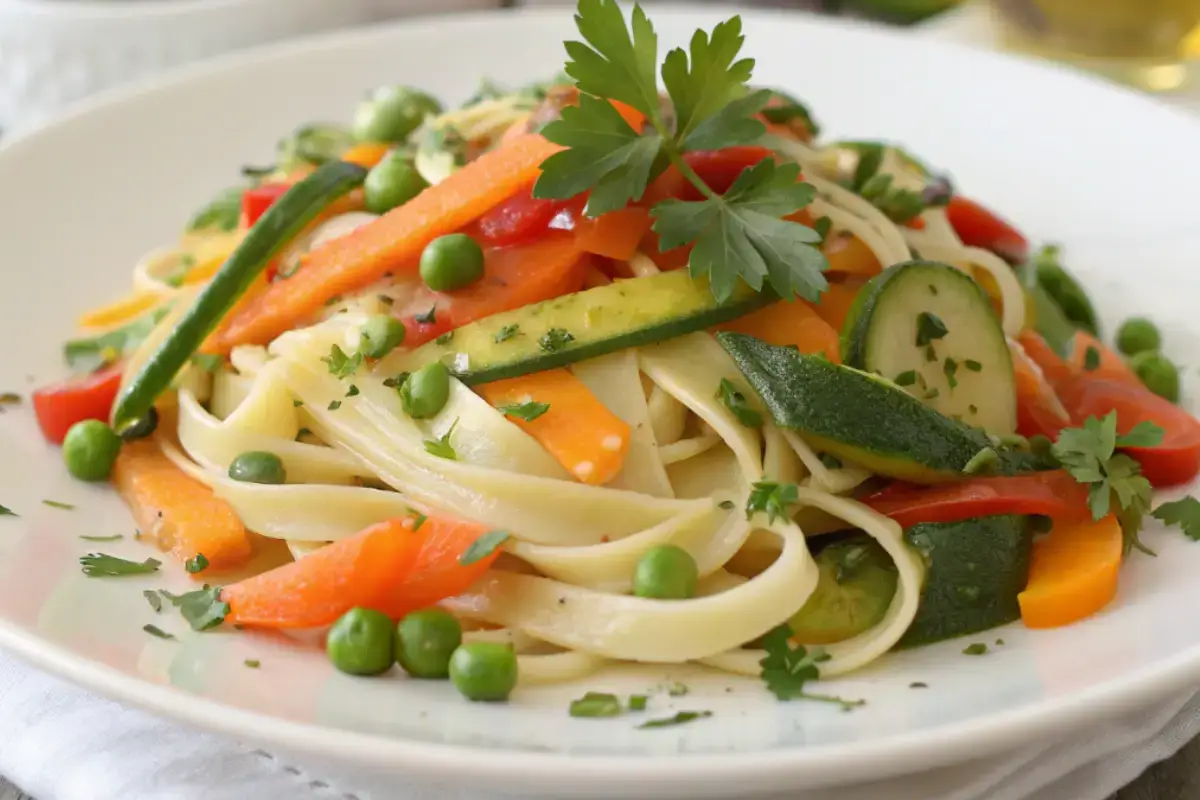
- Bright, quick pasta primavera ready in 25 minutes with fresh vegetables and light lemon-garlic sauce.
- Sauce made in same pan; starchy pasta water creates a silky coating without heavy cream.
- Blanching vegetables keeps them vibrant and crisp tender; finish pasta cooking in the sauce.
- Highly adaptable: swap vegetables, add proteins, or make vegan, gluten free, or extra creamy variants.
- Store refrigerated up to three days; reheat gently in a skillet with splash of water or broth.
Last Updated on February 5, 2026 by Souhail
Some dishes taste like spring from the very first bite, and this pasta primavera is one of them. One weeknight in my small New York apartment, I turned fresh market vegetables, crisp asparagus, sweet peas, tender zucchini, into a comforting meal that was ready in just 25 minutes.
Nothing heavy or overly creamy here, just al dente pasta coated in a light lemon-garlic sauce, where every vegetable keeps its own character. Simple, colorful, and seriously satisfying, this pasta primavera has become my go-to for busy evenings that still deserve a little softness. Because spring is something you want to savor right now, straight from your plate.
Table of contents
Why This Recipe Works
Let’s talk about why this pasta primavera has become my most requested weeknight dish. It’s not just pretty on the plate it’s brilliantly practical.
- The sauce comes together in the same pan where you sauté the vegetables, which means fewer dishes and more flavor as the garlic and lemon soak into every bite
- Blanching the asparagus and peas first keeps them vibrant and crisp tender instead of turning mushy in the sauce
- Using pasta water starchy and hot is the real secret to a silky sauce that clings to every strand of fettuccine without heavy cream
- The lemon zest added at the end wakes up all the flavors and cuts through the richness of the Parmesan beautifully
- It’s endlessly adaptable: swap in broccolini for asparagus, add snap peas for extra crunch, or stir in white beans for plant based protein
For a lighter version, try my cottage cheese alfredo sauce technique it gives you that creamy texture with half the calories. Going vegan? Use nutritional yeast instead of Parmesan and coconut cream in place of dairy. Gluten free? Your favorite GF fettuccine works perfectly just watch the cook time closely.
Pro Tips for Success
Here’s what I’ve learned after making this dish dozens of times in my Brooklyn apartment kitchen.First, salt your pasta water like the sea it makes all the difference when your vegetables are lightly seasoned. Second, don’t overcrowd the pan when sautéing your garlic. Burnt garlic ruins the delicate balance of this dish, so keep the heat at medium and stir constantly until it’s just fragrant. Third, reserve at least a full cup of that starchy pasta water before draining.
You’ll add it gradually to the sauce, and trust me, it’s the magic ingredient that transforms a separated mess into a glossy, restaurant quality coating. And finally, finish cooking the pasta right in the sauce for the last two minutes. This lets the noodles absorb all those bright lemony flavors and ensures every bite tastes intentional.
Variants of the Recipe
The beauty of pasta primavera lies in its flexibility. Think of it as a template for celebrating whatever looks best at your market this week.
Protein Power Version
Add grilled chicken or shrimp during the last minute of cooking for a heartier meal. I love slicing leftover grilled chicken into strips and warming it gently in the sauce. For seafood lovers, plump shrimp sautéed with a pinch of red pepper flakes adds a lovely kick. If you enjoy stuffed pasta dishes, the same lemony vegetable mix works beautifully tucked into shells with ricotta.
Extra Creamy Comfort Style
For those nights when you need maximum comfort, stir in two tablespoons of mascarpone or cream cheese at the end. The sauce becomes luxuriously rich while still letting the vegetables shine. This version feels especially special for date nights at home.
Vegan Sunshine Bowl
Skip the cheese entirely and boost umami with a tablespoon of white miso paste whisked into the lemon sauce. The result is surprisingly complex and satisfying. Top with toasted pine nuts for crunch and a drizzle of good olive oil.
Serving Suggestions
Serve this pasta primavera in wide, shallow bowls to show off all those colorful vegetables. A simple arugula salad with lemon vinaigrette on the side cuts the richness perfectly. For crunch, sprinkle with toasted pine nuts or slivered almonds just before serving. Fresh basil ribbons or chopped parsley add a pop of color and brightness. On cooler evenings, pair it with a slice of crusty garlic bread for mopping up every last drop of that lemony sauce. And if you have extra spring vegetables hanging around, transform them into a light vegetable soup the next day for zero waste cooking.
Storage and Reheating Instructions
Store leftovers in an airtight container in the refrigerator for up to three days. The sauce may thicken as it sits, which is totally normal. To reheat, place portions in a skillet over low heat with a splash of water or broth. Stir gently until warmed through this prevents the pasta from drying out or becoming gluey. Avoid the microwave if possible, but if you must, cover the bowl with a damp paper towel and heat in 30 second bursts, stirring between each. Freezing isn’t recommended as the vegetables lose their pleasant texture when thawed.
Creative Uses for the Recipe
Turn leftover pasta primavera into a frittata by chopping it finely and mixing with beaten eggs, then baking until set. The vegetables and pasta create a gorgeous, colorful base. You can also toss cold leftovers with extra lemon juice and fresh herbs for a pasta salad perfect for lunch boxes. For a fun brunch twist, top a scoop of warm pasta primavera with a perfectly fried egg the runny yolk becomes an instant sauce upgrade.
How Do You Make it
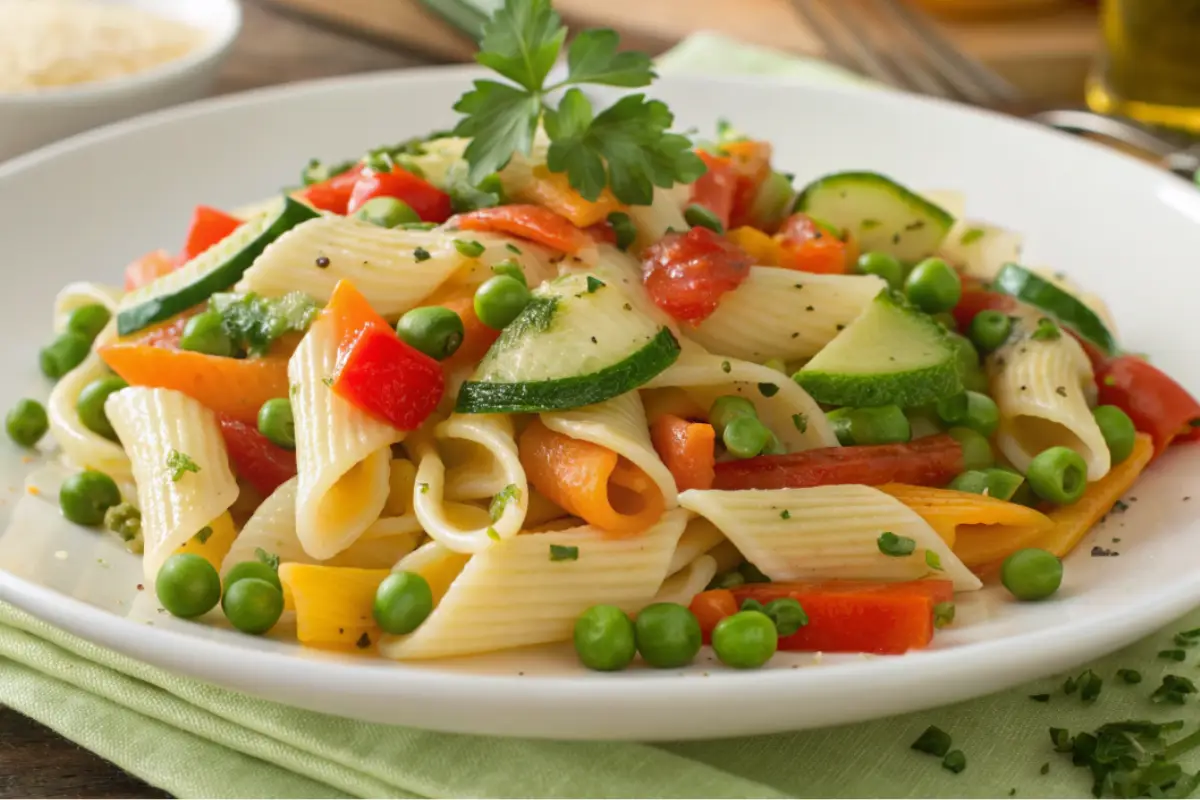

Pasta Primavera
4
servings10
minutes15
minutes420
kcalA vibrant celebration of spring vegetables tossed with fettuccine in a light lemon garlic sauce. This pasta primavera comes together in 25 minutes for an easy yet impressive weeknight dinner.
Keep the screen of your device on
Ingredients
12 ounces fettuccine
1 bunch asparagus, trimmed and cut into 2 inch pieces
1 cup fresh or frozen peas
2 tablespoons olive oil
4 cloves garlic, minced
Zest and juice of 1 lemon
0.75 cup freshly grated Parmesan cheese, plus more for serving
0.5 cup reserved pasta water, plus more as needed
Salt and freshly ground black pepper to taste
2 tablespoons fresh parsley, chopped
1 small zucchini, spiralized or cut into thin ribbons (optional)
Directions
- Cook fettuccine in a large pot of well salted boiling water according to package directions until al dente.
- During the last 3 minutes of cooking, add the asparagus and peas to the pot to blanch.
- Reserve 0.5 cup of starchy pasta water before draining everything together.
- Heat olive oil in a large skillet over medium heat.
- Add minced garlic and sauté for 1 minute until fragrant but not browned.
- Immediately add the drained pasta and vegetables to the skillet along with lemon zest, lemon juice, and 0.25 cup of the reserved pasta water.
- Toss everything gently with tongs for 2 minutes, allowing the pasta to absorb the flavors.
- Remove the skillet from heat.
- Sprinkle in the Parmesan cheese and toss continuously until the cheese melts into a silky sauce.
- If the sauce seems too thick, add more pasta water 1 tablespoon at a time until you reach your desired consistency.
- Season generously with salt and pepper.
- Fold in fresh parsley and zucchini ribbons if using they will soften slightly from the residual heat.
Notes
- Use freshly grated Parmesan, not pre shredded, for the smoothest sauce texture.
- Don’t skip reserving pasta water it’s essential for creating a cohesive sauce.
- For extra protein, stir in 1 cup of cooked chickpeas or white beans with the vegetables.
- This dish is best served immediately but reheats beautifully with a splash of water.
- Swap fettuccine for linguine, spaghetti, or gluten free pasta based on preference.
Nutrition Facts
- Total number of serves: 4
- Calories: 420kcal
- Fat: 14g
- Saturated Fat: 5g
- Sodium: 0.320mg
- Carbohydrates: 62g
- Fiber: 6g
- Sugar: 5g
- Protein: 18g
Like this recipe?
Follow @wikitasty on Pinterest
FAQs
It’s best served fresh, but you can prep the vegetables and sauce base up to a day ahead. Cook the pasta and combine everything just before serving for the best texture.
This usually happens when the heat is too high when adding cheese. Always remove the pan from heat before stirring in Parmesan, and toss continuously until melted.
Absolutely! Frozen peas and asparagus work well just skip the blanching step and add them directly to the skillet with a splash of water to steam for 3-4 minutes before adding pasta.
Long flat noodles like fettuccine or linguine hold the light sauce beautifully. But penne or fusilli work too if you prefer short shapes.
Blanch them briefly in the pasta water during the last few minutes of cooking, then shock in ice water if prepping ahead. Never overcook them in the sauce.
Yes! Replace Parmesan with 3 tablespoons nutritional yeast and add 2 tablespoons olive oil for richness. The lemon flavor will still shine beautifully.
Closing Thoughts
This pasta primavera has become my go to for those nights when I want to eat well without spending hours in the kitchen. It’s proof that the simplest ingredients treated with care can create something truly special. The bright lemon, the crunch of fresh vegetables, the comfort of warm pasta it’s a bowl that just makes you feel good. So grab whatever looks vibrant at your market this week, put a pot of water on to boil, and give yourself the gift of a meal that tastes like spring no matter the season.
And when you make it, I’d love to see your creation tag me on Instagram or drop a comment below. Happy cooking, friends.