
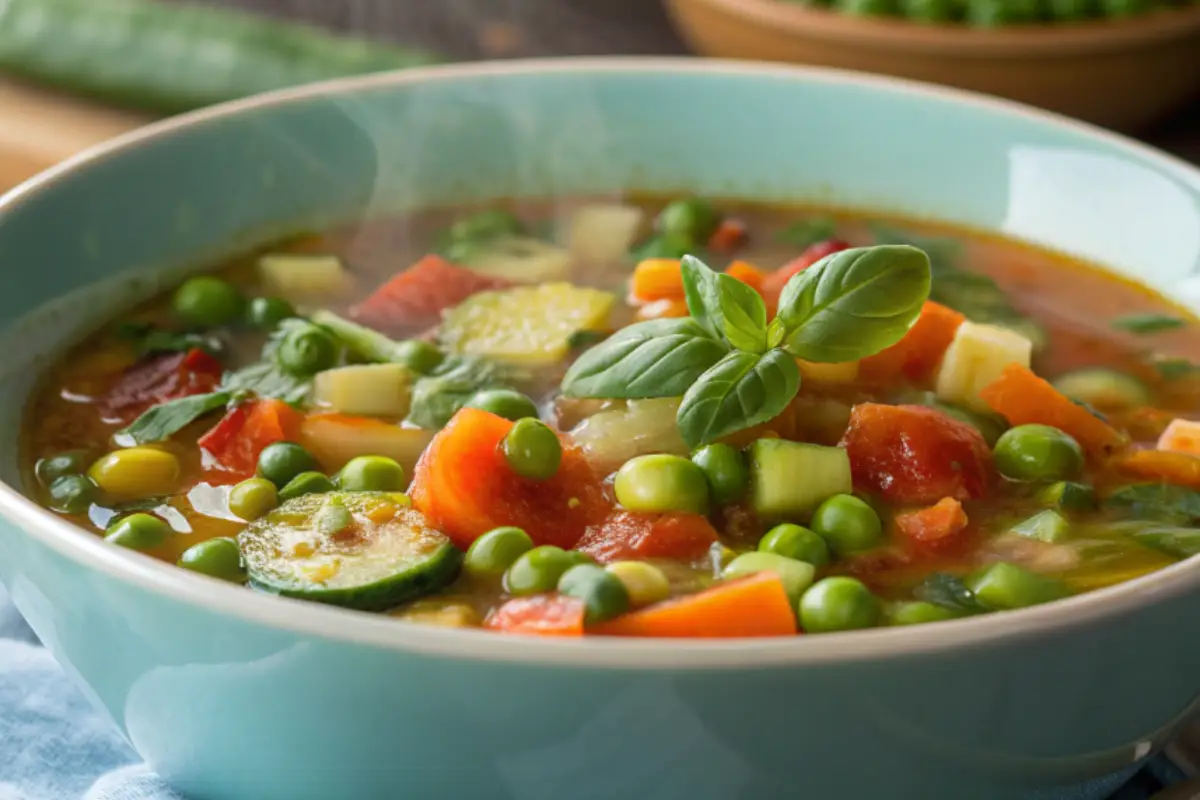
- Light, seasonal spring minestrone highlights tender-crisp vegetables, lemon finish, and fresh herbs instead of heavy tomato bases or soaked dried beans.
- Quick-cooking timing keeps vegetables vibrant; add asparagus and peas late, finish with olive oil and lemon zest for brightness.
- Versatile and easy: vegan and gluten-free adaptations, store refrigerated up to four days, avoid freezing with pasta.
Last Updated on February 5, 2026 by Souhail
There’s a magical moment every April in New York when the farmers’ markets transform overnight. One week it’s all root vegetables and hardy kale, and the next? Suddenly there are bundles of slender asparagus, pea shoots so delicate they look like green lace, and baby zucchini no bigger than my thumb. That’s when I know it’s time for my spring minestrone. This isn’t your heavy winter soup with dried beans and canned tomatoes. Oh no.
This version is light, vibrant, and tastes like a garden after a gentle rain. I created this recipe during my first spring living alone in Brooklyn, when I craved something nourishing but didn’t want to feel weighed down after a long day of recipe testing. Spring minestrone became my go-to for those transitional weeks when you’re tired of hearty stews but not quite ready for cold salads.
With its bright lemon finish, tender-crisp vegetables, and a whisper of fresh dill, this soup feels like hope in a bowl. It’s the perfect weeknight dinner that comes together faster than takeout, yet feels special enough for weekend entertaining. And the best part? Every spoonful tastes like you’re eating the season itself.
Table of contents
Why This Soup Steals My Heart Every Spring
What makes this spring minestrone truly special isn’t just what’s in it—it’s what’s not in it. No heavy tomato base weighing things down. No dried beans requiring hours of soaking. Instead, we’re celebrating the fleeting treasures of early spring with a broth that lets each vegetable shine. Here’s why this recipe works like magic:
- We use quick-cooking fresh vegetables like asparagus and zucchini so they stay tender-crisp, not mushy
- Cannellini beans add creamy protein without making the soup feel heavy
- A splash of lemon juice at the end brightens every single spoonful
- Fresh dill and parsley stirred in right before serving keep the herbal notes vibrant
- Homemade vegetable broth (or a good store-bought one) creates a clean canvas that doesn’t overpower delicate spring flavors
Want to make it vegan? You’re already there! For gluten-free, simply swap regular pasta for your favorite gluten-free small shape. I love using brown rice ditalini. And if you’re craving extra protein, a handful of white beans from my white chicken chili recipe would blend beautifully here for added heartiness without changing the soup’s light character.
My Little Secrets for Soup That Sings
Let me share the tricks I’ve learned after making this soup dozens of times in my tiny Brooklyn kitchen. First, resist the urge to overcook those gorgeous spring vegetables. I add the asparagus and peas in the last five minutes so they keep their brilliant color and slight bite. Second, always taste your broth before adding extra salt—canned beans and store-bought broth vary wildly in sodium. Third, that finishing drizzle of good olive oil? Non-negotiable. It adds a silky richness that makes this humble soup feel restaurant-worthy.
And here’s my favorite tip: grate a little lemon zest directly over each bowl right before serving. It transforms the entire experience with this incredible floral brightness that makes everyone ask, “What’s that amazing flavor?”
Let’s Make It Your Own
Spring produce changes week by week, and this soup welcomes that evolution beautifully. Think of it as your seasonal canvas.
Asparagus and Pea Power
This is my go-to version when farmers’ markets overflow with slender asparagus and sweet peas. The combination creates a delicately sweet flavor with pops of bright green color. I trim the asparagus and cut it into one-inch pieces, adding them with three minutes left so they stay crisp-tender.
Baby Greens Boost
When I want extra nutrients without changing the soup’s character, I stir in two big handfuls of baby spinach or chopped kale during the last two minutes of cooking. The greens wilt perfectly into the broth, adding earthiness and color. It reminds me of my spinach soup recipe but with a much lighter, broth-based foundation.
Herb Garden Variation
Feeling fancy? Double the fresh herbs and add a tablespoon of chopped fresh tarragon or chives along with the dill. This version tastes incredibly sophisticated and makes an elegant starter for spring dinner parties.
Pasta-Free Comfort
Skip the pasta entirely and add an extra cup of white beans for a lower-carb option that’s still wonderfully satisfying. The broth becomes more prominent, letting those spring vegetables truly shine.
Serving Suggestions
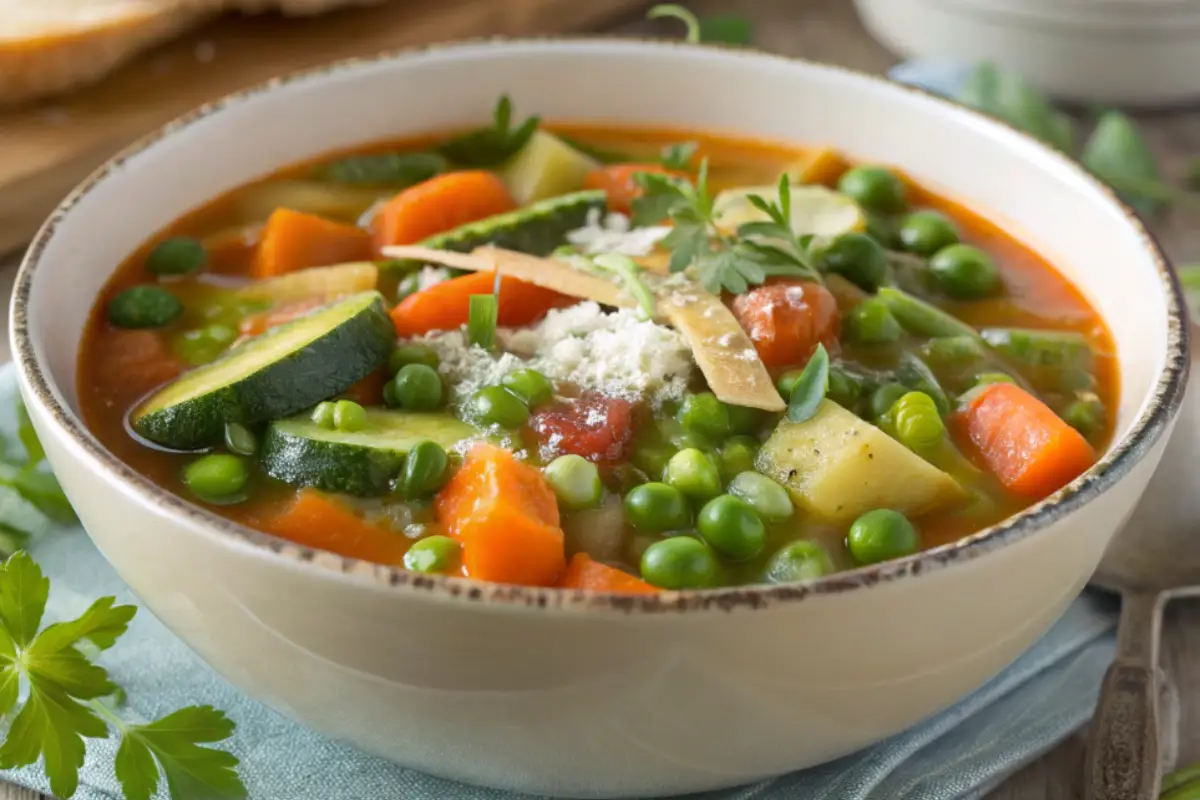
Serve this soup in wide, shallow bowls to showcase all those beautiful green vegetables floating in golden broth. I love garnishing each bowl with a sprinkle of freshly grated Parmesan (or nutritional yeast for vegans), an extra twist of black pepper, and that essential drizzle of fruity olive oil.
For a complete meal, pair it with crusty bread for dipping or a simple arugula salad with lemon vinaigrette. On cooler spring evenings, it’s absolutely heavenly alongside my pumpkin ravioli recipe for a comforting yet seasonal dinner that feels both light and satisfying.
Storage and Reheating Instructions
This soup keeps beautifully for up to four days in an airtight container in the refrigerator. I actually think the flavors deepen overnight! When reheating, gently warm it on the stovetop over medium-low heat. If the pasta has absorbed too much broth, simply stir in a splash of water or additional vegetable broth until you reach your desired consistency. Avoid boiling vigorously to prevent the vegetables from becoming mushy. I don’t recommend freezing this particular version because the fresh vegetables and pasta don’t hold up well after thawing.
Creative Uses for Leftovers
Don’t toss those last few spoonfuls! I love reducing leftover spring minestrone on the stove until it thickens considerably, then tossing it with an extra handful of freshly cooked pasta for a completely new dish. You can also use it as a flavorful base for grain bowls—simply pour warm soup over cooked farro or quinoa and top with avocado slices.
And here’s a fun idea: blend a cup of the soup with a handful of fresh herbs and a tablespoon of Greek yogurt for a vibrant vegetable dip that’s perfect with crudités or even as a fruit dip alternative for a savory twist on snack time
How Do You Make it

spring minestrone
6
servings15
minutes20
minutes245
kcalA light and vibrant spring minestrone packed with seasonal vegetables, white beans, and fresh herbs for a nourishing bowl that tastes like sunshine.
Keep the screen of your device on
Ingredients
2 tablespoons olive oil
1 medium yellow onion, diced
2 medium carrots, diced
2 celery stalks, diced
3 garlic cloves, minced
6 cups low-sodium vegetable broth
1.5 cups water
1.5 cups ditalini pasta
1 can (15 ounces) cannellini beans, drained and rinsed
1 cup asparagus, trimmed and cut into 1-inch pieces
1 cup fresh or frozen peas
1 medium zucchini, diced
0.25 cup fresh dill, chopped
0.25 cup fresh parsley, chopped
2 tablespoons lemon juice
1 teaspoon lemon zest
Salt and freshly ground black pepper to taste
Extra olive oil and Parmesan cheese for serving
Directions
- Heat the olive oil in a large pot over medium heat. Add the onion, carrots, and celery.
- Cook, stirring occasionally, until the vegetables begin to soften, about 6 to 8 minutes. Stir in the garlic and cook until fragrant, about 1 minute more.
- Pour in the vegetable broth and water. Bring the mixture to a gentle boil.
- Stir in the ditalini pasta and cook according to package directions, usually about 8 minutes, until the pasta is al dente.
- Add the cannellini beans, asparagus, peas, and zucchini to the pot.
- Continue cooking until the vegetables are tender-crisp and the pasta is fully cooked, about 4 to 5 minutes more.
- Remove the pot from the heat. Stir in the fresh dill, parsley, lemon juice, and lemon zest.
- Season generously with salt and freshly ground black pepper to taste.
- Ladle the soup into bowls. Drizzle each serving with a little extra olive oil and sprinkle with Parmesan cheese if desired.
- Serve immediately while hot and fragrant.
Notes
- Don’t walk away while the pasta cooks—taste it frequently to avoid overcooking in the broth
- Fresh lemon juice is essential; bottled juice won’t give you the same bright finish
- For extra depth, add a Parmesan rind to the broth while simmering (remove before serving)
- The soup will thicken as it sits; thin with additional broth or water when reheating
- To make ahead, cook the pasta separately and add it to individual bowls when serving to prevent mushiness
Nutrition Facts
- Total number of serves: 6
- Calories: 245kcal
- Fat: 6g
- Saturated Fat: 1g
- Cholesterol: 0mg
- Sodium: 0.480mg
- Carbohydrates: 38g
- Fiber: 8g
- Sugar: 6g
- Protein: 11g
Like this recipe?
Follow @wikitasty on Pinterest
FAQs
Absolutely! Prepare everything except the pasta ahead of time. Store the soup base separately and cook fresh pasta when ready to serve, then combine. This prevents the pasta from becoming mushy after sitting in broth.
Any small pasta shape works beautifully—try elbow macaroni, small shells, or orzo. For gluten-free, brown rice ditalini or chickpea pasta hold up well without getting gummy.
Pasta and beans naturally absorb liquid as soup sits. Simply stir in additional broth or water when reheating until you reach your preferred consistency. Start with a quarter cup at a time.
I don’t recommend freezing this version with fresh vegetables and pasta—they become watery and mushy when thawed. Instead, freeze the broth and vegetable base without pasta, then add freshly cooked pasta when reheating.
Add delicate vegetables like asparagus, peas, and zucchini in the last 5 minutes of cooking. They’ll retain their vibrant color and pleasant texture rather than dissolving into the broth.
Minestrone traditionally includes beans and pasta or rice, making it heartier than simple vegetable soup. Spring minestrone keeps those elements but uses lighter broth and seasonal vegetables for a fresher profile.
A Little Slice of Spring in Every Bowl
I’ll never forget the first time I made this soup after a particularly long, gray New York winter. Snow was still patchy in Central Park, but the farmers’ market had asparagus. That first spoonful tasted like possibility—like the city was waking up and so was I. There’s something deeply comforting about cooking with what’s fresh and fleeting. This soup captures that brief, beautiful moment when spring vegetables are at their absolute peak.
Let’s Cook Together!
I’d absolutely love to see your spring minestrone creations! Snap a photo and tag me on Instagram—I always smile when I see your kitchen victories. And tell me in the comments: what’s the first spring vegetable you look forward to each year? For me, it will always be asparagus.
Closing Thoughts
This spring minestrone has become my seasonal ritual—a simple way to welcome warmer days with a bowl that’s both nourishing and joyful. It’s proof that the best recipes don’t need complicated techniques or rare ingredients. Just good vegetables, a squeeze of lemon, and the willingness to celebrate the season on your plate.
Give it a try this weekend, and while you’re at it, explore my spinach soup recipe for another light, veggie-packed favorite that works beautifully year-round. Happy cooking, friends!