
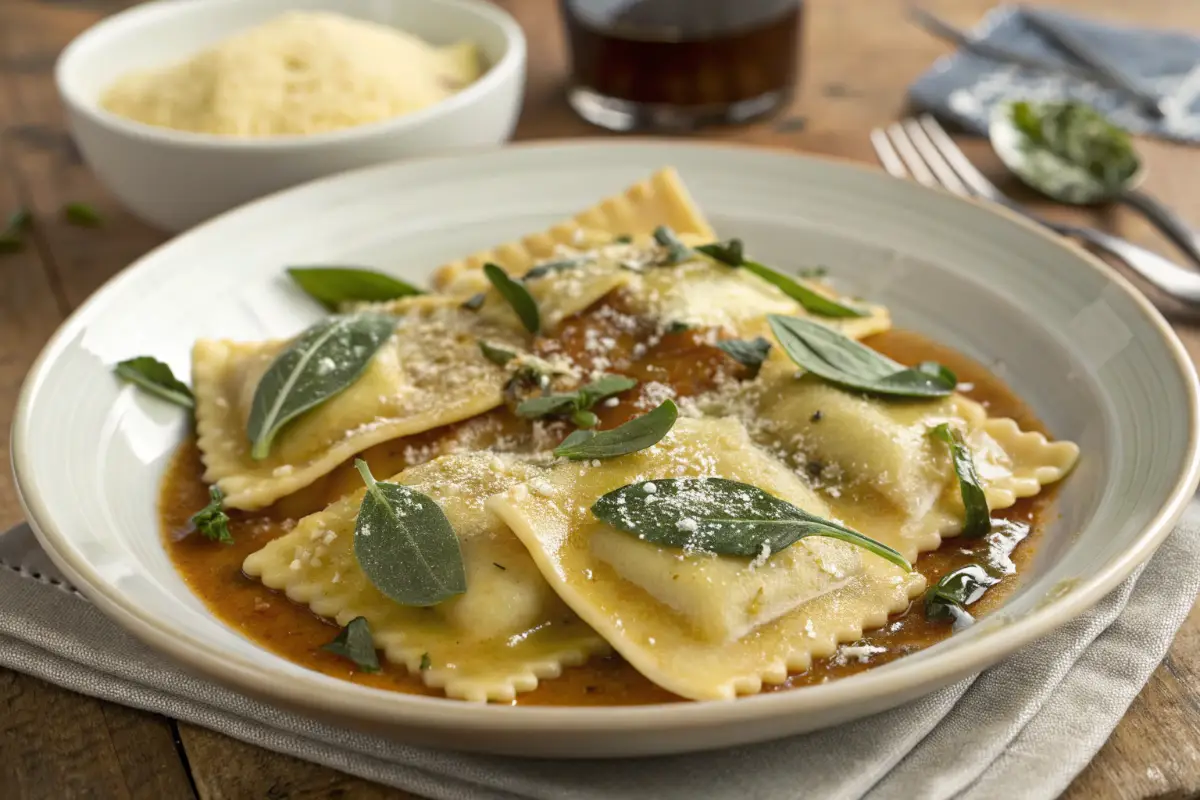
- Master browning butter: watch color and aroma, swirl to toast solids until nutty, then remove to avoid bitterness.
- Fry sage leaves in browned butter to crisp them, providing herbaceous contrast to silky ravioli.
- Use fresh spring greens and herbs in the filling for bright, seasonal flavors that keep the dish light.
- Quick enough for weeknights yet elegant for guests; simple ingredients and technique let the quality shine.
- Store leftovers refrigerated up to three days; reheat gently in a skillet with a splash of water to restore sauce.
Last Updated on April 4, 2026 by Souhail
There is a specific moment in early spring when the market stalls finally overflow with fresh greens and delicate herbs. This is exactly when I pull out my largest skillet to make this Spring Ravioli with Brown Butter and Sage for anyone who will sit at my table. The dish strikes a perfect balance between rich comfort and the bright vitality of the season.
You do not need to be a professional chef to master the technique of browning butter until it smells like toasted nuts. I have refined this process over years of teaching home cooks how to achieve that golden hue without burning the solids. The result is a velvety sauce that clings to every ridge of the pasta perfectly.
This recipe fits seamlessly into your routine whether you are hosting a date night or feeding a hungry family after work. It comes together quickly enough for a Tuesday but looks elegant enough for a weekend gathering. You will find that the simplicity of the ingredients allows the quality of your cooking to shine through.
Table of contents
- Why This Spring Pasta Stands Out
- Mastering the Brown Butter Technique
- Delicious Variations to Try
- Perfect Pairings for Your Table
- Storing and Reheating Leftovers
- Creative Ways to Use This Dish
- How Do You Make It
- FAQS
- The Tradition of Brown Butter in Italian Cooking
- Printable Shopping List
- Dairy & Refrigerated
- Final Thoughts on Your Spring Meal
Why This Spring Pasta Stands Out
This dish succeeds because it relies on a fundamental culinary technique that transforms simple ingredients into something extraordinary. Browning the butter creates a nutty depth that complements the earthy sage and delicate pasta without overwhelming them. It is a lesson in how patience and heat control can elevate a basic weeknight meal into a restaurant-quality experience.
The balance of textures here is what keeps people coming back for seconds every single time. You get the tender bite of the ravioli against the crisp, fried sage leaves and the silky, golden sauce. It is a harmonious blend that feels both comforting and sophisticated on the palate.
- Nutty Flavor Profile: The browned butter adds a rich, toasted note that regular melted butter simply cannot achieve.
- Crispy Herb Garnish: Frying the sage leaves until crisp provides a necessary textural contrast to the soft pasta.
- Seasonal Brightness: Using fresh spring vegetables in the filling keeps the dish light and vibrant rather than heavy.
- Quick Execution: The sauce comes together in the time it takes to boil the water, making it ideal for busy evenings.
You can easily adapt this recipe to fit various dietary needs without sacrificing the core flavor experience. If you require a gluten-free option, simply swap in your favorite gluten-free ravioli brands which hold up well to this sauce. For a vegan version, use plant-based butter and ensure your pasta dough contains no eggs, as the sauce relies heavily on the fat content for its richness.
If you love exploring different filled pastas, you might also enjoy trying a Pumpkin Ravioli Recipe during the autumn months when squash is at its peak. The technique for the brown butter sauce remains identical, proving how versatile this method truly is across different seasons.
Mastering the Brown Butter Technique
Success with this recipe hinges entirely on your ability to monitor the butter as it cooks in the pan. You need to watch for the milk solids to turn a golden brown color while swirling the pan constantly to prevent burning. This process usually takes about three to five minutes over medium heat depending on your stove and pan type.
I recommend using a light-colored skillet so you can clearly see the color change happening at the bottom of the pan. Dark non-stick pans can sometimes hide the browning process, leading to accidentally burnt butter which tastes bitter. A stainless steel or light enamel pan gives you the visual feedback necessary for perfection.
- Watch the Color: Keep your eyes on the pan constantly as the butter transitions from foamy to golden brown very quickly.
- Listen for the Sound: The sizzling sound will quiet down significantly once the water evaporates and the solids begin to toast.
- Smell the Aroma: Your nose is your best tool here; the moment it smells like toasted nuts, it is ready to come off the heat.
- Add Sage Immediately: Toss the sage leaves in right after the butter browns so they crisp up in the residual heat without burning.
- Reserve Pasta Water: Always save a cup of starchy cooking water to emulsify the sauce and help it cling to the ravioli.
- Serve Instantly: This sauce does not wait for anyone, so have your serving bowls warmed and ready before you start browning.
For those who enjoy fish dishes with similar nutty profiles, this same brown butter technique works beautifully in a Baked Tilapia with Brown Butter and Capers Recipe. The principles of heat control and timing are universal across these distinct protein and pasta applications.
Delicious Variations to Try
While the classic combination of cheese and spring greens is timeless, there are many ways to customize the filling inside your pasta. Changing the interior components can shift the dish from a light lunch to a hearty dinner centerpiece depending on your needs.
Ricotta and Lemon Zest
Adding fresh lemon zest to a standard ricotta filling cuts through the richness of the brown butter with bright citrus notes. This variation feels incredibly fresh and is perfect for those warmer spring days when you want something zesty. The acidity balances the nutty sauce beautifully without needing extra vinegar or wine.
Spinach and Artichoke
Incorporating chopped artichoke hearts and sautéed spinach creates a filling that mimics the popular dip but in pasta form. This version adds a bit more texture and earthiness that stands up well to the strong flavor of the sage. It is a robust option that satisfies heartier appetites while still feeling seasonal.
Butternut Squash Swap
Although technically a fall vegetable, using a butternut squash filling offers a sweet counterpoint to the savory browned butter. This twist works surprisingly well if you find yourself craving something slightly sweeter than the traditional cheese filling. The natural sugars in the squash caramelize slightly when tossed in the hot fat.
| Variation Name | Key Change | Best For |
|---|---|---|
| Ricotta Lemon | Add fresh lemon zest to filling | Bright, zesty flavor lovers |
| Spinach Artichoke | Mix in chopped artichokes | Hearty, textured meals |
| Butternut Squash | Use sweet squash puree | Sweet and savory balance |
| Pea and Mint | Stir in fresh peas and mint | Ultra-fresh spring vibes |
If you want to add even more green vegetables directly to the sauce, consider looking at a Ravioli with Brown Butter Sage and Peas Recipe for inspiration on incorporating sweet peas. Adding peas introduces a pop of sweetness and color that makes the plate visually stunning.
Perfect Pairings for Your Table
Serving this dish requires sides that complement rather than compete with the rich, nutty sauce and delicate pasta. You want accompaniments that provide a crisp contrast or a clean palate cleanser between bites of the buttery goodness.
A simple arugula salad dressed with nothing more than lemon juice and a pinch of salt works wonders here. The peppery bite of the greens cuts through the fat of the brown butter, refreshing your mouth for the next forkful. It keeps the meal feeling light despite the richness of the main course.
Crusty bread is essential for soaking up any remaining sauce left on the plate after the pasta is gone. Choose a rustic sourdough or a baguette with a chewy interior to maximize the sauce absorption. No one wants to waste a single drop of that golden, sage-infused butter.
Storing and Reheating Leftovers
Proper storage is crucial because pasta tends to absorb sauce as it sits, which can alter the texture significantly over time. You should store any leftovers in an airtight container in the refrigerator immediately after the meal has cooled to room temperature.
| Storage Method | Duration | Notes |
|---|---|---|
| Refrigerator | 3 Days | Store sauce and pasta together to prevent drying |
| Freezer | 1 Month | Freeze unfilled ravioli only; do not freeze sauced pasta |
| Counter | Not Recommended | Butter sauce spoils quickly at room temperature |
Reheating requires a gentle touch to restore the emulsion of the sauce without separating the butter or overcooking the pasta. Place the leftovers in a skillet over low heat with a splash of water or broth to loosen the sauce before warming through. Avoid using the microwave if possible, as it tends to make the butter greasy and the pasta rubbery.
Creative Ways to Use This Dish
Leftover ravioli can be transformed into entirely new meals that feel just as intentional as the original dinner. These ideas help you stretch your cooking efforts further and reduce food waste in a delicious way.
Turn cold ravioli into a frittata by whisking them with eggs and baking until set for a hearty brunch option. The brown butter flavor permeates the egg custard, creating a rich and satisfying morning meal. Top with extra fried sage for a consistent flavor profile throughout the dish.
Slice the cooked ravioli in half and pan-fry them until crispy to create a unique appetizer skewer. Thread them onto toothpicks with cherry tomatoes and mozzarella balls for a playful caprese-style bite. This is an excellent way to serve leftovers at a party where finger foods are preferred.
Mix chopped leftover ravioli into a warm grain bowl with roasted vegetables and a vinaigrette. The cold pasta adds substance to the bowl while the residual butter acts as part of the dressing. It is a quick lunch solution that requires almost no additional cooking effort.
How Do You Make It
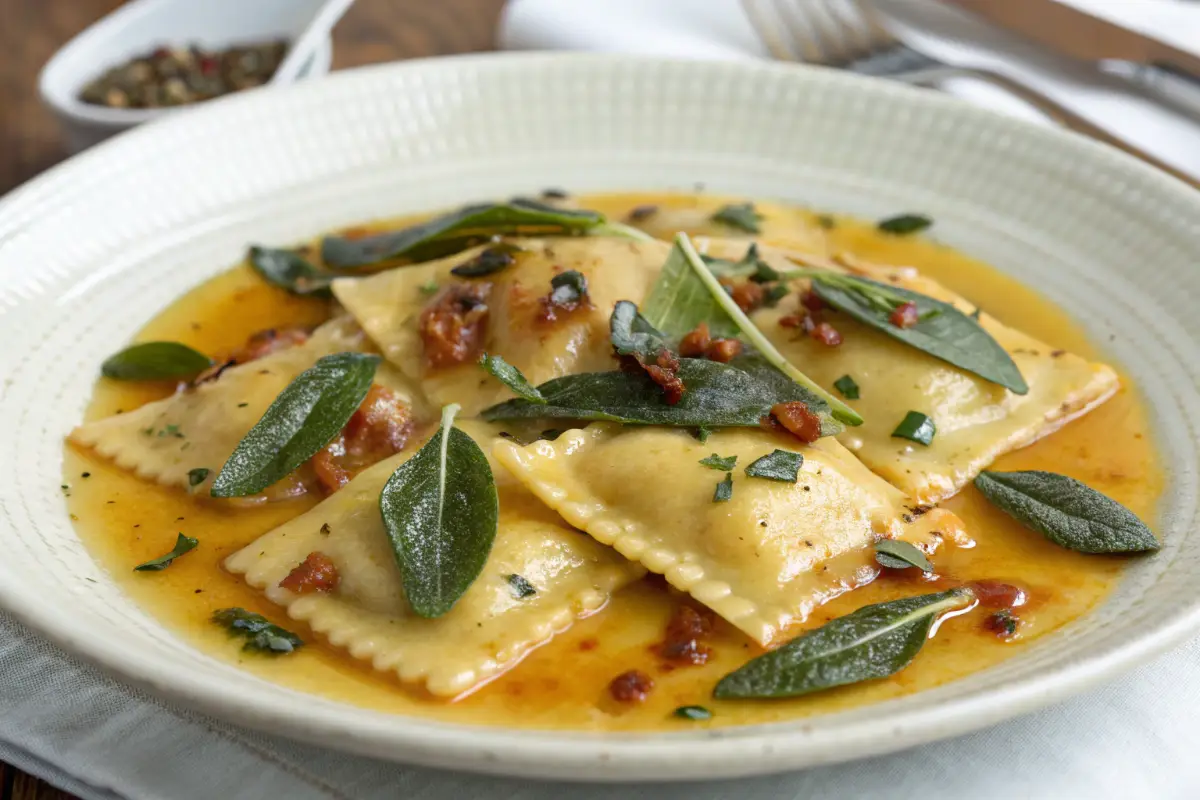

Spring Ravioli with Brown Butter and Sage
Discover how to make this Spring Ravioli with Brown Butter and Sage for a quick yet elegant vegetarian dinner. The nutty brown butter sauce and crispy sage leaves create a gourmet meal in minutes using simple pantry staples.
4
servings15
minutes25
minutes480
kcalKeep the screen of your device on
Ingredients
1 lb fresh cheese ravioli (or high-quality frozen)
0.5 cup unsalted butter
15 fresh sage leaves
0.25 tsp freshly ground black pepper
0.5 tsp flaky sea salt
0.25 cup grated Parmesan cheese
1 tbsp lemon juice
2 tbsp reserved pasta water
Directions
- Bring a large pot of generously salted water to a rolling boil and cook the ravioli according to package directions until al dente.
- Remember to reserve at least half a cup of the starchy cooking water before draining the pasta gently.
- While the water heats, melt the butter in a large light-colored skillet over medium heat and swirl the pan occasionally.
- Watch closely as the butter foams and then subsides, waiting for the milk solids to turn golden brown and smell like toasted nuts.
- Immediately toss the fresh sage leaves into the hot brown butter and fry for about 30 seconds until they are crisp and dark green.
- Remove the pan from the heat source immediately to prevent the butter from burning further while you finish the pasta.
- Add the drained ravioli directly into the skillet with the brown butter and sage, tossing gently to coat every piece evenly.
- Splash in the reserved pasta water and lemon juice to create a glossy emulsion that clings to the pasta surfaces.
- Season the dish with flaky sea salt and freshly ground black pepper to taste before transferring to warm serving bowls.
- Finish with a generous dusting of grated Parmesan cheese and serve immediately while the sauce is hot and fragrant.
Notes
- Use a light-colored pan to monitor the browning process accurately and avoid burnt butter.
- Do not rinse the pasta after draining, as the starch is needed for the sauce to adhere properly.
- If the sauce seems too thick, add more reserved pasta water one tablespoon at a time.
- Fresh sage is essential for this recipe; dried sage will not crisp up or provide the same flavor.
- For extra richness, stir in a tablespoon of heavy cream at the very end of cooking.
Nutrition Facts
- Total number of serves: 4
- Calories: 480kcal
- Fat: 32g
- Saturated Fat: 19g
- Cholesterol: 0.85mg
- Sodium: 0.620mg
- Carbohydrates: 38g
- Fiber: 2g
- Sugar: 3g
- Protein: 14g
Like this recipe?
Follow @wikitasty on Pinterest
FAQS
Yes, you can use dried ravioli, but you must adjust the cooking time significantly to ensure they remain tender. Dried pasta often requires a longer boil, so check the package instructions carefully to avoid overcooking. The texture will be slightly firmer than fresh, but the brown butter sauce will still coat it deliciously.
Bitterness usually occurs when the milk solids burn rather than just toast to a golden brown color. You likely left the butter on the heat too long after it stopped foaming, causing the solids to turn black. Next time, remove the pan from the heat the moment you smell a nutty aroma and see golden specks.
This dish is best enjoyed immediately, but you can prep the components separately for a quick assembly later. Boil the ravioli and store them with a little oil to prevent sticking, then reheat gently with freshly browned butter when ready to eat. Reheating pre-sauced pasta often results in a broken sauce and rubbery texture.
If you do not have sage, fresh thyme or rosemary can work, though the flavor profile will change distinctly. Thyme offers a more floral note while rosemary provides a piney sharpness that pairs well with brown butter. Use slightly less rosemary than sage as its flavor is much more potent and dominant.
To make this vegan, use a high-quality plant-based butter that browns similarly to dairy butter and check your ravioli ingredients. Many fresh pastas contain eggs, so look for egg-free varieties or make your own dough with flour and water. Nutritional yeast can replace the Parmesan cheese for a cheesy, umami finish.
Absolutely, as grilled chicken, shrimp, or white beans pair wonderfully with the nutty sage sauce. For a quick addition, toss in some canned cannellini beans during the last minute of heating to warm them through. If adding meat, cook it separately and place it on top of the finished pasta to maintain texture.
The Tradition of Brown Butter in Italian Cooking
Browning butter, or beurre noisette as the French call it, has deep roots in Northern Italian cuisine where butter is more common than olive oil. Regions like Lombardy and Piedmont have long utilized this technique to add depth to simple pasta dishes and vegetable sides. It represents a resourceful way to maximize flavor from humble ingredients that were readily available in colder climates.
The addition of sage is a classic pairing that dates back centuries, originally used to aid digestion of rich fatty foods. This combination appears in the famous Ravioli di Zucca from Mantua, where the sweetness of pumpkin meets the savory nuttiness of the sauce. Understanding this history helps appreciate why the flavors work so intuitively together on your plate today.
Cooking this dish connects you to a long lineage of home cooks who relied on technique rather than expensive ingredients to create magic. It is a reminder that some of the best meals come from mastering the basics and respecting the seasonality of produce. Every time you hear that sizzle and smell that toastiness, you are participating in a timeless culinary tradition.
Printable Shopping List
Produce
- Fresh sage leaves (1 bunch)
- Lemon (1 whole)
- Fresh parsley for garnish (optional)
Dairy & Refrigerated
- Unsalted butter (1 stick)
- Fresh cheese ravioli (1 lb)
- Parmesan cheese block (for grating)
Pantry Staples
- Flaky sea salt
- Black peppercorns (for grinding)
- All-purpose flour (if making pasta from scratch)
Health Benefits of Key Ingredients
| Nutrient or Ingredient | Benefit |
|---|---|
| Sage | Rich in antioxidants and known for anti-inflammatory properties |
| Butter | Provides fat-soluble vitamins like A, D, E, and K in moderation |
| Cheese | Excellent source of calcium and high-quality protein for muscle repair |
| Lemon Juice | Adds Vitamin C and aids in iron absorption from the greens |
While brown butter is rich, the sage in this dish offers genuine health perks including digestive support and antimicrobial benefits. The fresh herbs provide a concentrated dose of antioxidants that help combat oxidative stress in the body. Enjoying this meal mindfully allows you to appreciate both the flavor and the functional nutrition it provides.
The carbohydrates from the pasta offer immediate energy, making this a great choice for an active day or a hearty dinner. Balancing the rich fats with the fiber from the herbs and potential vegetable additions creates a satisfying macronutrient profile. It is comfort food that nourishes the body while delighting the senses.
Final Thoughts on Your Spring Meal
Making this Spring Ravioli with Brown Butter and Sage is a wonderful way to celebrate the arrival of warmer weather and fresh produce. I hope you find as much joy in the process of browning that butter as you do in eating the final dish. It is a recipe that proves simplicity, when executed with care, yields the most rewarding results.
If you enjoyed this pasta, you might also want to try a comforting bowl of Hash Brown Potato Soup for a different kind of cozy meal. Or perhaps explore a sweet and savory Brown Sugar Glazed Corned Beef Recipe for your next holiday gathering.
Save this recipe for later so you can easily find it when those fresh sage leaves start appearing at your local market. Pin this to your dinner board now and let me know in the comments how your brown butter turned out. Happy cooking!