
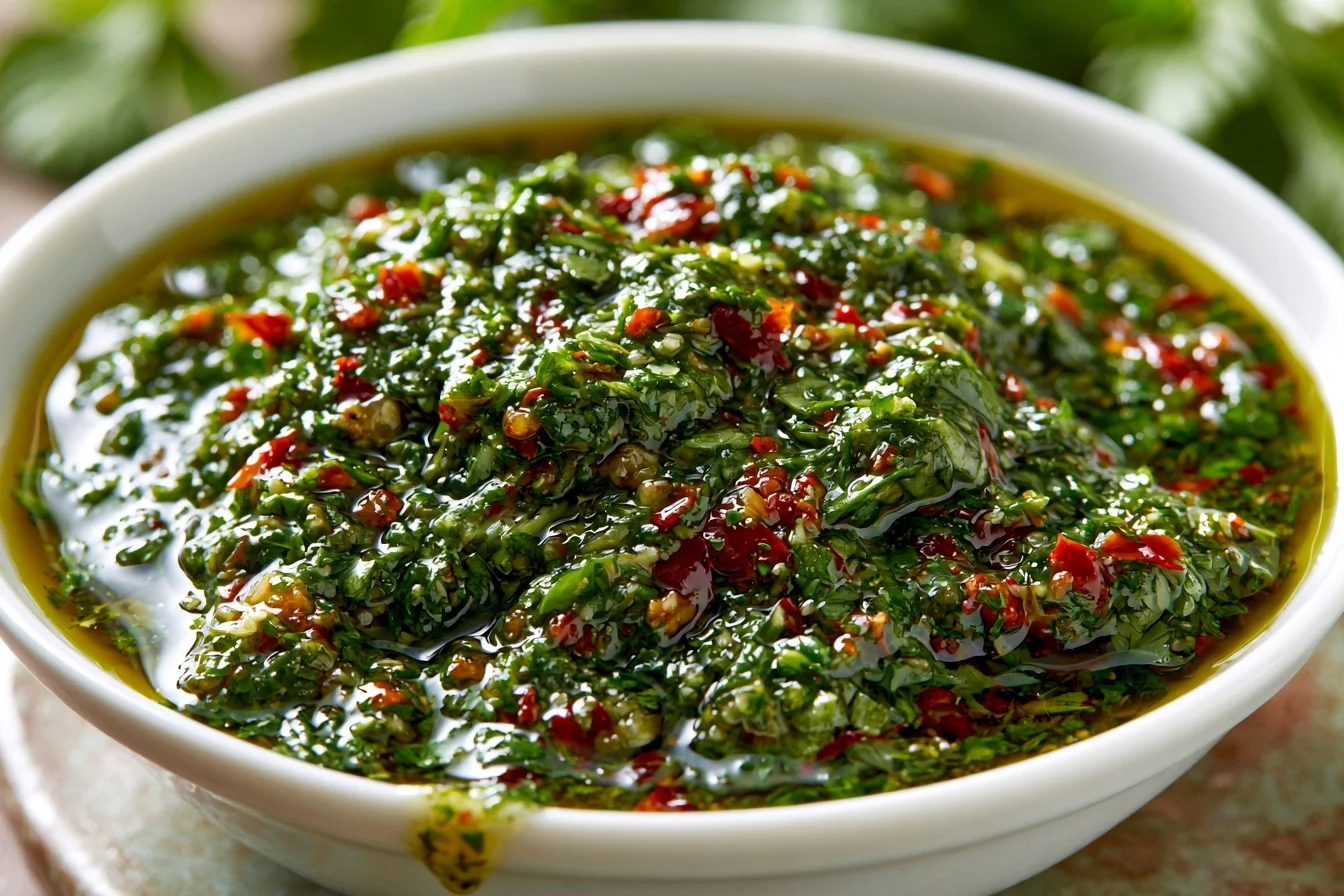
- Simple, vibrant sauce of parsley, garlic, oregano, vinegar, and olive oil that takes five minutes and elevates grilled meats.
- Use fresh flat leaf parsley, dried oregano, and a sharp knife for texture; balance vinegar and oil, and let chimichurri rest to meld flavors.
- Extremely versatile: serve with beef, chicken, seafood, vegetables, use as marinade, dip, or freeze in ice cube trays for convenient portions.
Last Updated on July 24, 2026 by Souhail
This post contains affiliate links. As an Amazon Associate, we earn from qualifying purchases. This means we may earn a small commission if you purchase through our links, at no extra cost to you.
If you’ve ever tasted a perfectly grilled steak in Argentina, you know there’s one magical ingredient that makes it unforgettable: authentic argentinian chimichurri sauce. This vibrant green condiment is far more than just a topping. It’s a celebration of fresh herbs, bold garlic, and tangy vinegar that transforms simple grilled meats into restaurant-quality dishes. Whether you’re a seasoned grill master or just discovering this South American treasure, chimichurri sauce deserves a permanent spot in your kitchen.
What makes chimichurri so special is its simplicity combined with incredible depth of flavor. Unlike heavy, complicated sauces, this herbaceous blend comes together in minutes with just a handful of pantry staples. In Argentina, chimichurri isn’t reserved for special occasions—it’s an everyday essential that Argentines serve alongside asados, their traditional barbecues. The sauce brings brightness and freshness to grilled beef, lamb, chicken, and even vegetables.
I still remember my first encounter with genuine chimichurri at a small parrilla in Buenos Aires. The chef explained that the secret wasn’t in fancy techniques but in respecting each ingredient and balancing the flavors perfectly. That lesson stuck with me, and now I’m thrilled to share this authentic recipe with you so you can bring that same Argentine spirit to your table.
Table of contents
- Why You'll Love This Recipe
- Meet Your New Favorite Grilling Companion
- Pro Tips for Perfect Authentic Argentinian Chimichurri Sauce
- Creative Variations on the Classic Chimichurri Recipe
- Understanding the Nutritional Profile
- Serving Ideas That Showcase Your Chimichurri
- Keeping Your Chimichurri Fresh and Flavorful
- Common Questions About Making Chimichurri
Why You’ll Love This Recipe
- This authentic argentinian chimichurri sauce comes together in just five minutes, requiring no cooking whatsoever, making it the perfect quick condiment for busy weeknights when you want restaurant-quality results without spending hours in the kitchen.
- Made with fresh parsley, garlic, oregano, and vinegar, this herbaceous sauce delivers bold, vibrant flavors that elevate any grilled protein from ordinary to extraordinary with minimal effort.
- This recipe stores beautifully in the refrigerator for weeks, allowing you to prepare a batch ahead and enjoy authentic chimichurri sauce whenever you need it, making entertaining and weeknight dinners infinitely easier.
- Unlike store-bought versions loaded with preservatives, this homemade chimichurri contains only real ingredients you recognize and control, giving you full transparency over what you’re serving your family.
- This versatile condiment works beautifully with beef, lamb, chicken, seafood, and roasted vegetables, making it an essential addition to your sauce repertoire that justifies its permanent home on your pantry shelf.
Meet Your New Favorite Grilling Companion
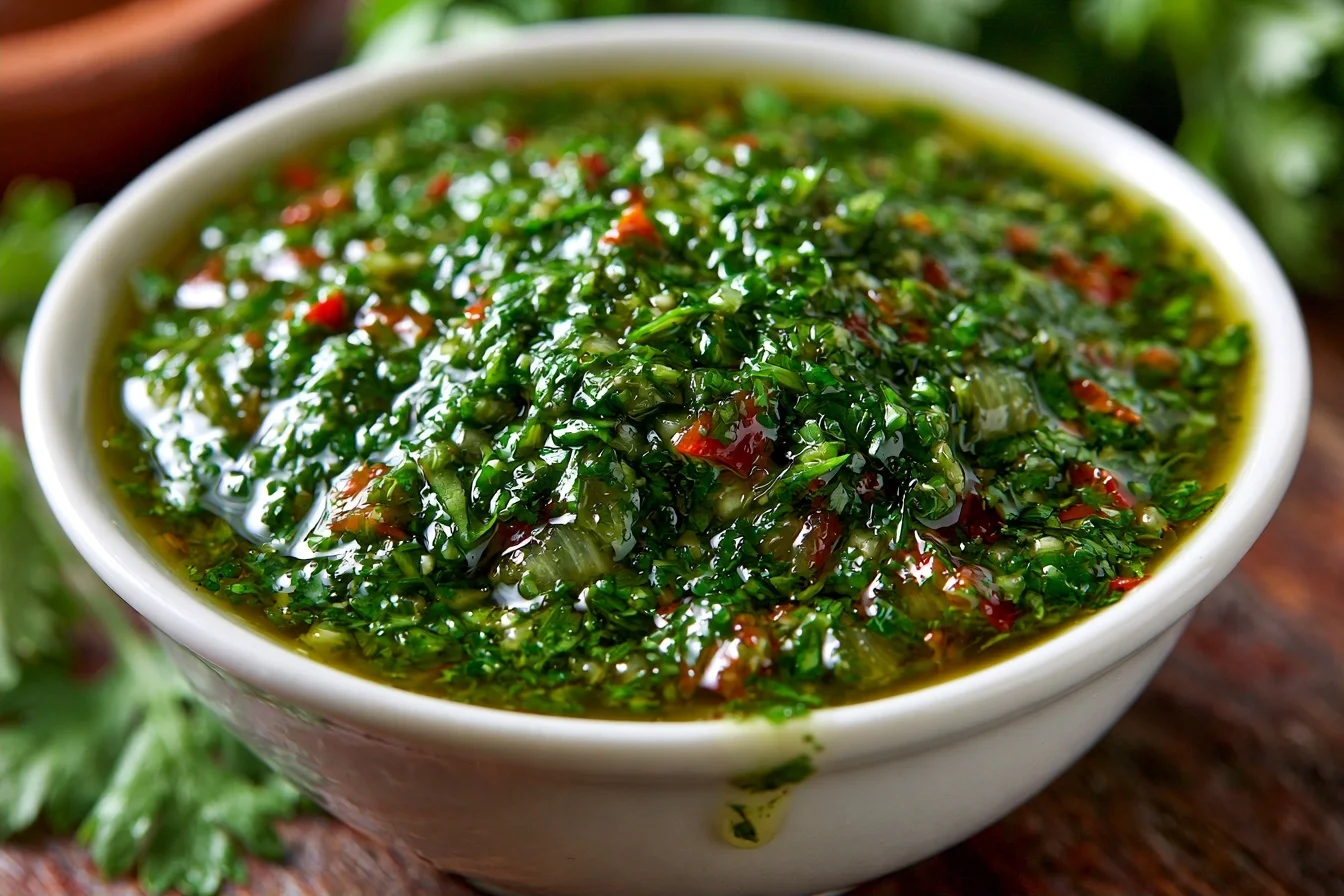

Authentic Argentinian Chimichurri Sauce
This vibrant, herbaceous chimichurri sauce comes together in minutes with fresh parsley, garlic, oregano, vinegar, and olive oil. A staple of Argentine cuisine, this authentic condiment elevates grilled meats and vegetables with bold, fresh flavors.
8
servings5
minutes0
minutes120
kcalKeep the screen of your device on
Ingredients
1 cup fresh flat-leaf parsley
4 cloves garlic
1 teaspoon dried oregano
0.5 cup extra virgin olive oil
0.5 cup red wine vinegar
0.5 teaspoon red pepper flakes
0.5 teaspoon sea salt
0.25 teaspoon black pepper
Directions
- Combine all ingredients in a glass bowl or jar. Add the minced parsley, garlic, dried oregano, olive oil, and red wine vinegar together.
- Season to taste with sea salt, black pepper, and red pepper flakes if using. Stir well to combine all ingredients thoroughly.
- Let the sauce rest for at least 15 minutes before serving. This allows the flavors to meld and develop beautifully.
- Taste and adjust the seasonings if needed. Add more vinegar for extra tang, more oil for richness, or more garlic for intensity.
- Serve at room temperature alongside grilled meats, vegetables, or your favorite proteins. Store leftovers in an airtight glass jar in the refrigerator.
Notes
- Chimichurri keeps beautifully in the refrigerator for up to three weeks in an airtight glass container.
- For longer storage, freeze chimichurri in ice cube trays for up to three months, then transfer cubes to a freezer bag.
- This sauce is best served at room temperature to fully enjoy its fresh, herbaceous character.
- For a smoother consistency, use a food processor to pulse the ingredients, but avoid over-processing.
- Red wine vinegar is traditional, but white wine vinegar works equally well if preferred.
Nutrition Facts
- Serving Size: 1
- Total number of serves: 8
- Calories: 120kcal
- Fat: 11g
- Carbohydrates: 2g
- Fiber: 0.5g
- Protein: 1g
Like this recipe?
Follow @wikitasty on Pinterest
Pro Tips for Perfect Authentic Argentinian Chimichurri Sauce
Making authentic argentinian chimichurri sauce is straightforward, but a few insider tips will help you achieve that perfect balance of flavors every time. The key is understanding how each ingredient contributes to the final result and knowing when to adjust based on your personal preferences. Let me walk you through the techniques I’ve learned from years of working with this incredible sauce.
Choosing the Right Herbs
Fresh flat-leaf parsley is the star of any authentic chimichurri recipe. Choose bright green bunches with no browning or wilting. Therefore, buy your herbs the day you plan to make the sauce. The oregano should be dried rather than fresh in traditional Argentine preparations—this concentrates the flavor and prevents the sauce from becoming too wet. If you only have fresh oregano available, use about half the amount since fresh herbs are more delicate.
Mincing and Texture Techniques
The texture of your chimichurri matters more than you might think. In Argentina, the sauce ranges from finely minced to slightly chunky depending on regional preferences. For a traditional approach, finely mince your garlic and parsley by hand using a sharp knife rather than a food processor. This prevents the herbs from bruising and releasing too much moisture. However, if you prefer a smoother consistency, a food processor works perfectly fine.
Balancing Acid and Oil
The ratio of vinegar to oil determines whether your sauce tastes bright or rich. Start with equal parts, then taste and adjust according to your preference. Some people love a more acidic version that cuts through fatty meats beautifully. Others prefer extra oil for a silkier mouthfeel. In addition, the quality of your vinegar matters significantly—use red wine vinegar or a good quality white vinegar for the best results. Avoid cheap distilled vinegar, which tastes harsh and one-dimensional.
Garlic Intensity Control
Garlic can quickly overpower your sauce if you’re not careful. Start with two cloves and taste before adding more. Fresh garlic varies in intensity depending on the season and variety. If your garlic seems particularly pungent, mince it and let it sit for a few minutes before mixing into the sauce—this mellows the raw bite slightly. For a gentler garlic flavor, try roasting a clove first, though this deviates from the traditional approach.
Resting and Flavor Development
Allow your finished chimichurri to rest for at least 15 minutes before serving. This resting period lets the flavors meld together beautifully and creates a more cohesive, balanced sauce. In fact, chimichurri actually improves after a few hours or even overnight as the ingredients continue to develop. This makes it perfect for preparing ahead of time.
Creative Variations on the Classic Chimichurri Recipe
While the traditional authentic argentinian chimichurri sauce is perfection on its own, there’s wonderful room for creative interpretation. These variations honor the spirit of the original while adding new dimensions of flavor. Each one works beautifully for different occasions and proteins. Therefore, don’t hesitate to experiment and find your favorite version.
Cilantro and Lime Version
For a brighter, more citrusy take, replace half the parsley with fresh cilantro and substitute lime juice for the vinegar. This variation pairs beautifully with grilled fish and seafood. Add a pinch of cumin for extra warmth. In addition, a touch of honey balances the acidity perfectly. This herbaceous twist brings a fresh, modern energy while maintaining the core philosophy of the original sauce.
Spicy Red Pepper Version
For those who love heat, incorporate roasted red peppers and red pepper flakes into your chimichurri. First, roast fresh red peppers over a flame until charred, then peel and finely chop them. Add to your base recipe along with a quarter teaspoon of red pepper flakes. This creates a stunning crimson sauce that looks as good as it tastes. Try this variation with lamb chops with mint chimichurri for an unforgettable meal.
Mint and Parmesan Variation
Fresh mint adds unexpected sophistication to chimichurri. Use equal parts parsley and mint, then add finely grated Parmesan cheese for umami depth. This version works wonderfully with grilled vegetables and lighter proteins. The mint brings a cooling element that contrasts beautifully with the heat of the grill. For more inspiration on cheese-forward sauces, explore this garlic parmesan sauce recipe to see how cheese elevates other condiments.
Smoky Chimichurri with Smoked Paprika
Add a teaspoon of smoked paprika to your base recipe for a deeper, smokier dimension. This variation complements grilled chicken and beef beautifully, especially when you’re cooking over charcoal. The smokiness echoes the flavors from the grill, creating a cohesive dining experience. In addition, a small pinch of cumin adds earthiness that rounds out the profile.
Charred Garlic and Anchovy Version
For an advanced variation, char your garlic cloves briefly in a dry pan before mincing them into the sauce. Then add one finely minced anchovy fillet for umami richness. This version is not for the faint of heart, but those who love bold, savory flavors will find it absolutely addictive. The anchovy dissolves into the sauce, adding depth rather than fishiness. This variation pairs exceptionally well with baked tilapia with chimichurri sauce for a sophisticated seafood preparation.
Understanding the Nutritional Profile
Authentic argentinian chimichurri sauce is remarkably nutritious while remaining completely guilt-free. Each serving contains approximately 120 calories, making it an excellent choice for those watching their intake. The majority of these calories come from healthy monounsaturated fats in the olive oil, which supports heart health and nutrient absorption. Therefore, you can enjoy this sauce generously without concern.
A two-tablespoon serving provides about 11 grams of fat, primarily from quality olive oil. The protein content sits at roughly 1 gram per serving, which comes from the fresh herbs and garlic. Carbohydrates are minimal at just 2 grams, with less than 1 gram of sugar. This makes chimichurri perfect for low-carb and keto diets. The fiber content, approximately 0.5 grams per serving, comes from the fresh parsley and herbs.
Beyond the macronutrients, chimichurri delivers significant micronutrient benefits. Parsley is rich in vitamin K, which supports bone health and blood clotting. Garlic contains allicin, a compound with potential anti-inflammatory properties. The olive oil provides vitamin E and polyphenols with antioxidant benefits. In addition, the fresh herbs contribute chlorophyll and various phytonutrients that support overall wellness. When you drizzle this sauce over grilled proteins, you’re not just adding flavor—you’re boosting the nutritional value of your entire meal.
Serving Ideas That Showcase Your Chimichurri
The beauty of authentic argentinian chimichurri sauce lies in its versatility. While it’s traditionally served alongside grilled beef at Argentine asados, this herbaceous condiment shines in countless other applications. Think beyond the obvious and you’ll discover endless possibilities for this flavor powerhouse. Therefore, keep a jar on hand and experiment freely.
Grilled meats remain the classic pairing, of course. Drizzle chimichurri over grilled ribeye, sirloin, or flank steak immediately after cooking while the meat is still hot. The sauce mingles with the meat juices, creating an incredible sauce for your plate. Additionally, try it with grilled lamb chops, pork chops, or chicken breasts for equally delicious results. For seafood lovers, chimichurri elevates grilled fish, shrimp, and scallops beautifully. The acidity cuts through the richness of fatty fish while the herbs complement delicate white fish perfectly.
Beyond grilled proteins, use chimichurri as a finishing sauce for roasted vegetables like zucchini, eggplant, bell peppers, and potatoes. Spoon it over scrambled eggs or avocado toast for a vibrant breakfast. Mix it into Greek yogurt for a tangy dip, or drizzle it over fresh mozzarella and tomatoes for a modern take on caprese. Some of my favorite applications include using it as a marinade for grilled vegetables, a condiment for empanadas, or a topping for grilled corn. The possibilities are truly endless once you start thinking creatively.
Keeping Your Chimichurri Fresh and Flavorful
One of the best aspects of authentic argentinian chimichurri sauce is its impressive shelf life. Store your finished sauce in an airtight glass jar in the refrigerator where it will keep beautifully for up to three weeks. The oil creates a natural preservative barrier, and the vinegar adds additional preservation power. Therefore, making a large batch ahead of time is not only practical but encouraged.
For longer storage, freeze chimichurri in ice cube trays for up to three months. Once frozen, pop the cubes into a freezer bag for convenient portioning. This method works wonderfully since you can thaw exactly as much as you need for individual meals. When ready to use, simply thaw at room temperature for about 15 minutes. The flavors remain vibrant and fresh after freezing, though the texture may separate slightly—simply stir well to recombine.
One important note: chimichurri is best served at room temperature or slightly chilled, never heated. This is a raw sauce meant to maintain its fresh, herbaceous character. If you’ve stored it in the refrigerator, remove it 10 minutes before serving to allow the oil to warm slightly and the flavors to open up. If you notice the oil has solidified in the cold, simply let it sit at room temperature until it returns to its pourable consistency.
Common Questions About Making Chimichurri
I receive many questions about making authentic chimichurri sauce, and I’m happy to address the most common ones here. These answers come from both traditional Argentine preparation methods and my own years of experience working with this beloved sauce. Whether you’re a first-time maker or looking to refine your technique, these answers should help you create perfect chimichurri every time.
Dried parsley lacks the vibrant flavor and fresh character that makes authentic chimichurri special. Fresh flat-leaf parsley is essential to the recipe. However, if you absolutely must use dried parsley, use only one-third the amount since dried herbs are more concentrated. The result won’t be quite the same, so I strongly recommend seeking out fresh parsley at your local market.
Traditional Argentine chimichurri is not spicy hot. It’s herbaceous, garlicky, and tangy, but not designed to bring heat to your palate. However, you can absolutely add red pepper flakes or fresh chili peppers if you prefer a spicy version. Start with just a pinch and taste as you go, since heat can quickly overpower the delicate herb flavors.
While both are herbaceous sauces, they’re quite different. Pesto is Italian and contains basil, pine nuts, cheese, and garlic blended into a smooth paste. Chimichurri is Argentine and features parsley, vinegar, and oil with a chunkier texture and more acidic profile. Chimichurri is also typically served at room temperature as a condiment rather than being stirred into pasta like pesto.
Yes, absolutely. While traditionally made by hand with a knife, using a food processor or blender saves time and works perfectly well. Pulse the ingredients gently rather than running the machine continuously to avoid over-processing the herbs into a paste. Stop when you reach your desired texture—some people prefer a finely minced consistency while others like it slightly chunky.
Chimichurri is traditionally served at room temperature, which allows the flavors to shine and the oil to coat your palate beautifully. However, you can refrigerate it before serving if you prefer a chilled sauce. Just remove it from the fridge about 10 minutes before serving so the oil returns to its pourable consistency. The choice comes down to personal preference and what you’re serving it with.
Red wine vinegar is the traditional choice and delivers wonderful depth and complexity. White wine vinegar also works beautifully and provides a slightly lighter taste. Apple cider vinegar can work in a pinch but brings a different flavor profile. Avoid cheap distilled white vinegar, which tastes harsh and one-dimensional. Choose a quality vinegar with good flavor since it significantly impacts the final sauce.
Now that you understand the nuances of making authentic argentinian chimichurri sauce, it’s time to head to your kitchen and create your own batch. Don’t overthink it—this sauce thrives on simplicity and quality ingredients. Trust your instincts, taste as you go, and adjust the flavors to match your personal preferences. The beauty of chimichurri lies in its flexibility and forgiving nature.
I genuinely hope this recipe brings the warmth and flavor of Argentina into your home. Whether you’re grilling for a crowd or preparing a quiet dinner for yourself, chimichurri transforms everyday meals into something special. Make a big batch, keep it on hand, and watch how this versatile sauce becomes your secret weapon in the kitchen. Happy cooking, and enjoy every delicious bite!