
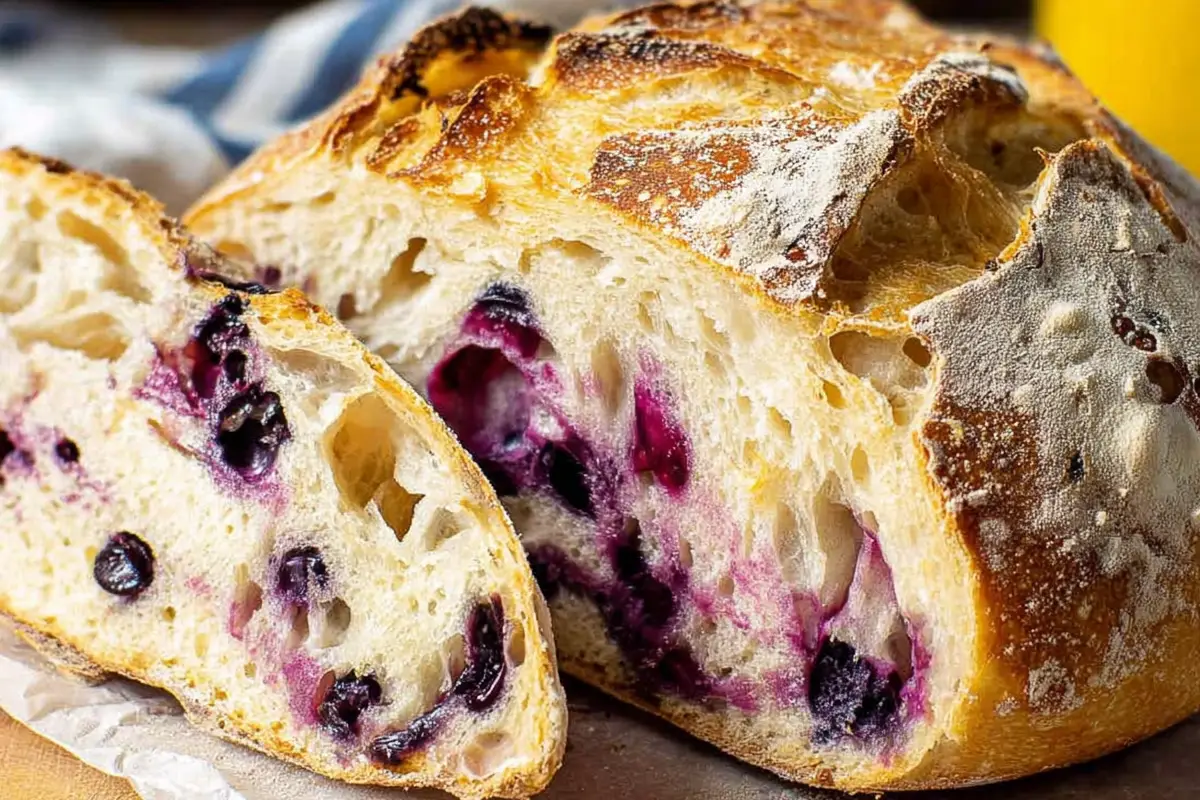
- Bright lemon zest balances sourdough tang while blueberries add juicy, sweet pops throughout the loaf.
- Use fresh firm berries or toss frozen in flour to prevent excess moisture and staining.
- Gentle stretch and fold plus cold overnight fermentation improve flavor and dough handling.
- Versatile recipe: swap fruits, add lavender or cinnamon swirl, make vegan or seasonal pumpkin twist.
- Best eaten within two days; slice and freeze for longer storage, toast to reheat for crisp crust.
Last Updated on January 23, 2026 by Souhail
There’s just something magical about the combination of lemon and blueberry, especially when it’s folded into the tangy, chewy goodness of sourdough. I still remember the first time I made this lemon blueberry sourdough bread on a lazy Sunday morning in my New York kitchen. The smell alone was enough to make my neighbor knock on my door asking what I was baking! This recipe blends the natural tang of a slow-fermented sourdough with the brightness of lemon zest and the juicy sweetness of blueberries. It’s like summer in a slice—soft, chewy, fruity, and slightly tart, with a crust that sings when you slice into it.
Whether you’re already a sourdough aficionado or just dipping your toes into wild fermentation, this recipe is a gorgeous way to bring something fresh and unexpected to your bread game. It works beautifully as a weekend bake, something special to share at brunch, or even as a sweet gift for a friend who could use a little pick-me-up. Plus, you don’t need to be a pro baker to pull it off—just a little patience and some love for real food.
Table of contents
- Why I Absolutely Love This Lemon Blueberry Sourdough (and You Will Too!)
- How to Make Lemon Blueberry Sourdough Bread
- Pro Tips to Nail This Fruity, Zesty Sourdough Every Time
- Delicious Variants of This Zesty Sourdough You’ll Want to Try
- How to Serve It: Ideas That’ll Make You Drool
- Storage and Reheating: Keep It Fresh and Tasty
- Fun & Creative Ways to Use This Bread
- Frequently Asked Questions
- Final Thoughts: Time to Bake Some Sunshine
Why I Absolutely Love This Lemon Blueberry Sourdough (and You Will Too!)
This isn’t just any sourdough loaf. It’s one of those recipes that make people pause after the first bite and go, “Whoa—what is that?!” Here’s why this lemon blueberry sourdough bread is truly special:
- A Burst of Bright Flavor: The lemon zest infuses the dough with citrusy sunshine, balancing perfectly with the tartness of sourdough and the sweetness of ripe blueberries.
- Juicy Pops in Every Bite: Fresh blueberries create soft, jammy pockets throughout the loaf—think of it like nature’s candy woven into sourdough.
- A Stunning Loaf to Serve or Share: It’s not just delicious; it’s beautiful. The swirl of purple and flecks of yellow make it a showstopper.
- A Fun Way to Use Your Starter: Got an active sourdough starter? This is a fresh and fruity alternative to your usual loaves. If you’re just getting started, check out this easy sourdough starter recipe for beginners.
- Customizable for Every Baker: You can tweak the flavors, sweeten it up, make it vegan, or go gluten-free with the right flour blend. More on that below!
How to Make Lemon Blueberry Sourdough Bread
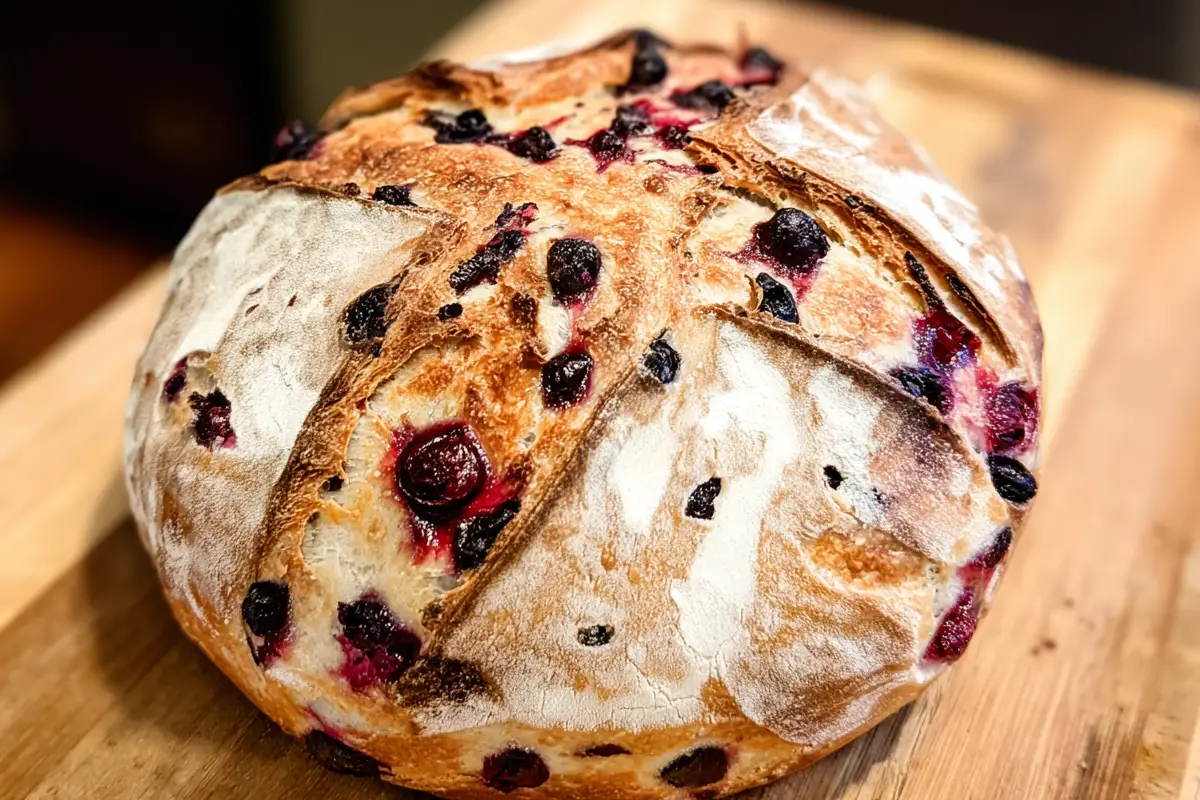

Lemon Blueberry Sourdough Bread Recipe
1 loaf
servings25
minutes45
minutes200
kcalThis lemon blueberry sourdough bread is a bright, fruity twist on classic sourdough, packed with citrusy zest and juicy berries. A perfect loaf for brunch or gifting
Keep the screen of your device on
Ingredients
100 g active sourdough starter
500 g bread flour
350 g water
10 g salt
Zest of 1 large lemon
150 g fresh blueberries (or frozen, tossed in flour)
Directions
- Start by making sure your sourdough starter is bubbly and active. If it passes the float test (a small spoonful floats in water), you’re good to go! This recipe is a two-day process, but most of that time is hands-off, and the flavor is totally worth it.
- In a large mixing bowl, combine 100g active sourdough starter, 350g water, and 500g bread flour. Mix until no dry flour remains. It will look shaggy and rough—that’s totally fine. Cover with a damp towel and let it rest for 1 hour. This rest is called “autolyse,” and it helps the flour absorb water and relax the gluten.
- After an hour, add 10g salt and the zest of 1 large lemon. Wet your hands and gently fold the salt and zest into the dough until well incorporated. You’ll start to feel the dough become more cohesive and elastic.
- Over the next 3 hours, perform a series of stretch and folds every 30 minutes. To do this, grab a section of dough, stretch it upward, and fold it over itself. Rotate the bowl and repeat 3-4 times per session. On the second set, gently fold in 150g fresh blueberries, distributing them as evenly as possible. Be careful not to squish them too much—fold gently.
- After your final fold, cover the dough and let it bulk ferment at room temperature (around 72–75°F) for 4 to 6 hours, or until it has roughly doubled in size and looks puffy.
- Turn the dough out onto a lightly floured surface. Let it rest for 15–20 minutes uncovered (this is the bench rest). Then, shape it into a round or oval loaf, using a bench scraper to help if needed. Transfer the shaped dough into a floured banneton or a bowl lined with a floured towel.
- Cover and refrigerate overnight for the cold proof—this improves flavor and makes the dough easier to score and bake the next day.
- The next morning, preheat your oven to 475°F with a Dutch oven inside. Once preheated, carefully remove the dough from the fridge. Turn it onto parchment paper, score the top with a razor or sharp knife, and transfer it into the hot Dutch oven.
- Bake covered for 20 minutes, then remove the lid and bake for another 20–25 minutes, until the crust is deep golden and sounds hollow when tapped.
- Remove from the oven and let it cool on a wire rack for at least 1 hour before slicing. The blueberries will be hot and gooey, and slicing too soon could make the bread gummy inside—so be patient!
Notes
- Use fresh, firm blueberries for best texture. If using frozen, coat them lightly in flour.
- Don’t skip the overnight cold proof—it adds incredible flavor and makes shaping easier.
- Handle the dough gently when folding in the berries to avoid smashing them.
- Zesting the lemon directly over the dough releases the oils and intensifies the flavor.
- For extra tang, extend the bulk fermentation slightly (closer to 6 hours).
- A Dutch oven helps create that iconic sourdough crust. If you don’t have one, use a baking stone and add steam.
Nutrition Facts
- Calories: 200kcal
- Fat: 1g
- Sodium: 200mg
- Carbohydrates: 38g
- Fiber: 2g
- Sugar: 2g
- Protein: 6g
Like this recipe?
Follow @wikitasty on Pinterest
Pro Tips to Nail This Fruity, Zesty Sourdough Every Time
Trust me, after baking this bread more times than I can count (and getting it very wrong a few times), I’ve gathered some go-to tips to make your loaf dreamy from start to finish:
- Use fresh, firm blueberries: Frozen blueberries work in a pinch, but they tend to release more moisture and can make the dough tricky to handle. If using frozen, toss them in flour first.
- Zest, don’t juice: Lemon juice can add too much liquid. Stick with zest for flavor without messing with hydration levels.
- Stretch and fold gently: When adding berries, be extra gentle. Too much handling and you’ll end up with purple dough (which is cute, but not what we’re after).
- Cold ferment overnight: This develops flavor and makes your life easier. Plus, the dough becomes easier to handle after chilling.
- Line your proofing basket: Blueberries can leak a bit—lining with parchment helps avoid a sticky mess.
- Score with confidence: A good slash lets your loaf expand beautifully. I go with a single long slash for this one.
Delicious Variants of This Zesty Sourdough You’ll Want to Try
One of the best things about this lemon blueberry sourdough bread is how versatile it is. You can play around with mix-ins, flours, or even make it a bit more indulgent (or healthy!). Here are some of my favorite ways to switch things up:
1. Lemon Raspberry Sourdough
Swap blueberries for raspberries if you want a tangier, more vibrant punch. Raspberries are a little softer, so fold them in very gently. The tartness plays so well with the lemon zest!
2. Lavender Lemon Blueberry Sourdough
Add ½ teaspoon of dried culinary lavender to the dough along with the lemon zest. It creates an aromatic, floral vibe that’s perfect for a spring brunch.
3. Cinnamon Sugar Swirl
For a cozier version, mix 1 tablespoon of cinnamon with 2 tablespoons of sugar and sprinkle it between your folds. It adds warmth that balances the bright berries beautifully.
4. Vegan Version
Use maple syrup instead of honey (if you’re sweetening the dough), and make sure your starter is fed with plant-based flour blends. No eggs or dairy here, so it’s easy to keep vegan-friendly!
5. Lemon Blueberry Sourdough Pumpkin Bread
For a seasonal twist, replace a portion of the water with pumpkin purée and cut back slightly on the flour. You’ll get a moist, spiced loaf that’s next-level good. It’s like combining this recipe with my sourdough pumpkin bread—highly recommend trying it once fall hits!
How to Serve It: Ideas That’ll Make You Drool
Honestly, I’ve eaten this bread plain, toasted, smothered in butter, and turned into French toast—and it never disappoints. Here are a few ways to enjoy it:
- Toasted with Whipped Honey Butter: The tart berries and lemon shine with a little creamy richness.
- French Toast with Lemon Yogurt Drizzle: Talk about weekend brunch goals. A few slices of this, dipped in egg and lightly fried, served with lemony yogurt or mascarpone… heaven.
- On a Cheese Board: Pair it with soft cheeses like brie or goat cheese. That sweet-savory combo is incredible.
- With Tea or Coffee: A slice of this with a cup of earl grey? Yes, please.
Want more blueberry inspiration? Check out this comforting blueberry crumble recipe for dessert ideas that pair beautifully.
Storage and Reheating: Keep It Fresh and Tasty
This bread is best enjoyed within the first two days, but it stores well, too.
- Room Temp: Wrap tightly in foil or a bread bag and store on the counter for up to 2 days.
- Fridge: Not ideal—it dries out faster.
- Freezer: Slice and freeze in an airtight bag. Reheat in the toaster or oven straight from frozen.
- To Reheat: Toast slices lightly to bring back that crispy crust and soft center. For a whole loaf, bake at 350°F wrapped in foil for 10–15 minutes.
Fun & Creative Ways to Use This Bread
If you’ve got leftovers (or just love experimenting), here are some fun ways to give this bread a second life:
- Lemon Blueberry Sourdough French Toast Casserole: Cube the bread, soak it overnight in a vanilla custard, then bake. It’s perfect for holidays or brunch parties.
- Bread Pudding: Add white chocolate chips or crushed almonds for texture.
- Grilled Cheese with a Twist: Try a mild goat cheese and honey drizzle between slices of this bread. Unexpected and absolutely delicious.
- Sweet Croutons: Cube, toast, and sprinkle on yogurt bowls or salads.
Frequently Asked Questions
Fold them in very gently during the second stretch and fold. If you’re worried about too much juice, use slightly firmer berries or toss them in flour before adding.
Yes! Just don’t thaw them—add them frozen, tossed in flour. This prevents excess moisture from making the dough too wet.
Blueberries add moisture, so the dough will be a bit more delicate. Cold proofing helps firm it up. Wet your hands when folding and shaping to avoid sticking.
You can replace up to 30% of the bread flour with whole wheat. Any more and you may need to adjust hydration and fermentation time.
Sourdough naturally requires gluten structure, so a gluten-free version needs special flour blends and different handling. I’d recommend using a recipe tailored for gluten-free sourdough.
The crust should be golden and crisp, and the loaf should sound hollow when tapped on the bottom. You can also check internal temp—it should be around 200–210°F.
Final Thoughts: Time to Bake Some Sunshine
There’s something so joyful about baking a loaf that feels like sunshine in bread form. This lemon blueberry sourdough bread is one of those recipes that brings color and flavor into your kitchen—whether you’re slicing it up for brunch, gifting it to a friend, or enjoying a quiet moment with a cup of tea and a warm slice.
It’s a great way to shake up your sourdough routine and show off just how versatile fermentation baking can be. Plus, once you’ve made it once, you’ll start dreaming up your own mix-ins and seasonal twists—I can’t wait to hear what combinations you come up with!
If you’re on a roll with baking, be sure to check out my sourdough focaccia recipe or dive into something sweet like this easy blueberry crumble.