
Last Updated on April 16, 2026 by Souhail
This post contains affiliate links. As an Amazon Associate, we earn from qualifying purchases. This means we may earn a small commission if you purchase through our links, at no extra cost to you.
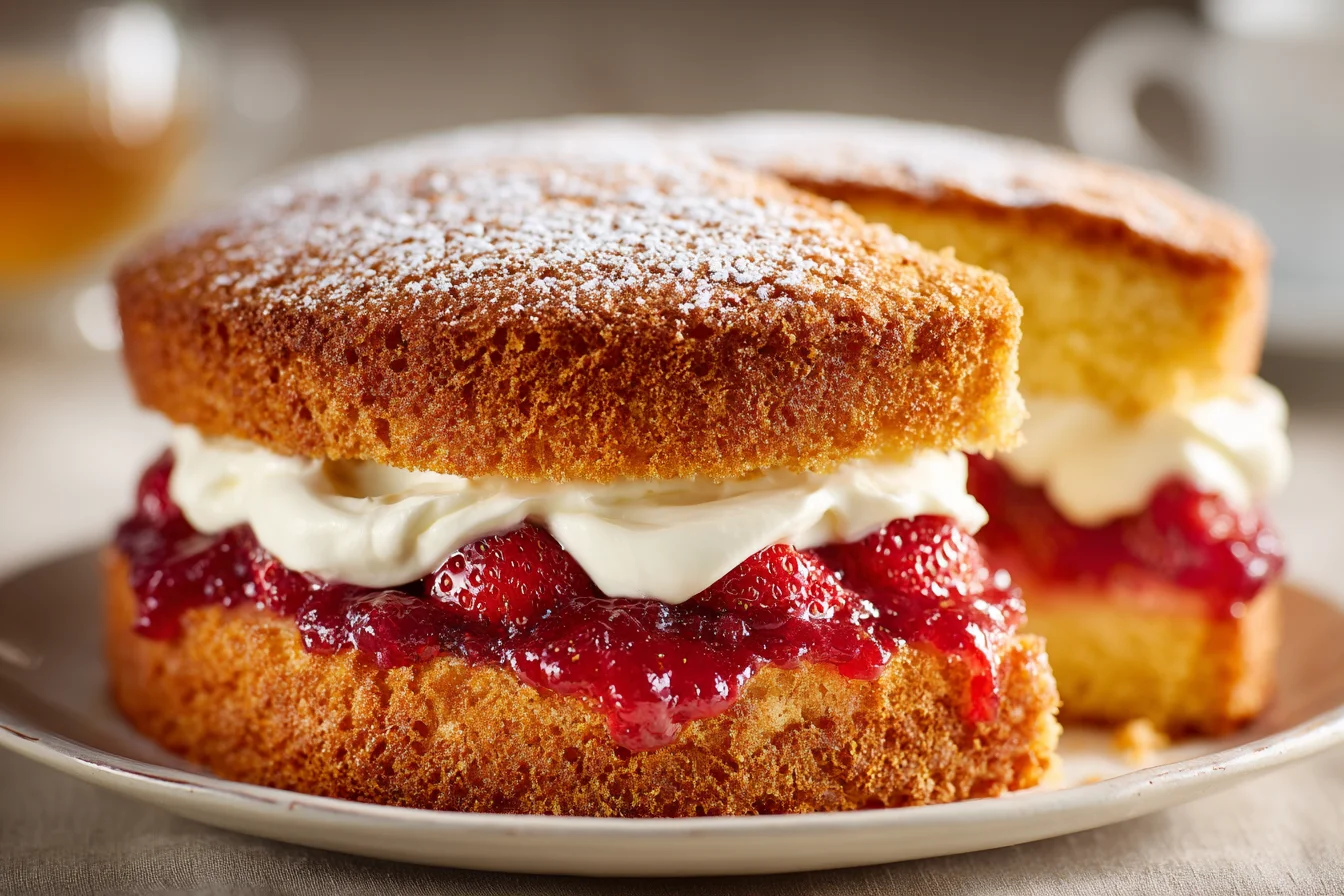
There’s something truly magical about a Victoria Sponge Cake. This classic British dessert has graced afternoon tea tables for generations, and once you taste one, you’ll understand why. A Victoria Sponge Cake features two tender, fluffy layers of vanilla sponge filled with jam and whipped cream, creating a delicate balance of flavors and textures that feels both elegant and comforting at the same time.
The beauty of this traditional British cake lies in its simplicity. You don’t need fancy equipment or complicated techniques to master it. What you do need is quality ingredients, a bit of patience, and the willingness to embrace a recipe that has stood the test of time. Whether you’re preparing for a special occasion or simply craving a slice of nostalgia, this sponge cake delivers every single time.
I still remember the first time my grandmother taught me to bake this cake. Her kitchen filled with the aroma of vanilla and butter, and watching her carefully layer the jam and cream felt like learning a cherished family secret. Now, I’m thrilled to share this recipe with you so you can create those same warm memories in your own home.
Table of contents
- Why You'll Love This Recipe
- How to Make This Elegant British Sponge Cake
- Professional Tips for Perfect Victoria Sponge Cake Results
- Creative Variations on the Traditional Victoria Sponge Cake
- Understanding the Nutrition in Your Victoria Sponge Cake
- The Perfect Ways to Enjoy Your Victoria Sponge Cake
- Keeping Your Victoria Sponge Cake Fresh and Delicious
- Common Questions About Making Victoria Sponge Cake
Why You’ll Love This Recipe
- This classic sponge cake recipe produces two perfectly light and airy layers that rise beautifully in the oven, creating an impressive dessert that looks far more complicated than it actually is to prepare.
- The combination of homemade jam and fresh whipped cream filling transforms simple cake layers into an elegant treat that works perfectly for afternoon tea, garden parties, or any special celebration.
- You can have this entire traditional British cake ready to serve in just over an hour from start to finish, making it surprisingly practical for entertaining guests or satisfying sudden dessert cravings.
- This butter cake recipe yields incredibly moist and tender crumb with subtle vanilla flavor that pairs beautifully with both fruity jams and rich cream, giving you endless customization options for different occasions.
How to Make This Elegant British Sponge Cake

Victoria Sponge Cake
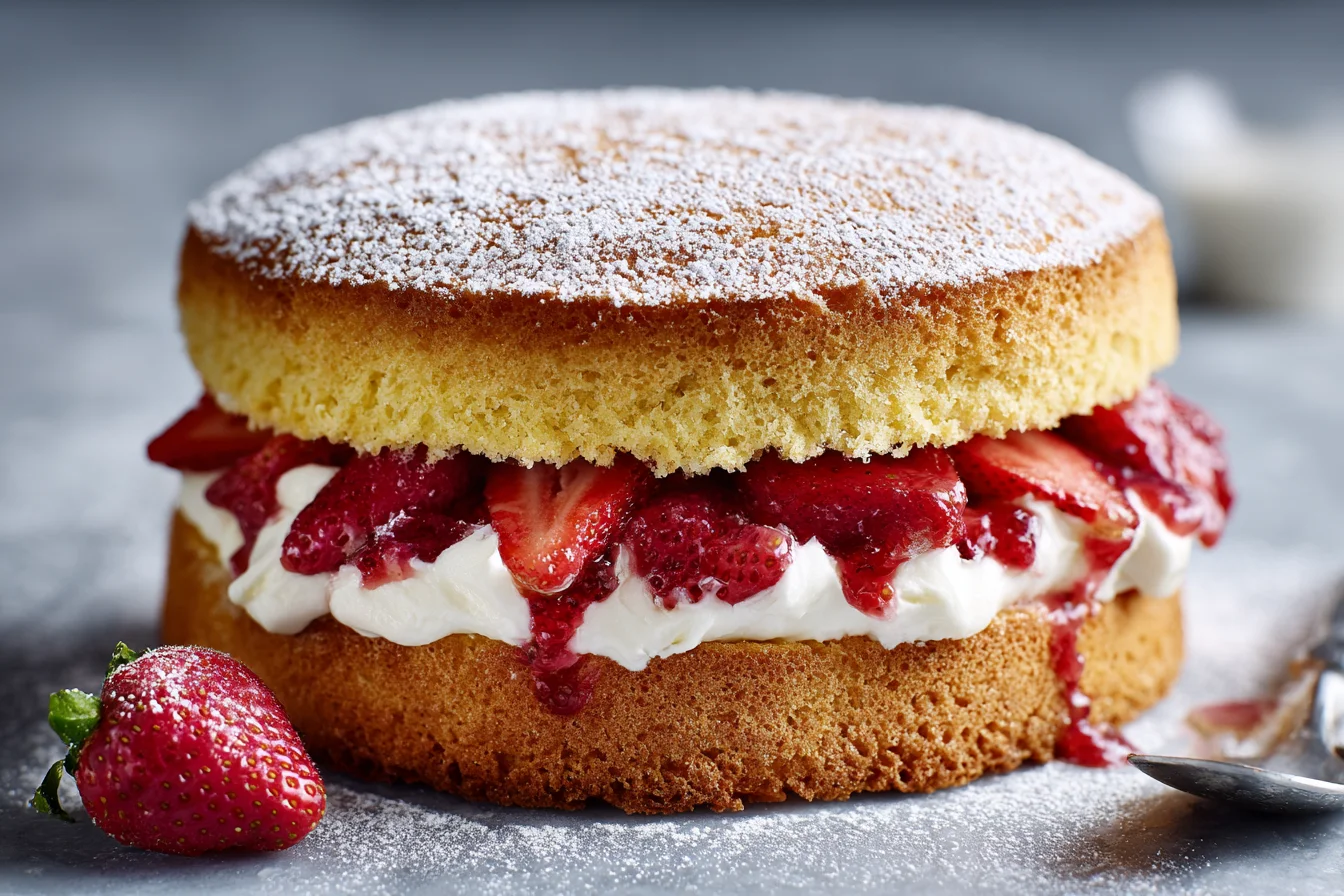
This classic British dessert features two light, fluffy vanilla sponge layers filled with strawberry jam and whipped cream. Perfect for afternoon tea or elegant gatherings, it’s surprisingly simple to make and absolutely delicious.
10
servings15
minutes25
minutes320
kcalKeep the screen of your device on
Ingredients
2 cups all-purpose flour
1 cup unsalted butter
1 cup granulated sugar
4 large eggs
2 teaspoons baking powder
0.5 teaspoon salt
0.25 cup whole milk
2 teaspoons vanilla extract
0.75 cup strawberry jam
1 cup heavy whipping cream
2 tablespoons powdered sugar
Directions
- Preheat your oven to 350°F (175°C). Grease two 8-inch round cake pans with butter and line the bottoms with parchment paper for easy removal.
- Sift together your flour, baking powder, and salt in a small bowl. Set this mixture aside while you prepare the wet ingredients.
- Cream the softened butter and granulated sugar together in a large mixing bowl for three to five minutes until the mixture becomes pale, fluffy, and nearly doubled in volume. This step is crucial for incorporating air into your cake.
- Add the eggs one at a time to your creamed butter mixture, beating well after each addition. Make sure each egg is fully incorporated before adding the next one. This ensures even distribution throughout the batter.
- Stir in the vanilla extract until everything is well combined and smooth.
- Fold in the sifted flour mixture gently using a rubber spatula, alternating with the milk. Begin and end with the flour mixture. Fold until just combined, being careful not to overmix, which would develop gluten and make your cake dense.
Notes
- All ingredients should be at room temperature for best results.
- Use fresh baking powder to ensure proper rising.
- Do not open the oven door during baking, as this causes temperature fluctuations.
- The unfilled cake layers can be baked one to two days ahead and stored in an airtight container.
- Assemble the cake no more than four hours before serving to keep the whipped cream fresh.
Nutrition Facts
- Serving Size: 1
- Total number of serves: 10
- Calories: 320kcal
- Fat: 16g
- Carbohydrates: 38g
- Fiber: 1g
- Protein: 4g
Like this recipe?
Follow @wikitasty on Pinterest
Professional Tips for Perfect Victoria Sponge Cake Results
Baking a flawless Victoria Sponge Cake comes down to understanding a few key techniques. Temperature control matters enormously here. Therefore, always bring your butter and eggs to room temperature before mixing. This simple step ensures even distribution of air throughout the batter, which directly impacts how high your cake rises and how light it feels. In addition, measuring your ingredients accurately makes a significant difference in the final result.
Room Temperature Ingredients Are Essential
Cold butter won’t cream properly with sugar, and cold eggs won’t incorporate smoothly into your batter. Take both out of the refrigerator about 30 minutes before you start baking. This small preparation step transforms your mixing process and helps you achieve that signature light, fluffy texture that makes this layer cake so special.
Use the Creaming Method for Best Results
Cream your softened butter and sugar together for at least three to five minutes until the mixture becomes pale and fluffy. This process incorporates air into the batter, which creates lift in the oven. Don’t rush this step. The longer you cream, the lighter your finished cake will be. A handheld mixer works wonderfully here, though a stand mixer gives you the most consistent results.
Sift Your Flour for Lighter Cake Layers
Sifting removes lumps and incorporates air into your dry ingredients. Therefore, always sift your flour and baking powder together before folding them into your wet mixture. Fold gently using a rubber spatula, turning the bowl as you go. This technique keeps your batter light and prevents overdevelopment of gluten, which would make your cake dense and tough rather than tender and delicate.
Divide Batter Evenly Between Pans
Use a kitchen scale to divide your batter equally between your prepared cake pans. Even layers bake at the same rate and stack beautifully. If one layer is thicker than the other, it will bake faster and potentially brown too much on top. Weighing your batter takes the guesswork out of this important step.
Cool Completely Before Assembling
Warm cake layers will melt your whipped cream filling and cause your jam to run. Therefore, let your baked cakes cool completely in their pans for about 15 minutes, then turn them out onto wire racks to cool for at least one hour before assembly. This patience ensures your finished Victoria Sponge Cake holds together beautifully and looks as impressive as it tastes.
Creative Variations on the Traditional Victoria Sponge Cake
While the classic version remains timeless, this traditional British cake welcomes wonderful variations. You can easily customize this recipe to suit different tastes and dietary needs. Therefore, experiment with these adaptations to keep your baking fresh and exciting while maintaining that signature light, fluffy texture.
Lemon Victoria Sponge Cake
Add the zest of two lemons to your creamed butter and sugar mixture, then reduce the milk by two tablespoons and replace it with fresh lemon juice. Fill your layers with lemon curd instead of jam for a bright, tangy version. Top with a light dusting of powdered sugar and candied lemon slices for extra elegance.
Chocolate Sponge Cake Variation
Substitute two tablespoons of your flour with high-quality cocoa powder for a subtle chocolate flavor. You can also fill this version with chocolate buttercream instead of cream and jam. Consider pairing it with a raspberry jam filling for a classic chocolate and berry combination that feels both indulgent and sophisticated.
Dairy-Free Victoria Sponge Cake
Replace the butter with dairy-free butter in equal amounts, and swap the milk for unsweetened almond or oat milk. Use dairy-free whipped cream for your filling. The cake layers bake identically, and most people cannot detect any difference in taste or texture. This adaptation makes this beloved dessert accessible to those following plant-based diets.
Gluten-Free Sponge Cake Option
Substitute all-purpose flour with a high-quality gluten-free flour blend that includes xanthan gum. You may need to add an extra tablespoon of milk to achieve the correct batter consistency. Bake for an additional five minutes, as gluten-free cakes often take slightly longer to set. The result is equally light and delicious, making this traditional cake inclusive for everyone at your table.
Strawberry Shortcake Version
Transform your sponge cake into a stunning strawberry shortcake by filling the layers with fresh whipped cream and sliced strawberries instead of jam. Top with additional whipped cream and whole berries. This variation celebrates fresh fruit and works beautifully for spring and summer gatherings. For more strawberry dessert inspiration, check out this strawberry sheet cake recipe that offers another wonderful way to showcase this delicious fruit.
Understanding the Nutrition in Your Victoria Sponge Cake
Each generous slice of Victoria Sponge Cake contains approximately 320 calories, making it a substantial dessert that satisfies cravings beautifully. The cake gets about 45 percent of its calories from carbohydrates, primarily from the flour, sugar, and jam filling. However, the butter and cream contribute healthy fats that keep you feeling satisfied longer than you might expect.
One slice provides roughly 4 grams of protein, which comes mainly from the eggs in the batter. The fat content sits around 16 grams per serving, with most of that coming from the butter and whipped cream filling. While this isn’t a low-fat dessert, the quality ingredients mean you’re getting real nutrition rather than empty calories. A single slice contains about 38 grams of carbohydrates and approximately 24 grams of sugar, so this cake works best as an occasional treat rather than an everyday indulgence.
The beauty of homemade cake lies in knowing exactly what goes into each bite. You control the quality of your butter, the freshness of your eggs, and the type of jam you use. If you’re watching your sugar intake, consider using a lower-sugar jam or making your own with less added sugar. For those seeking similar elegant desserts with different flavor profiles, try this hummingbird cupcakes recipe that offers tropical flavors and wonderful nutrition information. You might also enjoy exploring this Texas chocolate pecan pie recipe for a richer dessert option.
The Perfect Ways to Enjoy Your Victoria Sponge Cake
Afternoon tea represents the quintessential way to serve Victoria Sponge Cake, and for good reason. Pair a generous slice with hot tea, whether you prefer Earl Grey, English breakfast tea, or something lighter like chamomile. The delicate flavors of the cake complement tea beautifully without overwhelming your palate. Serve it on proper china if you have it, and watch how this simple gesture transforms an ordinary afternoon into something memorable and special.
Beyond traditional tea time, this cake shines at garden parties, bridal showers, and birthday celebrations. You can serve it as the main dessert at a casual dinner party, perhaps alongside fresh berries and extra whipped cream for guests who want to customize their portions. The cake also works wonderfully for potlucks and bake sales, as it travels well and looks impressive when sliced and displayed on a cake stand.
For a more casual approach, simply enjoy a slice with a cup of coffee in the morning or as an afternoon pick-me-up. The cake’s light texture means it never feels heavy, even when eaten by itself. Consider dusting the top with powdered sugar just before serving for an extra touch of elegance that requires virtually no effort but creates significant visual impact.
Keeping Your Victoria Sponge Cake Fresh and Delicious
Store your assembled Victoria Sponge Cake in an airtight container at room temperature for up to two days. The whipped cream filling means this cake doesn’t keep quite as long as cakes with buttercream frosting, but it remains delicious during this window. If you need to store it longer, refrigerate the cake in an airtight container for up to four days. The cool temperature actually helps the flavors meld together beautifully.
For longer storage, you have excellent options. Wrap the unfilled cake layers individually in plastic wrap, then place them in an airtight freezer container. They’ll keep beautifully for up to three months in the freezer. When you’re ready to serve, thaw the layers at room temperature for about one hour, then assemble with fresh jam and whipped cream. Alternatively, you can freeze the entire assembled cake for up to one month, though the whipped cream texture changes slightly upon thawing, so this works best if you plan to serve it within a few days of freezing.
Do not refrigerate unfilled cake layers, as this dries them out unnecessarily. However, always refrigerate the assembled cake if it contains whipped cream filling. This keeps the cream stable and prevents it from weeping or separating. Before serving a refrigerated cake, let it sit at room temperature for about 15 minutes so the cake layers warm slightly and the flavors come through more clearly.
Common Questions About Making Victoria Sponge Cake
You probably have questions about this classic dessert, and I want to make sure you feel confident baking it. Below you’ll find answers to the most common questions home bakers ask about Victoria Sponge Cake. These insights come from years of professional baking experience and countless conversations with home cooks just like you.
Victoria Sponge Cake uses the creaming method to incorporate air, creating a lighter, more delicate crumb than standard cakes. It features two layers filled with jam and whipped cream, making it more elegant and refined. The traditional British recipe emphasizes simplicity and quality ingredients rather than complex techniques.
Yes, you can substitute eggs with flax eggs or applesauce, though the texture will be slightly different. Use one flax egg per large egg in the recipe. However, traditional Victoria Sponge Cake relies on eggs for structure and lift, so egg-free versions won’t rise quite as high. For food safety information about eggs, visit the FDA’s guidance at https://www.fda.gov/food/buy-store-serve-safe-food/what-you-need-know-about-egg-safety.
Your cake is ready when a toothpick inserted into the center comes out clean or with just a few moist crumbs. The top should spring back when you gently press it, and the edges should pull away slightly from the sides of the pan. Typically, this takes 20 to 25 minutes at 350°F. Overbaking dries out the cake, so check it starting at 18 minutes.
Strawberry jam is the traditional choice and remains the most popular option. However, raspberry jam, apricot jam, or even homemade jam all work beautifully. Choose jam with larger fruit pieces rather than smooth jam for better flavor and texture. Avoid jams with large seeds if you prefer a smoother filling. You can also use lemon curd or chocolate spread for different flavor profiles.
Yes, you can bake the cake layers one or two days ahead and store them unfilled in an airtight container. Assemble the cake with jam and cream no more than four hours before serving for best results. Alternatively, freeze unfilled layers for up to three months. For food safety tips on storing baked goods, check the CDC’s food safety guidelines at https://www.cdc.gov/food-safety/about/index.html.
Several factors affect rising. First, ensure your baking powder is fresh and hasn’t expired. Second, cream your butter and sugar for at least three to five minutes to incorporate enough air. Third, use room temperature eggs and milk for proper mixing. Finally, avoid opening the oven door during baking, as this causes temperature fluctuations. If you’re concerned about food safety during preparation, visit https://www.cdc.gov/food-safety/prevention/index.html for best practices.
Baking a Victoria Sponge Cake transforms you into a confident home baker, even if you’ve never attempted a layered cake before. This recipe teaches fundamental techniques that apply to countless other desserts. More importantly, it connects you to a centuries-old tradition of home baking that brings joy to everyone who tastes it.
Go ahead and gather your ingredients today. Set aside an afternoon, take your time with each step, and trust the process. When you pull those golden cake layers from the oven and assemble them with jam and cream, you’ll feel the same magic I experienced in my grandmother’s kitchen. That’s the real magic of Victoria Sponge Cake.